
Bangladesh offers a fascinating blend of ancient history, vibrant culture, and modern development that captivates travelers, students, and anyone curious about South Asian nations. This comprehensive guide covers Bangladesh’s journey from its early Bengal civilizations through British colonial rule to its emergence as an independent nation in 1971.
Whether you’re planning a visit, researching for academic purposes, or simply want to understand this dynamic country better, you’ll discover essential insights about Bangladesh’s capital Dhaka, its strategic location in the Bengal delta, and the meaning behind its distinctive flag featuring a red circle on green field.
We’ll explore Bangladesh’s remarkable economic transformation from an agricultural society to a major textile exporter, examine its population of over 165 million people, and dive into the rich cultural traditions that make this nation unique. You’ll also learn about the geographic features that shape daily life, from the mighty rivers that crisscross the country to the fertile plains that feed millions.
This guide breaks down complex topics into clear sections, making it easy to find exactly what you need to know about Bangladesh’s past, present, and promising future.
Ancient Roots and Early Civilizations of Bengal

Prehistoric Settlements and Archaeological Discoveries
The fertile plains of Bengal have been home to human civilizations for thousands of years, with archaeological evidence revealing a rich tapestry of prehistoric life. Excavations at sites like Mahasthangarh in Bogra district have uncovered pottery, coins, and structural remains dating back to the 3rd century BCE, making it one of the earliest urban settlements in the region. The discovery of Neolithic tools and artifacts along the banks of major rivers shows that hunter-gatherer communities transitioned to agricultural societies around 2000 BCE.
Stone Age implements found across the region tell the story of early inhabitants who mastered fire, crafted sophisticated tools, and developed complex social structures. The Wari-Bateshwar archaeological site has yielded remarkable finds including glass beads, semi-precious stones, and silver punch-marked coins, suggesting extensive trade networks that connected Bengal with distant lands including the Roman Empire and Southeast Asia. These discoveries paint a picture of thriving communities that were far from isolated, engaging in commerce and cultural exchange across vast distances.
Rise of Powerful Buddhist and Hindu Kingdoms
Bengal emerged as a major center of political and religious power during the early centuries of the Common Era. The Gupta Empire’s influence brought Hinduism to prominence, but it was Buddhism that truly flourished in the region’s monasteries and learning centers. The Mauryan emperor Ashoka’s conversion to Buddhism left an indelible mark on Bengal, with numerous stupas and monasteries built across the landscape.
The Pala dynasty, ruling from the 8th to 12th centuries, transformed Bengal into the heartland of Mahayana Buddhism. Under rulers like Dharmapala and Devapala, the kingdom expanded beyond Bengal’s borders, controlling territories from Assam to Punjab. The Palas established Vikramshila and Nalanda universities, which became renowned centers of Buddhist learning, attracting scholars from Tibet, China, and Southeast Asia.
Hindu kingdoms also left their mark during this period. The Chandra dynasty controlled southeastern Bengal, while various smaller kingdoms established themselves across the region. These rulers built magnificent temples, promoted Sanskrit literature, and developed sophisticated administrative systems that would influence governance patterns for centuries to come.
Cultural Fusion During the Pala and Sena Dynasties
The transition from Pala to Sena rule marked a fascinating period of cultural synthesis in Bengal’s history. The Sena dynasty, originating from Karnataka, brought South Indian cultural elements that blended with existing Bengali traditions. Ballala Sena and Lakshman Sena promoted Hindu revivalism while respecting the Buddhist heritage their predecessors had established.
This era witnessed remarkable developments in art, literature, and architecture. The distinctive Bengali temple style emerged during this period, characterized by curved roofs that mimicked local bamboo huts. Jayadeva’s “Gita Govinda,” composed during Lakshman Sena’s court, became a masterpiece of devotional literature that influenced artistic expression across the subcontinent.
The Palas and Senas created a unique cultural environment where Buddhist compassion merged with Hindu devotion, where Sanskrit scholarship coexisted with emerging vernacular literature. This synthesis laid the foundation for Bengal’s distinctive cultural identity – one that embraced diversity while maintaining its own character. Trade guilds flourished, artisans perfected their crafts, and the region’s agricultural prosperity supported sophisticated urban centers that buzzed with intellectual and commercial activity.
Colonial Legacy and the Struggle for Independence
British East India Company’s transformative impact
The British East India Company arrived in Bengal during the early 17th century, initially establishing trading posts along the coast. What began as commercial ventures soon evolved into political control that would reshape the region’s entire social and economic fabric. The Company’s victory at the Battle of Plassey in 1757 marked a turning point, granting them effective control over Bengal’s vast resources and strategic trade routes.
The colonial administration introduced sweeping changes that touched every aspect of Bengali life. Traditional agricultural systems gave way to cash crop cultivation, with indigo and jute becoming major exports that enriched British coffers while often impoverishing local farmers. The Company established a new land revenue system that disrupted centuries-old patterns of land ownership, creating a class of intermediary landlords known as zamindars who collected taxes for the colonial government.
Education and administration were restructured according to British models. English became the language of higher learning and government, while Bengali and other local languages were marginalized in official contexts. The colonial legal system replaced traditional forms of justice, introducing concepts of property rights and contract law that fundamentally altered social relationships.
Railway networks, telegraph lines, and modern ports transformed Bengal’s infrastructure, connecting remote areas to global markets while serving British commercial interests. These developments created new opportunities for some Bengalis but also deepened economic dependence on colonial exports and imports.
Partition of Bengal and its lasting consequences
The 1905 Partition of Bengal stands as one of the most controversial administrative decisions in colonial history. Lord Curzon, the British Viceroy, divided Bengal into two provinces: East Bengal and Assam, with a Muslim majority, and West Bengal, Bihar, and Orissa, with a Hindu majority. The British justified this move as administrative necessity, claiming the original Bengal province was too large to govern effectively.
Bengali society erupted in unprecedented protest against what many saw as a deliberate attempt to weaken Bengali nationalism and create religious divisions. The Swadeshi movement gained momentum, encouraging boycotts of British goods and promoting indigenous industries. Students, intellectuals, and merchants joined forces in demonstrations that spread across both urban and rural areas.
The partition revealed deep-seated communal tensions that would plague the region for decades. While some Muslim leaders initially welcomed the creation of a Muslim-majority province, many Bengali Muslims joined their Hindu neighbors in opposing the division. The British strategy of “divide and rule” became starkly apparent as religious differences were deliberately amplified for political purposes.
Popular resistance forced the British to reverse the partition in 1911, reuniting Bengal while moving the colonial capital from Calcutta to Delhi. However, the damage was done. Religious polarization had taken root, creating lasting mistrust between communities that would ultimately lead to the traumatic partition of 1947.
Liberation War of 1971 and birth of modern Bangladesh
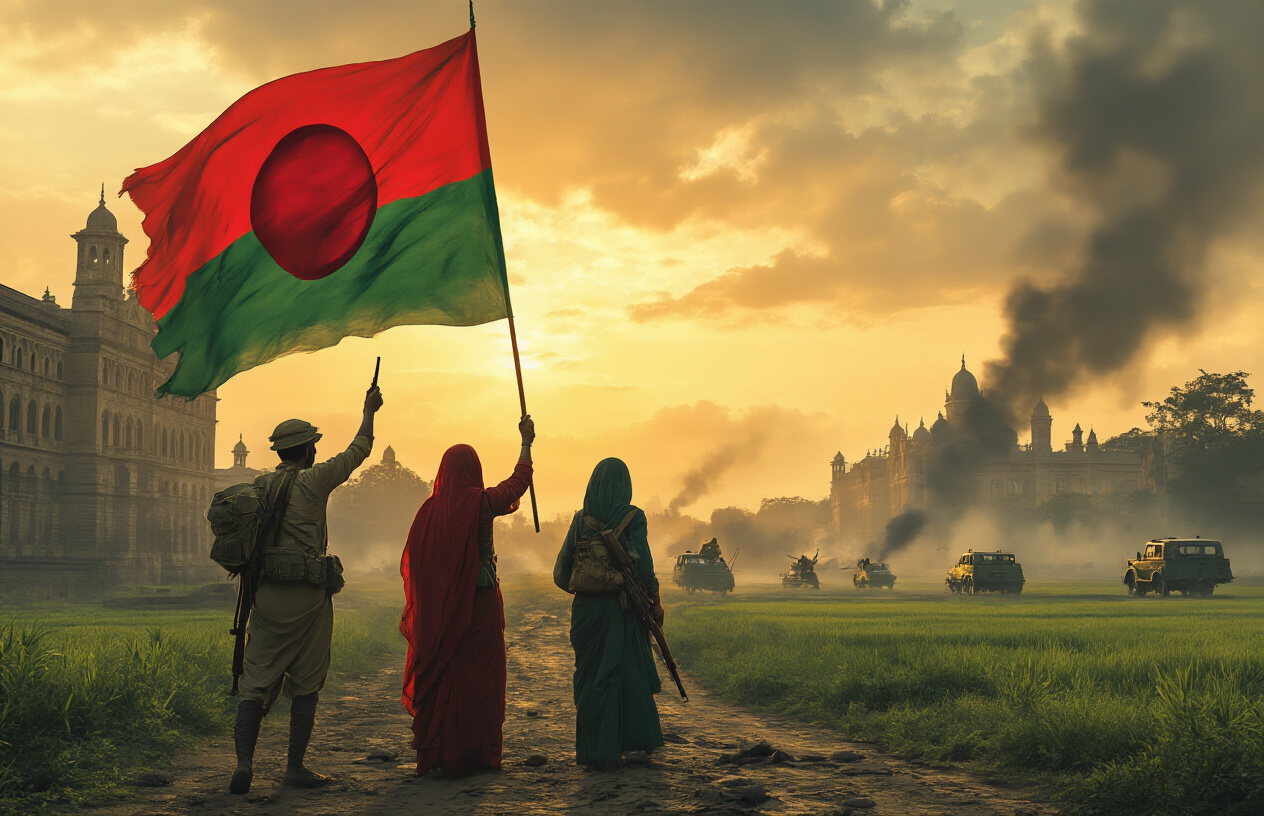
The creation of Pakistan in 1947 brought together two geographically separated regions under the banner of Islamic nationalism, but East Bengal (renamed East Pakistan) soon found itself treated as a colony by West Pakistan. Economic exploitation, cultural suppression, and political marginalization created growing resentment among Bengalis who watched their resources flow westward while receiving little investment in return.
Language became the first major battleground when Pakistani authorities attempted to impose Urdu as the sole national language, ignoring Bengali despite it being spoken by the majority of Pakistan’s population. The Language Movement of 1952 saw students and activists sacrifice their lives defending their mother tongue, with February 21 becoming a symbol of Bengali resistance that is now recognized as International Mother Language Day.
The 1970 general election delivered a decisive victory to the Awami League led by Sheikh Mujibur Rahman, whose Six Point Program demanded greater autonomy for East Pakistan. When West Pakistani leaders refused to transfer power despite the clear electoral mandate, tensions escalated rapidly. Sheikh Mujib’s historic speech on March 7, 1971, calling for independence struggle, electrified millions of Bengalis.
The Pakistan Army’s brutal crackdown on March 25, 1971, launched a nine-month liberation war that would claim millions of lives. Operation Searchlight targeted intellectuals, students, and political activists in a systematic campaign of terror. Bengali military officers, police, and civilians formed the Mukti Bahini (Liberation Forces), conducting guerrilla warfare against Pakistani forces.
India’s support proved decisive, providing training, weapons, and sanctuary to Bengali freedom fighters while accepting millions of refugees. The war intensified international attention, with global opinion largely favoring the Bengali cause. On December 16, 1971, Pakistani forces surrendered in Dhaka, and Bangladesh emerged as an independent nation, with Sheikh Mujibur Rahman returning from Pakistani imprisonment to lead the new country.
Rich Cultural Tapestry and Living Traditions
Bengali Language as the Cornerstone of National Identity
Bengali stands as one of the world’s most spoken languages, with over 300 million speakers globally. The language carries profound historical significance for Bangladesh, having served as the catalyst for the nation’s independence movement. When Pakistan attempted to impose Urdu as the sole official language in 1952, Bengali speakers rose in fierce protest during the Language Movement, with several students sacrificing their lives on February 21st. This date now marks International Mother Language Day, recognized worldwide by UNESCO.
The script itself tells a story of artistic beauty, with its flowing curves and distinctive characters derived from ancient Brahmi script. Bengali literature spans over a thousand years, encompassing everything from medieval poetry to contemporary novels that capture the essence of rural and urban life in Bangladesh.
Literary Giants and Their Global Influence
Bangladesh has produced some of the most celebrated literary figures in world literature. Rabindranath Tagore, though born in present-day India, remains deeply connected to Bengali culture and became the first Asian Nobel Prize winner in Literature in 1913. His works, including the national anthems of both Bangladesh and India, continue to inspire generations.
Kazi Nazrul Islam, known as the “Rebel Poet,” challenged social conventions and colonial rule through his revolutionary verses. His works promoted equality, women’s rights, and religious harmony. Contemporary writers like Humayun Ahmed brought Bengali literature into the modern era, creating beloved characters and stories that resonate with millions of readers.
Female voices have also shaped Bengali literature significantly. Begum Rokeya championed women’s education and rights in the early 20th century, while modern authors like Selina Hossain and Rizia Rahman continue this tradition of powerful storytelling.
Traditional Festivals and Religious Celebrations
Bangladesh celebrates a rich calendar of festivals that blend religious devotion with cultural joy. Pahela Boishakh, the Bengali New Year, transforms the entire country into a celebration of red and white, with traditional foods, music, and dance filling the streets. The festival represents renewal and hope, bringing together people from all walks of life.
Durga Puja, the most significant Hindu festival, showcases elaborate artistic installations and community gatherings. The five-day celebration features intricately crafted clay sculptures and pandals (temporary structures) that demonstrate exceptional craftsmanship.
Religious festivals include Eid ul-Fitr and Eid ul-Adha, celebrated with special prayers, family gatherings, and sharing meals with neighbors and the less fortunate. These occasions strengthen community bonds and emphasize values of compassion and generosity.
Other notable celebrations include:
- Poila Boishakh – New Year festivities with traditional performances
- Kali Puja – Honoring the goddess Kali with midnight rituals
- Buddha Purnima – Buddhist community celebrations
- Christmas – Christian festivities with unique Bengali touches
Arts, Crafts, and Architectural Marvels
Bangladesh’s artistic heritage spans centuries, blending indigenous traditions with influences from various cultures. Traditional crafts include intricate muslin weaving, once so fine that entire saris could pass through a ring. Though the original technique was lost during colonial times, artisans are working to revive this ancient craft.
Nakshi Kantha embroidery represents one of the most beloved folk arts, where women create stunning quilts using old saris and cloth pieces. Each kantha tells a story through colorful threads, depicting scenes from daily life, nature, and folklore.
The pottery tradition remains strong in regions like Rampura, where skilled craftsmen create both functional and decorative pieces using techniques passed down through generations. Brass and copper work from Dhamrai produces beautiful utensils and decorative items that combine utility with artistic beauty.
Architectural wonders dot the landscape, from ancient Buddhist viharas at Somapura Mahavihara (a UNESCO World Heritage site) to Mughal-era mosques featuring distinctive terracotta ornamentation. The Sixty Dome Mosque in Bagerhat stands as a masterpiece of medieval architecture, while modern structures like the National Parliament House by Louis Kahn blend contemporary design with traditional elements.
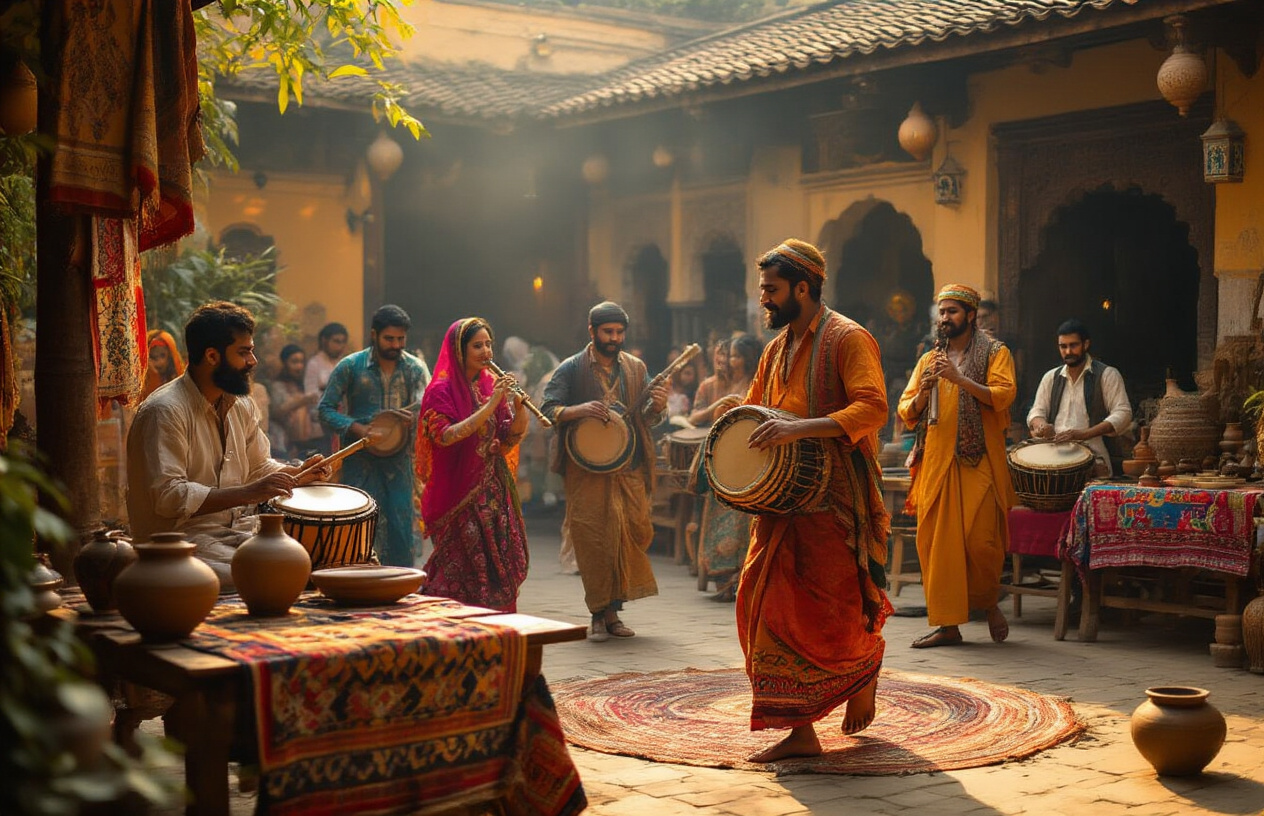
Traditional performing arts include Jatra (folk theater), classical dance forms, and the haunting melodies of Baul singers who travel the countryside sharing spiritual songs that transcend religious boundaries.
Dhaka – The Bustling Heart of the Nation
Historical significance as the Mughal capital
Dhaka’s story as a center of power stretches back over four centuries, when the Mughal Empire recognized its strategic importance. In 1608, the city became the capital of Bengal Subah, transforming from a modest trading post into the seat of imperial administration. The Mughals called it Jahangirnagar, honoring Emperor Jahangir, and under their rule, the city flourished as one of the wealthiest regions in the world.
The legendary muslin trade made Dhaka famous across Europe and Asia. These incredibly fine cotton fabrics, so delicate they were called “woven air,” brought immense prosperity to the region. European traders flocked to Dhaka’s markets, and the city became a crucial link in global commerce. The old quarters still bear witness to this golden age, with magnificent structures like Lalbagh Fort and the Ahsan Manzil palace standing as reminders of the city’s imperial past.
British colonial rule later shifted political power to Calcutta, but Dhaka maintained its cultural significance. The partition of Bengal in 1905 briefly restored its administrative importance, and the seeds of Bengali nationalism took root in its streets and institutions.
Modern urban development and infrastructure
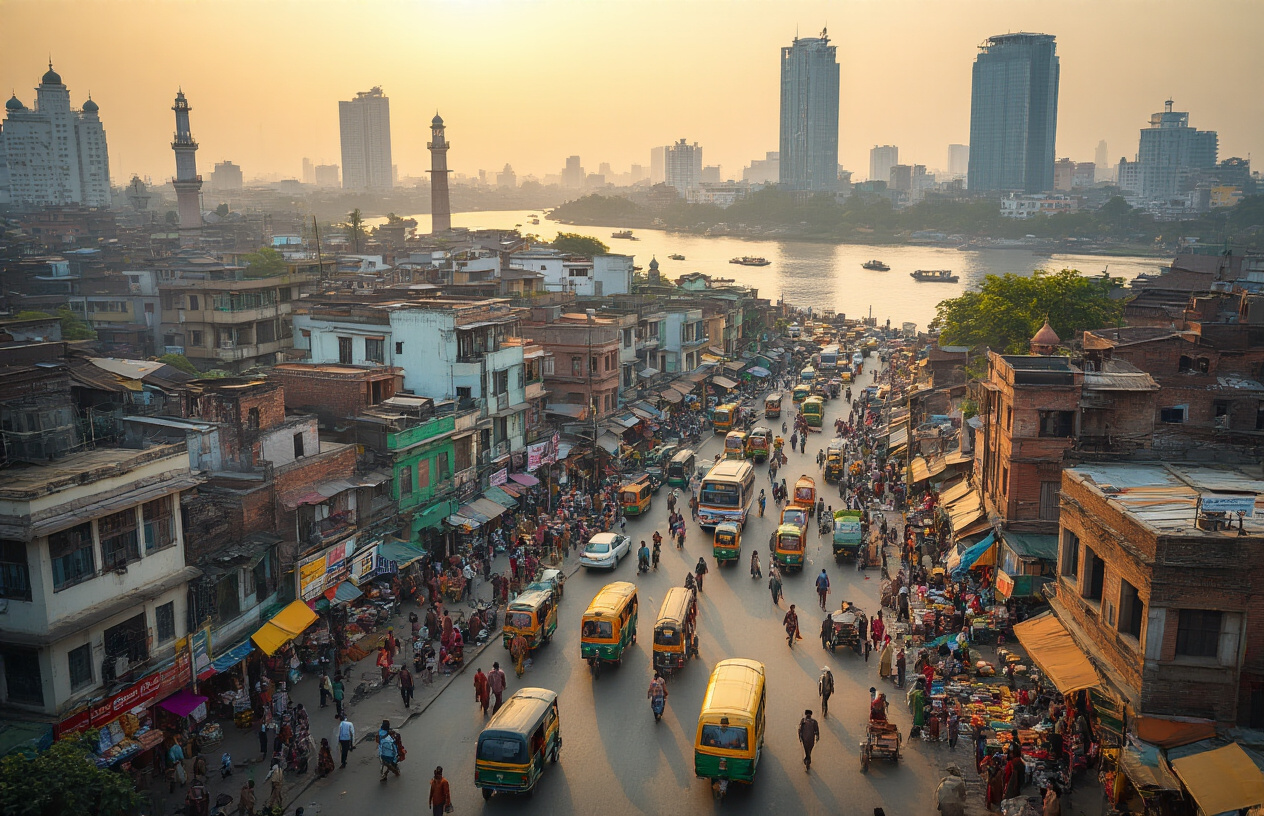
Today’s Dhaka presents a fascinating blend of rapid modernization and historical preservation. The city has undergone massive transformation since Bangladesh’s independence, evolving into a megacity of over 9 million people within the metropolitan area.
Major infrastructure projects have reshaped the urban landscape:
- Transportation Networks: The Dhaka Metro Rail, Bangladesh’s first subway system, opened in 2022, connecting key areas and reducing traffic congestion
- Flyovers and Expressways: Multiple elevated roadways like the Mayor Hanif Flyover and Dhaka Elevated Expressway improve traffic flow
- Modern Districts: Areas like Gulshan and Banani showcase contemporary architecture with glass towers, shopping malls, and residential complexes
- Digital Infrastructure: Extensive fiber optic networks and 4G coverage support the city’s growing tech sector
The city faces typical megacity challenges – traffic congestion, housing shortages, and infrastructure strain. However, ongoing projects like the Padma Bridge rail connection and planned Bus Rapid Transit systems promise to ease these pressures. Dhaka’s resilience shows in how it adapts ancient neighborhoods alongside gleaming new developments.
Economic powerhouse driving national growth
Dhaka generates approximately 35% of Bangladesh’s GDP, making it the undisputed economic engine of the nation. The city serves as headquarters for major banks, multinational corporations, and manufacturing companies that drive the country’s export economy.
Key Economic Sectors:
| Sector | Contribution | Notable Features |
|---|---|---|
| Textiles & Garments | 40% of city’s economy | Major global brands’ sourcing hub |
| Financial Services | 25% of city’s economy | Central bank and major commercial banks |
| Information Technology | 15% of city’s economy | Rapidly growing software and outsourcing |
| Trade & Commerce | 20% of city’s economy | Port access and regional distribution |
The ready-made garment industry forms the backbone of Dhaka’s economy, with thousands of factories employing millions of workers. International buyers from Europe, North America, and Asia maintain offices here, making Dhaka a global fashion sourcing destination.
The city’s stock exchange, banks, and insurance companies manage the majority of Bangladesh’s financial transactions. Recent growth in information technology and telecommunications has created new opportunities, with software companies and call centers establishing operations to serve both domestic and international markets.
Dhaka’s economic influence extends far beyond its borders, as remittances from migrant workers, business decisions, and investment flows originating from the capital affect the entire country’s economic trajectory.
Geographic Features and Strategic Location
River Systems Shaping the Landscape
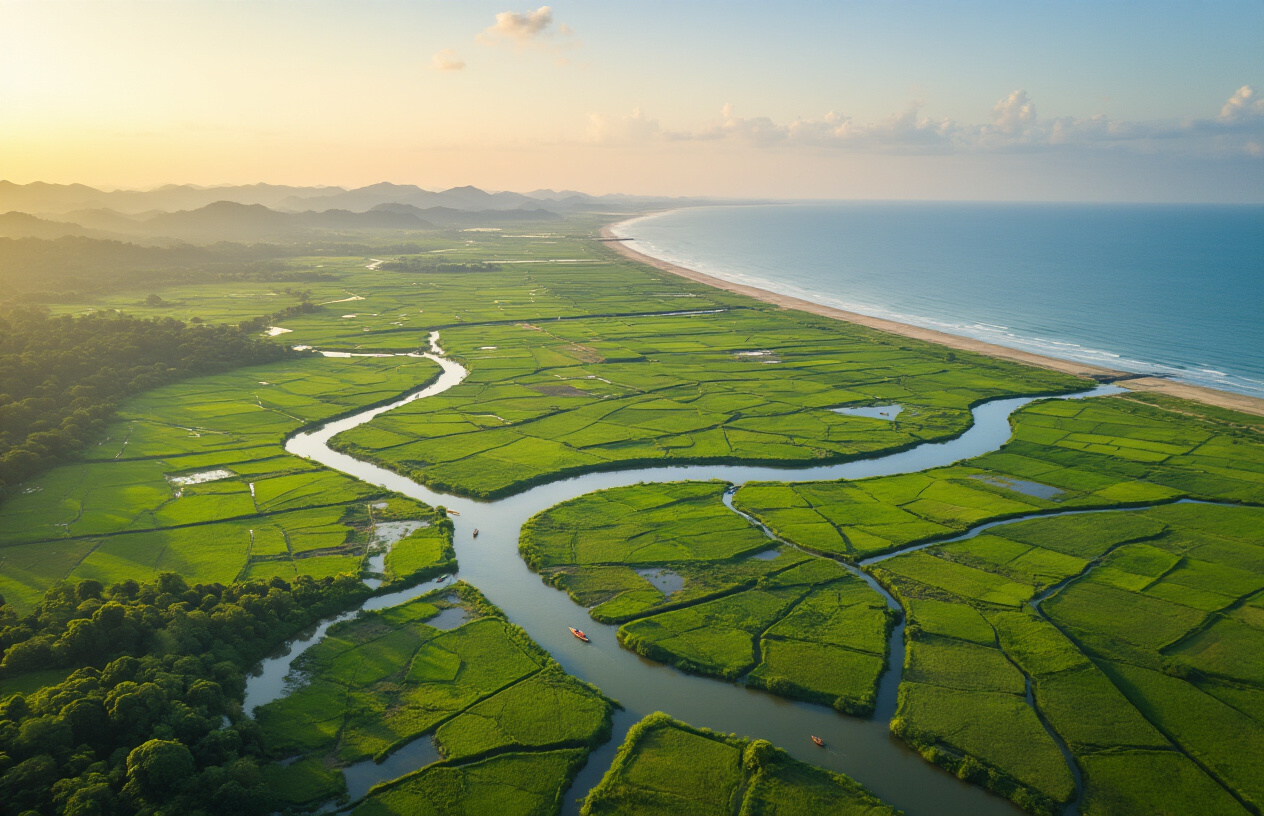
Bangladesh sits at the confluence of three mighty river systems that have carved its identity for millennia. The Ganges, Brahmaputra, and Meghna rivers create the world’s largest delta system, depositing nutrient-rich sediment across the country’s plains. These waterways don’t just flow through Bangladesh—they ARE Bangladesh in many ways.
The Padma River, which is what locals call the Ganges after it enters the country, brings water from the Himalayas and beyond. Meanwhile, the Jamuna (the Bangladeshi name for the Brahmaputra) carries glacial melt from Tibet through northeast India before joining this aquatic symphony. Together with hundreds of smaller rivers and tributaries, they create a network so intricate that Bangladesh has earned the nickname “land of rivers.”
During monsoon season, these rivers swell dramatically, sometimes merging into vast inland seas. This annual flooding cycle has shaped everything from agriculture to architecture, with communities adapting their lives around the rhythms of rising and falling waters. The rivers constantly shift their courses, creating new islands called chars while washing others away—a dynamic landscape that changes year by year.
Coastal Plains and Natural Resources
The southern coastline stretches for 580 kilometers along the Bay of Bengal, featuring the world’s longest natural sandy beach at Cox’s Bazar. This coastal region encompasses the Sundarbans, the largest mangrove forest on Earth, which serves as a natural barrier against cyclones and storm surges.
Bangladesh’s flat topography—with an average elevation of just 12 meters above sea level—makes it incredibly fertile but also vulnerable. The country’s highest point, Keokradong, reaches only 1,230 meters in the Chittagong Hill Tracts, making Bangladesh one of the flattest nations globally.
Natural gas reserves provide the backbone of the energy sector, with major fields in Sylhet and offshore locations. The country also possesses significant coal deposits in the northwest, though environmental concerns limit extraction. Rich alluvial soil across the delta supports intensive agriculture, while the coastal waters teem with fish that sustain both local diets and export markets.
Clay deposits support a thriving ceramics industry, while limestone quarries in the hills provide raw materials for cement production. The rivers themselves serve as highways for transportation, carrying goods and people across a country where waterways often prove more reliable than roads.
Climate Patterns and Seasonal Variations
Bangladesh experiences a tropical monsoon climate with three distinct seasons that dictate the rhythm of life. The hot summer months from March to June bring temperatures soaring above 40°C, with humidity that makes the air feel thick enough to swim through. This period tests endurance as people seek shade and wait for the life-giving monsoons.
The monsoon season arrives in June like a long-awaited guest, bringing torrential rains that can dump over 2,000 millimeters of water in just four months. While these rains replenish rivers and nourish crops, they also trigger floods that can submerge two-thirds of the country. The monsoons don’t just bring water—they bring hope for farmers and anxiety for those in flood-prone areas.
Winter months from November to February offer respite with pleasant temperatures between 10-20°C and clear skies. This dry season allows for harvest celebrations and construction projects, as roads become passable and outdoor work becomes bearable.
Cyclones pose the greatest climate threat, with the Bay of Bengal serving as a breeding ground for these devastating storms. Modern warning systems have dramatically reduced casualties compared to historical disasters, but economic damage remains substantial when these storms make landfall.
Strategic Position in South Asia
Bangladesh occupies one of the most strategically important positions in South Asia, serving as a natural bridge between the Indian subcontinent and Southeast Asia. The country shares its longest border with India—over 4,000 kilometers—making it crucial for regional connectivity and trade.
The Bay of Bengal coastline provides direct access to major shipping lanes connecting the Middle East, Europe, and East Asia. Chittagong port handles most international trade, while plans for deep-sea ports promise to enhance the country’s role as a regional hub. The location offers landlocked neighbors like Nepal and Bhutan potential access to maritime trade routes.
China has recognized Bangladesh’s strategic value, investing heavily in infrastructure projects under the Belt and Road Initiative. The proposed China-Myanmar-India-Bangladesh Economic Corridor would position Bangladesh as a key link in Asian trade networks.
Water politics play a major role in regional relationships, as upstream dam construction in India affects river flows crucial to Bangladesh’s agriculture and ecology. The shared Ganges and other transboundary rivers make water management a perpetual diplomatic priority.
This geographic position also creates security challenges, with the country serving as a corridor for both legal trade and smuggling operations. The long, porous borders require constant monitoring, while the coastal waters need protection from piracy and illegal fishing. Despite these challenges, Bangladesh’s location remains its greatest asset for future economic growth and regional integration.
National Symbols and Their Deep Meaning
Flag Design Reflecting Natural Beauty and Sacrifice
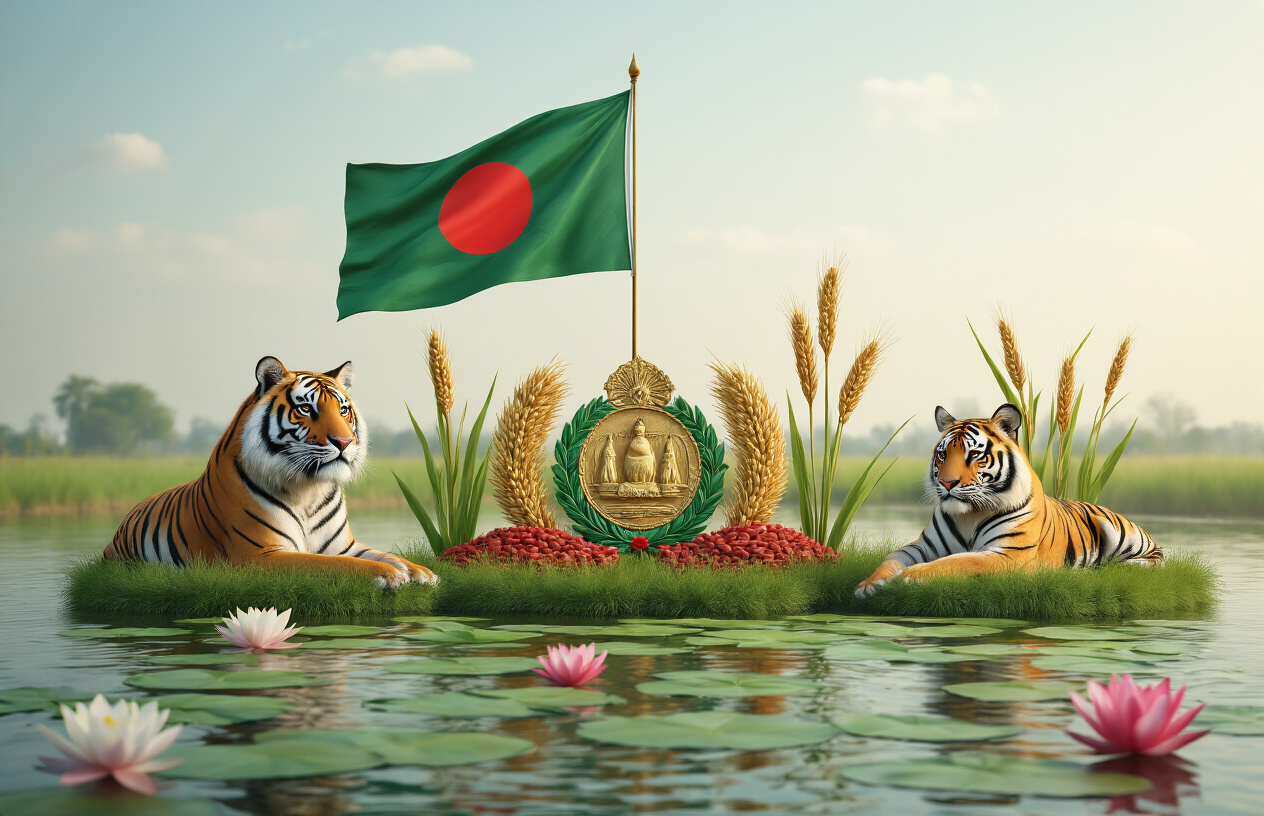
The green and red flag of Bangladesh tells a powerful story through its simple yet meaningful design. The deep green background represents the lush landscapes that define this riverine nation – from the fertile plains of the Bengal delta to the verdant hills of the southeast. This vibrant green symbolizes the country’s agricultural heritage, the hope of its people, and the youthful energy that drives the nation forward.
At the heart of the flag sits a red circle, positioned slightly off-center toward the hoist side to appear centered when the flag flies. This crimson disc carries profound meaning – it honors the blood shed by countless freedom fighters who sacrificed their lives during the Liberation War of 1971. The red also represents the rising sun of independence, marking Bangladesh’s emergence as a sovereign nation after centuries of foreign rule.
The flag’s proportions follow a precise 10:6 ratio, with the red circle’s diameter measuring one-fifth of the flag’s length. When hoisted, the flag becomes a daily reminder of the country’s natural bounty and the price paid for freedom. Every morning in schools across Bangladesh, students salute this symbol while reciting their pledge, connecting new generations to their nation’s struggles and achievements.
National Anthem and Its Cultural Significance
“Amar Shonar Bangla” (My Golden Bengal) serves as Bangladesh’s national anthem, written by Nobel laureate Rabindranath Tagore in 1905. The song originally protested the partition of Bengal by British colonial administrators, making it a symbol of Bengali unity that transcends political boundaries.
The anthem’s opening lines paint a picture of deep emotional connection to the motherland: “My Bengal of gold, I love you.” Tagore’s verses celebrate the natural beauty of Bengal – its rivers, fields, and seasonal changes that shape the rhythm of rural life. The song mentions the fragrance of mango blossoms, the melody of birds, and the gentle breeze that carries the scent of rice fields.
What makes this anthem particularly special is its musical structure, composed in Raag Alhaiya Bilawal, which creates a sense of longing and devotion. During national ceremonies, the anthem’s melody evokes strong emotional responses from citizens who see their landscape, culture, and identity reflected in its words.
The anthem plays a crucial role in maintaining cultural continuity. Bengali communities worldwide, whether in West Bengal, Bangladesh, or diaspora populations, recognize this song as their shared cultural heritage. In Bangladesh, it serves as a bridge between the nation’s literary golden age and its modern identity as an independent country.
Emblem Representing Core Values
The national emblem of Bangladesh combines traditional Bengali motifs with symbols of the modern nation-state. At the center sits a water lily (shapla) floating on water, surrounded by rice sheaves on both sides. This design reflects the country’s agrarian foundation and its relationship with water – the rivers, monsoons, and wetlands that define Bengali life.
The water lily holds special significance in Bengali culture, representing purity, beauty, and resilience. These flowers bloom in muddy waters yet emerge pristine and beautiful, symbolizing the Bengali people’s ability to thrive despite challenges. The four-star jute leaves above the lily represent the four foundational principles of the constitution: nationalism, socialism, democracy, and secularism.
Rice sheaves flanking the emblem emphasize agriculture’s central role in Bangladesh’s economy and culture. Rice is not just a crop but a cultural symbol – the Bengali greeting “have you eaten rice?” reflects how deeply this grain is embedded in daily life. The green and golden colors used throughout the emblem mirror those found in the flag, creating visual consistency across national symbols.
At the top of the emblem, three connected jute leaves represent the “golden fiber” that once dominated Bangladesh’s export economy. Below the water lily, a ribbon bears the national motto in Bengali: “Unity, Work, Progress.” These words encapsulate the nation’s aspirations – bringing together diverse communities, emphasizing the dignity of labor, and moving steadily toward development goals.
Demographic Dynamics and Social Structure
Population growth patterns and distribution
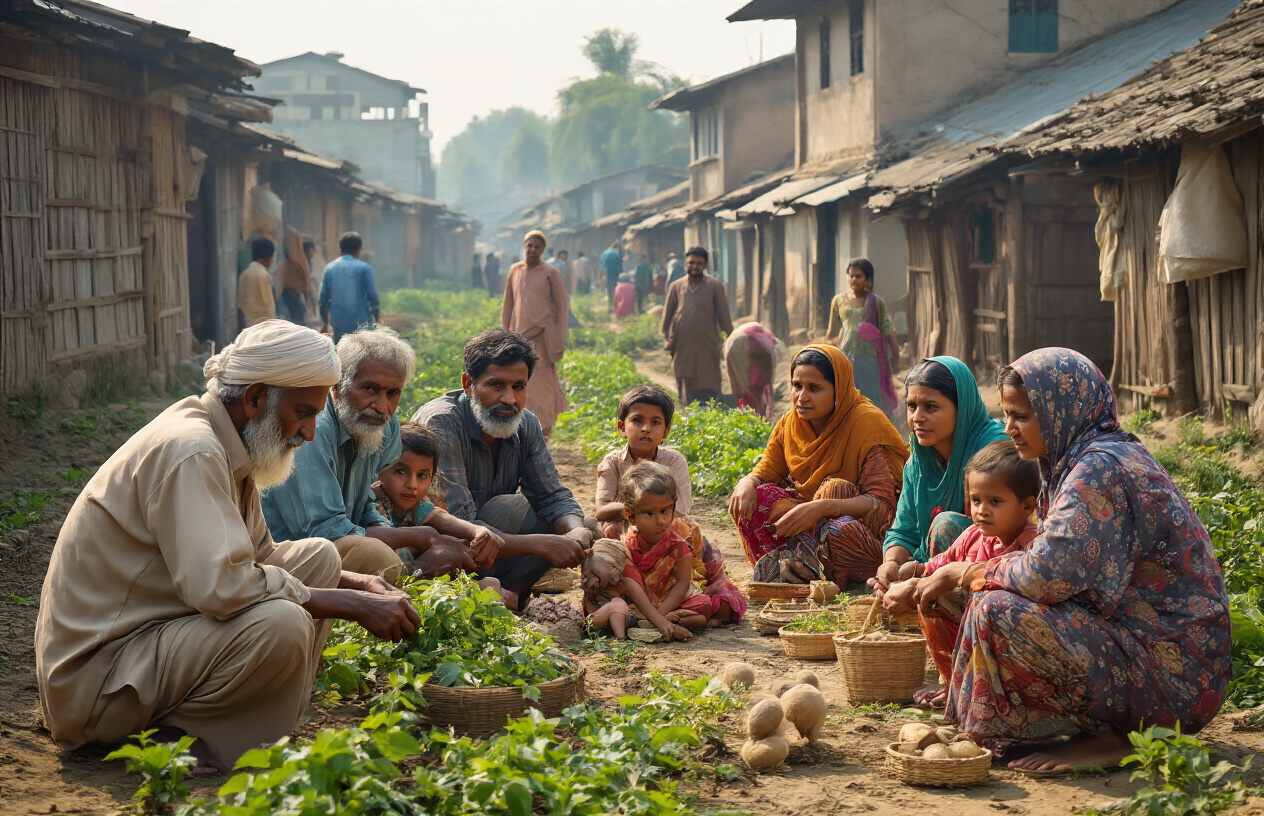
Bangladesh ranks as the eighth most populous country globally, with over 170 million people packed into an area roughly the size of Wisconsin. The population density reaches approximately 1,300 people per square kilometer, making it one of the most densely populated nations on Earth.
The country experiences a moderate population growth rate of about 1% annually, significantly down from the 2.5% rates seen in the 1980s. This decline reflects improved family planning programs, increased women’s education, and changing economic conditions. The demographic transition shows a young population structure, with around 27% under age 15, though this percentage has been steadily decreasing.
Population distribution remains heavily concentrated in fertile river valleys and delta regions. The Ganges-Brahmaputra-Meghna river system creates natural population corridors, with the highest densities found around Dhaka, Chittagong, and the central plains. Coastal areas like Cox’s Bazar and Sylhet division also support substantial populations, while the Chittagong Hill Tracts remain relatively sparsely populated due to difficult terrain.
Regional variations are striking. Dhaka division hosts nearly 20% of the national population despite covering only 8% of the land area. Rural areas in the northern districts of Rangpur and parts of Rajshahi show lower population densities, often due to seasonal flooding patterns and agricultural limitations.
Urban versus rural living trends
Bangladesh is experiencing rapid urbanization, with urban population growing at nearly 3% annually. Currently, about 39% of Bangladeshis live in urban areas, up from just 15% in 1990. This shift represents one of the fastest urbanization rates in South Asia.
Dhaka leads this urban explosion, growing from 2 million residents in 1980 to over 9 million today. Chittagong, Sylhet, and Rajshahi follow as major urban centers, each experiencing significant population influxes. The urban growth stems from rural-to-urban migration driven by employment opportunities in garment manufacturing, construction, and services.
Rural areas still house the majority, with 61% of the population living in villages and small towns. Traditional rural life centers around agriculture, with rice farming dominating the landscape. However, rural dynamics are changing rapidly. Many villages now host small-scale manufacturing units, and improved transportation connects remote areas to urban markets.
The urban-rural divide shows interesting patterns. Urban areas offer better healthcare, education, and employment opportunities, but also present challenges like overcrowding, pollution, and inadequate infrastructure. Rural areas maintain stronger community ties and lower living costs, but often lack modern amenities and economic opportunities that young people seek.
Migration patterns reveal seasonal movements, with rural workers temporarily moving to cities during agricultural off-seasons, then returning for planting and harvest periods.
Educational achievements and literacy rates
Bangladesh has made remarkable strides in education over the past three decades. The national literacy rate jumped from 35% in 1991 to approximately 75% today, representing one of the most impressive educational transformations in the developing world.
Primary education enrollment reaches nearly 100%, with girls actually showing higher enrollment rates than boys at the elementary level. This achievement stems from successful government policies including free primary education, school feeding programs, and stipends for girls’ education. The stipend program alone covers over 13 million students, significantly reducing dropout rates.
Secondary education presents more challenges, with completion rates around 60%. Gender gaps narrow at this level, though rural areas still lag behind urban centers. Vocational training programs are expanding rapidly, addressing skills shortages in manufacturing and technology sectors.
Higher education has expanded dramatically, with over 150 universities now operating across the country. Public universities like Dhaka University and Bangladesh University of Engineering and Technology maintain strong reputations, while private institutions grow rapidly to meet increasing demand.
Adult literacy programs target older generations, particularly women who missed educational opportunities in their youth. These programs show impressive results, with female literacy rates improving from 25% in 1991 to over 70% today.
Educational quality remains inconsistent, with urban private schools often providing superior instruction compared to rural public schools. English language skills are increasingly important for economic opportunities, creating additional educational priorities for families and policymakers.
Economic Transformation and Future Prospects
Textile Industry as the Backbone of Exports
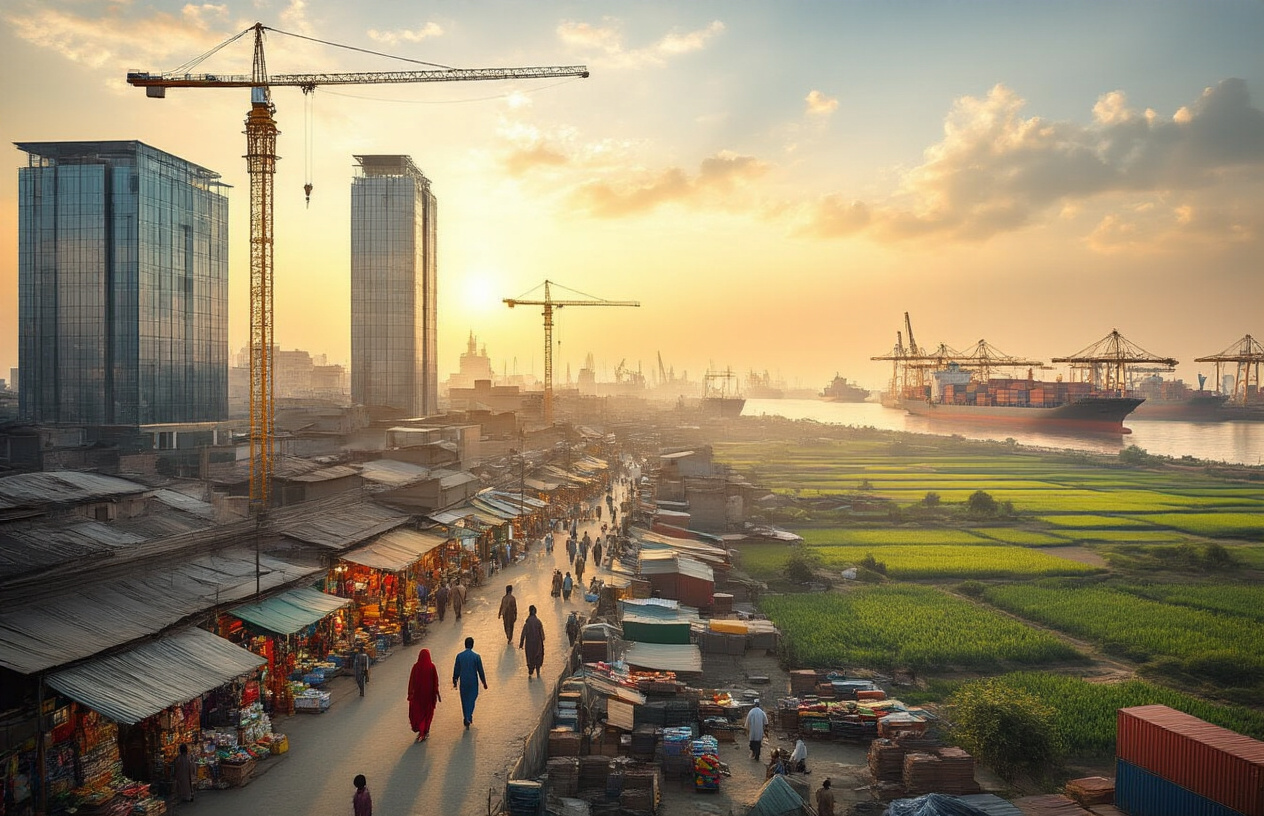
Bangladesh’s textile and garment industry generates over 80% of the country’s export earnings, making it the world’s second-largest apparel exporter after China. This massive sector employs approximately 4 million people, with women making up about 80% of the workforce. Major global brands like H&M, Zara, Walmart, and Primark rely heavily on Bangladeshi manufacturers for their supply chains.
The industry’s competitive advantage lies in low labor costs, with minimum wages significantly below those in competing countries like Vietnam or India. However, this advantage comes with challenges. The 2013 Rana Plaza collapse, which killed over 1,100 workers, forced the industry to address safety standards and working conditions. Since then, significant investments in factory safety, worker training, and compliance have transformed many facilities.
Recent shifts toward higher-value products show promise. Manufacturers are moving beyond basic t-shirts and jeans to produce technical textiles, knitwear, and specialized fabrics. The government’s “Made in Bangladesh” branding initiative aims to position the country as a reliable, ethical manufacturing hub rather than just a low-cost option.
Agricultural Sector and Food Security
Agriculture remains crucial for Bangladesh’s economy, employing about 40% of the population and contributing roughly 13% to GDP. Rice production dominates the sector, with Bangladesh ranking as the world’s fourth-largest rice producer. The country has achieved remarkable progress in food security, transitioning from chronic food shortages in the 1970s to near self-sufficiency today.
Small-scale farming characterizes the sector, with average farm sizes of just 0.6 hectares. Despite this limitation, productivity gains through high-yielding varieties, improved irrigation, and better farming techniques have boosted output substantially. Fish farming, particularly shrimp and freshwater fish, has become a major export earner and protein source.
Climate change poses serious threats to agricultural sustainability. Rising sea levels, increased salinity, and unpredictable weather patterns challenge traditional farming methods. The government and international partners are investing in climate-resilient crops, improved water management systems, and disaster preparedness programs to protect this vital sector.
Emerging Technology and Service Industries
Bangladesh’s technology sector is experiencing rapid growth, with the software and IT services industry expanding at over 20% annually. The country has positioned itself as an attractive destination for outsourcing services, particularly in software development, data entry, and customer support. Companies like Grameenphone, bKash, and Pathao have created successful local tech ecosystems.
The digital payment revolution has been particularly striking. bKash, the mobile financial service, processes over 5 million transactions daily, bringing financial services to previously unbanked populations. This fintech boom has attracted significant foreign investment and created thousands of jobs for young, educated Bangladeshis.
E-commerce platforms like Daraz and Chaldal are changing retail landscapes, especially in urban areas. The COVID-19 pandemic accelerated digital adoption, with online shopping, digital education, and telemedicine gaining widespread acceptance. Government initiatives like “Digital Bangladesh” aim to create a knowledge-based economy by 2041.
Trade Relationships and Foreign Investment Opportunities
Bangladesh maintains diverse trading relationships, with the European Union and United States as primary export destinations for textiles. China has become the largest source of imports, providing machinery, raw materials, and consumer goods. India remains an important regional trading partner, though the trade balance heavily favors India.
Foreign direct investment (FDI) has grown steadily, reaching over $3 billion annually. Key investment areas include energy, telecommunications, textiles, and infrastructure. Japanese companies have shown particular interest in manufacturing and infrastructure projects, while Chinese investments focus on power generation and transportation.
The government has established several economic zones and export processing zones to attract international manufacturers. These areas offer streamlined regulations, tax incentives, and modern infrastructure. Recent policy reforms have simplified business registration processes and improved the overall investment climate, though bureaucratic challenges persist.
Special economic zones like the Bangladesh Economic Zones Authority (BEZA) projects aim to create industrial clusters that can compete globally. These developments, combined with improved connectivity through projects like the Padma Bridge, are opening new opportunities for both domestic and foreign investors looking to tap into Bangladesh’s growing consumer market and strategic location between India and Southeast Asia.
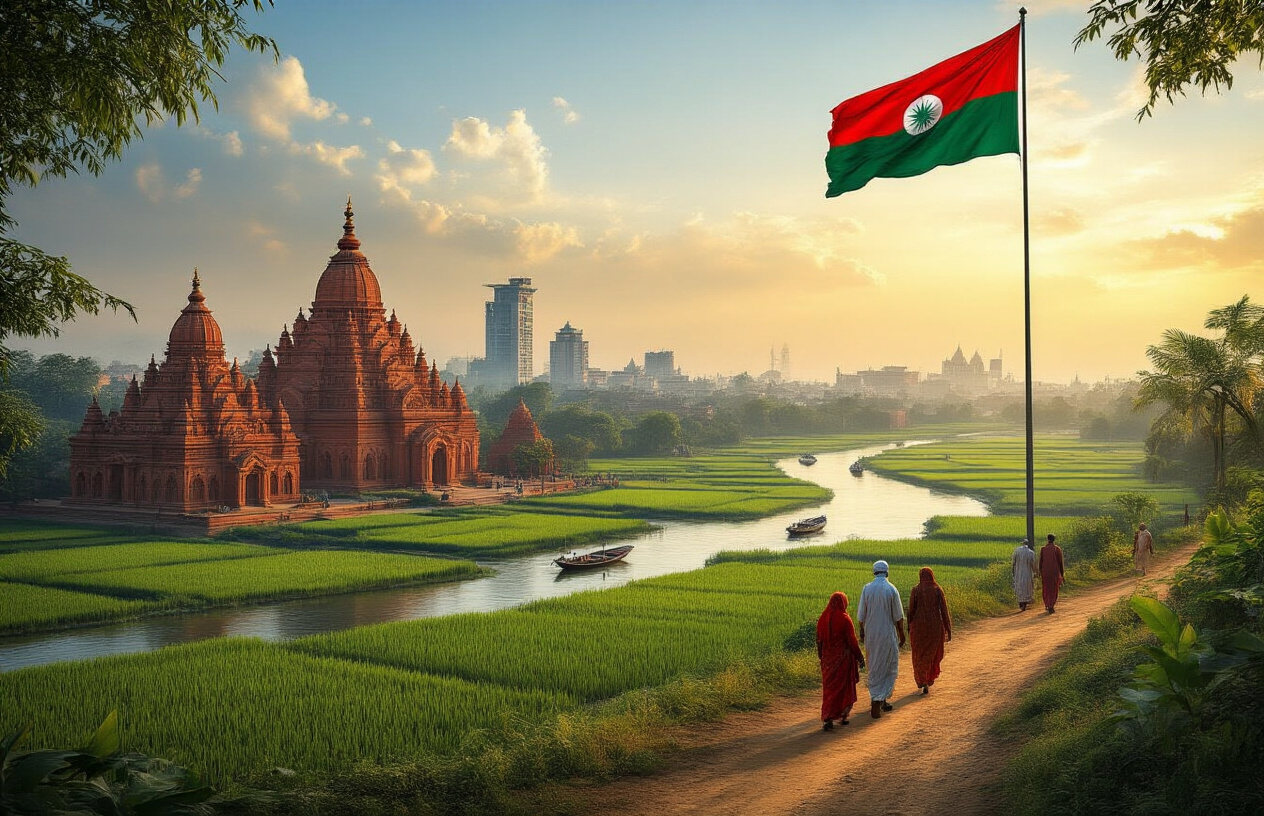
Bangladesh stands as a testament to resilience and cultural richness, carrying forward thousands of years of history from ancient Bengal through colonial struggles to modern independence. The nation’s vibrant traditions, from its diverse festivals to its renowned textile heritage, continue to thrive alongside rapid urbanization centered around Dhaka, the dynamic capital that pulses with millions of lives and endless possibilities.
The country’s strategic location at the crossroads of South and Southeast Asia, combined with its young population and growing economy, positions Bangladesh as an emerging force in the region. While challenges remain, the spirit that drove the fight for independence continues to fuel progress across industries, from ready-made garments to technology. For anyone seeking to understand this remarkable nation, look beyond the statistics to discover a land where ancient wisdom meets modern ambition, and where the green and red flag represents not just national pride, but the enduring hope of 165 million people building their future together.

Author: Nasir Uddin
Nasir Uddin is a dedicated writer and researcher at BanglaLook.com, where he explores topics related to education, Bangladeshi culture, lifestyle, and travel. With a strong passion for learning and storytelling, he blends personal observation with well-researched insights to help readers better understand Bangladesh and the world around them.
