The United States stands as one of the world’s most influential nations, shaping global politics, culture, and economics for centuries. This comprehensive guide is perfect for students, travelers, researchers, and anyone curious about American society and its place in the world.
From its revolutionary beginnings to becoming a modern superpower, the USA offers a fascinating blend of history, diversity, and innovation. We’ll explore the nation’s historical foundation and how it developed into today’s democratic republic. You’ll also discover America’s rich cultural heritage, from Native American traditions to the melting pot of immigrant influences that define modern American identity.
Finally, we’ll examine Washington D.C. as the political heart of the nation and break down the country’s economic powerhouse status that drives global markets. Get ready to dive deep into what makes America unique on the world stage.
Historical Foundation and Development
Colonial Era and Path to Independence
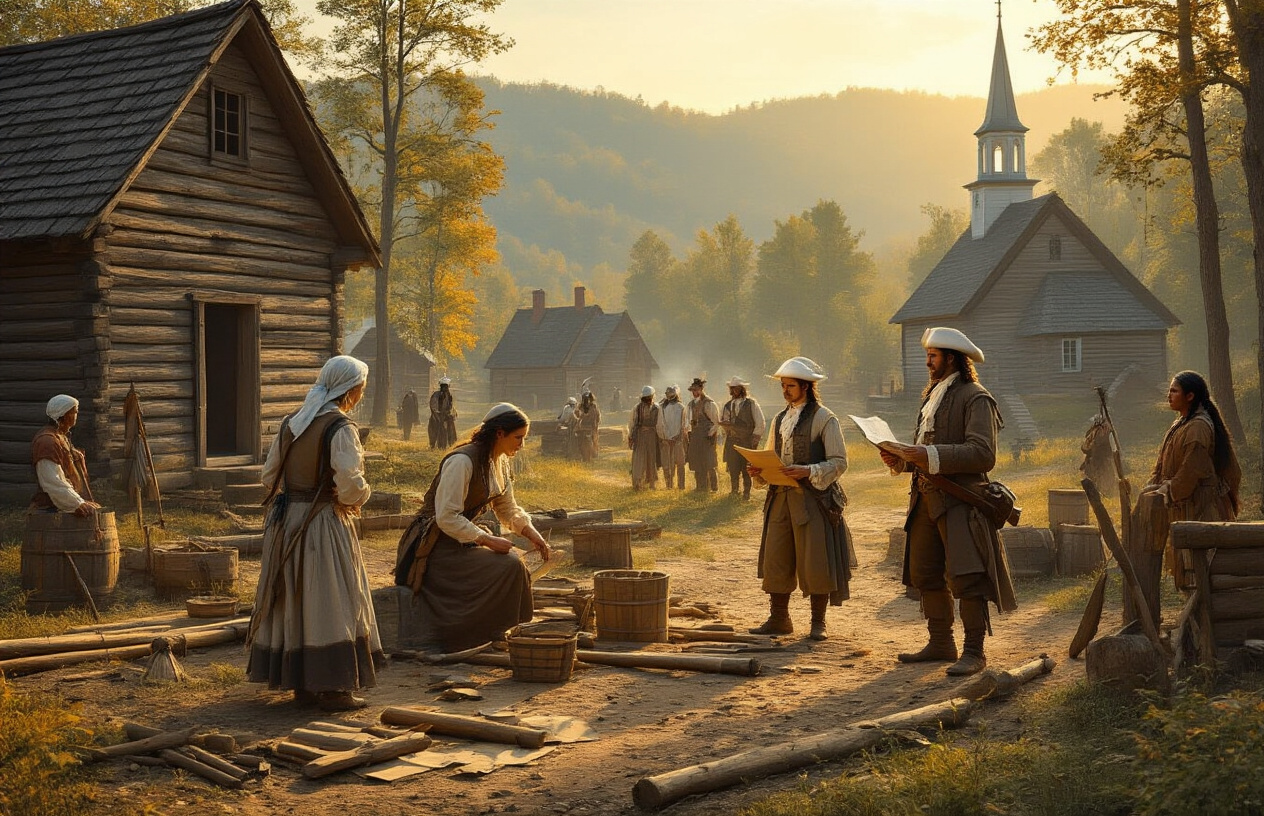
The story of America begins with thirteen British colonies scattered along the Atlantic coast, each developing its own character while remaining tied to the Crown. Virginia’s Jamestown settlement in 1607 marked the beginning of permanent English colonization, followed by the Plymouth Colony in 1620 when Pilgrims sought religious freedom in the New World.
These early settlements faced incredible hardships – harsh winters, disease, and conflicts with Native American tribes. Yet they persevered, establishing tobacco plantations in the South, fishing and shipping industries in New England, and diverse farming communities in the Middle Colonies. By the 1750s, the colonies had grown into thriving communities with their own local governments, traditions, and identities.
The relationship with Britain began souring after the French and Indian War (1754-1763). Britain imposed new taxes to pay war debts, including the Sugar Act, Stamp Act, and Tea Act. Colonists protested with the rallying cry “No taxation without representation,” since they had no voice in Parliament. The Boston Tea Party in 1773 and subsequent Intolerable Acts pushed tensions to the breaking point.
Armed conflict erupted at Lexington and Concord in April 1775. The Second Continental Congress convened, appointing George Washington as commander-in-chief of the Continental Army. On July 4, 1776, delegates adopted the Declaration of Independence, formally breaking ties with Britain and establishing the philosophical foundation of individual liberty and self-governance that would define the new nation.
Civil War and National Reunification
The young nation faced its greatest existential crisis just decades after independence when tensions over slavery tore the country apart. The issue had been festering since the Constitutional Convention, with compromises like the Three-Fifths Compromise temporarily papering over fundamental disagreements about human bondage and states’ rights.
Regional differences intensified as the country expanded westward. The Missouri Compromise of 1820 and Compromise of 1850 attempted to maintain balance between free and slave states, but each new territory’s status sparked fierce debates. The Kansas-Nebraska Act of 1854 led to “Bleeding Kansas” as pro-slavery and anti-slavery settlers fought for control.
Abraham Lincoln’s election in 1860 triggered secession by eleven Southern states who formed the Confederate States of America. The war began at Fort Sumter in April 1861, initially fought over preserving the Union rather than ending slavery. Lincoln’s Emancipation Proclamation in 1863 transformed the conflict into a moral crusade against human bondage.
The Civil War raged for four brutal years, claiming over 600,000 lives. Major battles like Gettysburg, Antietam, and Bull Run became legendary. The Union’s industrial advantages and naval blockade gradually wore down Confederate resistance. Lee’s surrender at Appomattox Court House in April 1865 ended the war, but Lincoln’s assassination days later cast a shadow over reunion efforts.
Reconstruction (1865-1877) attempted to rebuild the South and integrate freed slaves into society. The 13th, 14th, and 15th Amendments abolished slavery, granted citizenship to former slaves, and protected voting rights. However, the end of Reconstruction allowed Southern states to impose Jim Crow laws, establishing a system of legal segregation that would persist for nearly a century.
Industrial Revolution and Westward Expansion
The late 1800s transformed America from an agricultural society into an industrial powerhouse. The completion of the Transcontinental Railroad in 1869 connected the Atlantic and Pacific coasts, revolutionizing transportation and commerce. Railroads became the backbone of economic growth, facilitating the movement of goods, people, and ideas across vast distances.
Massive waves of immigration fueled industrial growth as millions of Europeans sought better opportunities. Cities like New York, Chicago, and Pittsburgh became manufacturing centers, with steel mills, textile factories, and meatpacking plants employing hundreds of thousands of workers. Industrial barons like Andrew Carnegie, John D. Rockefeller, and J.P. Morgan accumulated vast fortunes while creating monopolies in steel, oil, and banking.
Westward expansion accelerated after the Civil War as settlers moved beyond the Mississippi River seeking land, gold, and new beginnings. The Homestead Act of 1862 offered free land to families willing to farm it, drawing millions westward. The discovery of gold and silver in California, Colorado, and Nevada created boom towns and attracted fortune-seekers from around the world.
This expansion came at enormous cost to Native American tribes, who were systematically displaced from their ancestral lands. The Indian Wars, including battles at Little Bighorn and Wounded Knee, marked the tragic end of Native American resistance. The completion of westward expansion was symbolically marked by the closing of the frontier in 1890, as declared by the Census Bureau.
World Wars and Global Leadership
World War I marked America’s emergence as a global power, though the country initially maintained neutrality while supplying the Allies with weapons and materials. Germany’s unrestricted submarine warfare and the Zimmermann Telegram finally drew America into the conflict in 1917. American troops helped tip the balance, contributing to Germany’s defeat in 1918.
President Woodrow Wilson’s Fourteen Points outlined his vision for postwar peace, including the League of Nations. However, isolationist sentiment led the Senate to reject League membership, and America retreated from international engagement during the 1920s and 1930s. The Great Depression focused attention inward as unemployment reached 25% and banks collapsed nationwide.
World War II again thrust America onto the world stage after Japan’s attack on Pearl Harbor on December 7, 1941. The country mobilized its entire economy for war production, with women entering the workforce in unprecedented numbers. American forces fought on multiple fronts – in Europe, the Pacific, and North Africa – while serving as the “Arsenal of Democracy” for Allied nations.
Victory in 1945 left America as the world’s dominant military and economic power. The atomic bombings of Hiroshima and Nagasaki demonstrated American technological supremacy while ending the war. The Bretton Woods system established the dollar as the global reserve currency, while new international institutions like the United Nations and NATO reflected America’s commitment to global leadership. The Cold War with the Soviet Union would define American foreign policy for the next half-century, cementing the country’s role as leader of the free world.
Rich Cultural Heritage and Diversity

Native American Traditions and Influence
Before European colonization, hundreds of distinct Native American tribes flourished across the continent, each with unique languages, customs, and spiritual practices. These indigenous peoples developed sophisticated agricultural systems, governance structures, and artistic traditions that continue to shape American culture today.
Native American contributions permeate modern American life in ways many people don’t realize. The democratic principles embedded in the Iroquois Confederacy influenced the founding fathers when crafting the Constitution. Agricultural techniques developed by indigenous peoples gave the world crops like corn, potatoes, tomatoes, and squash – staples that revolutionized global nutrition.
Contemporary American culture celebrates Native American heritage through art, literature, and environmental philosophies that emphasize harmony with nature. Traditional crafts like pottery, weaving, and jewelry-making have gained widespread appreciation, while Native American storytelling traditions have enriched American literature and film.
Today, over 570 federally recognized tribes maintain their cultural identities while contributing to the broader American tapestry. Powwows, museums, and cultural centers across the country showcase the vibrant traditions that survive and thrive despite centuries of challenges.
Immigration Waves and Cultural Melting Pot
America’s identity as a nation of immigrants has created an unparalleled cultural mosaic. Each wave of immigration brought distinct traditions, foods, languages, and customs that blended together to create something uniquely American.
The Irish brought their music and storytelling traditions, which influenced American folk music and literature. Italian immigrants transformed American cuisine, making pizza and pasta household staples. German settlers contributed brewing techniques and classical music traditions. Jewish immigrants from Eastern Europe brought theatrical traditions that helped shape Broadway and Hollywood.
More recent immigration waves have added new dimensions to American culture. Latino communities have made salsa the most popular condiment in America and brought vibrant festivals like Cinco de Mayo into mainstream celebration. Asian immigrants have introduced martial arts, meditation practices, and cuisines that have become deeply embedded in American life.
This constant cultural exchange creates regional variations across the country. New York’s Little Italy differs from San Francisco’s Chinatown, while Miami’s Cuban influence creates a distinct cultural flavor from Los Angeles’s Mexican heritage. Each community maintains its heritage while adapting to American life, creating new fusion traditions.
Arts, Entertainment, and Media Dominance
American creativity has conquered global entertainment through innovations in music, film, television, and digital media. Hollywood established itself as the world’s entertainment capital, exporting American stories and values worldwide through blockbuster movies and television shows that define popular culture.
Music genres born in America – jazz, blues, country, rock and roll, and hip-hop – have become universal languages of expression. From Louis Armstrong’s trumpet to Elvis Presley’s rock revolution to Beyoncé’s pop dominance, American artists consistently set global trends and influence musical evolution worldwide.
Broadway theater remains the gold standard for live entertainment, while American television has evolved from simple sitcoms to complex, cinematic productions that rival movies in quality and scope. Streaming platforms have revolutionized how content gets consumed globally, with American companies leading this digital transformation.
The rise of social media and digital platforms has amplified American cultural influence. YouTube, TikTok trends often originate in American cities before spreading worldwide, while American influencers and content creators shape global conversations about fashion, lifestyle, and social issues.
American sports entertainment, particularly the Super Bowl and NBA Finals, draws massive global audiences, making these events cultural phenomena that transcend athletics. The integration of entertainment, advertising, and sports creates spectacular productions that influence how other countries approach major sporting events.
Washington D.C. – The Nation’s Capital
Government Center and Political Hub
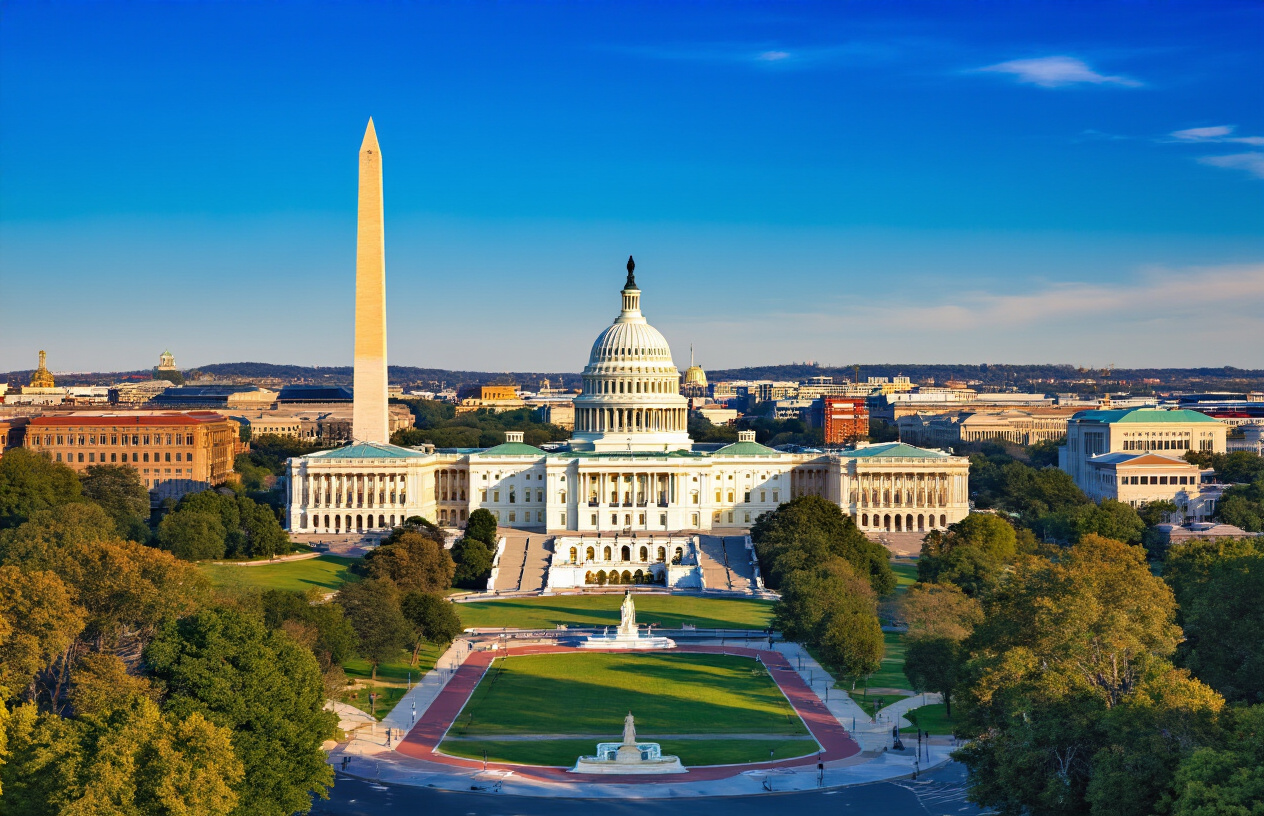
Washington D.C. serves as the beating heart of American democracy, housing all three branches of the federal government within its 68.3 square miles. The White House stands as the executive residence and principal workplace of the President, welcoming world leaders and hosting state dinners that shape international relations. Just down Pennsylvania Avenue, the U.S. Capitol building dominates the skyline with its iconic dome, providing the meeting place for both chambers of Congress where laws are debated and passed.
The Supreme Court building completes the governmental triangle, where nine justices interpret the Constitution and make decisions that impact millions of Americans. Beyond these primary institutions, the city buzzes with activity from federal agencies, embassies, and lobbying organizations that influence policy decisions daily. The Pentagon, though technically located across the Potomac River in Virginia, represents the military command center that coordinates defense operations worldwide.
Political power brokers, journalists, and diplomats from around the globe converge in D.C.’s restaurants, hotels, and meeting rooms, making deals and sharing information that shapes both domestic and foreign policy. The city’s unique federal district status means it operates under congressional oversight rather than state governance, creating a distinctive political environment where local and national interests often intersect.
Historic Landmarks and Monuments
The National Mall stretches like a green carpet between the Capitol and the Lincoln Memorial, dotted with monuments that tell America’s story through marble and bronze. The Washington Monument pierces the sky at 555 feet, serving as a focal point for the city’s layout and a tribute to the nation’s first president. The Lincoln Memorial draws millions of visitors who climb its steps to read the Gettysburg Address carved into its walls and stand where Martin Luther King Jr. delivered his “I Have a Dream” speech.
The Vietnam Veterans Memorial creates a powerful emotional experience with its black granite wall listing over 58,000 names of those who died in the conflict. The World War II Memorial honors the 16 million Americans who served, featuring fountains and pillars representing each state and territory. The Korean War Veterans Memorial depicts soldiers in action, while the newer Martin Luther King Jr. Memorial celebrates the civil rights leader with a striking stone sculpture.
Arlington National Cemetery, visible across the Potomac, houses the Tomb of the Unknown Soldier and serves as the final resting place for presidents, Supreme Court justices, and countless servicemen and women. The Jefferson Memorial’s rotunda design pays homage to the third president’s architectural interests, while the Franklin Delano Roosevelt Memorial tells the story of the New Deal era through four outdoor galleries representing his terms in office.
Museums and Cultural Institutions
The Smithsonian Institution transforms D.C. into the world’s largest museum complex, offering free admission to 17 museums and galleries that preserve human knowledge and achievement. The National Museum of Natural History captivates visitors with its dinosaur exhibits, Hope Diamond, and Hall of Human Origins, while the National Air and Space Museum showcases humanity’s conquest of flight and space exploration through actual aircraft and spacecraft.
The National Museum of American History houses the original Star-Spangled Banner, First Ladies’ gowns, and Dorothy’s ruby slippers from “The Wizard of Oz,” creating connections between pop culture and historical significance. The National Gallery of Art splits into East and West buildings, displaying masterpieces from Leonardo da Vinci to Jackson Pollock, while the Hirshhorn Museum focuses on contemporary and modern art.
The Holocaust Memorial Museum provides a sobering educational experience about one of history’s darkest chapters, using artifacts, testimonies, and interactive exhibits to ensure “never again” remains more than just words. The National Museum of African American History and Culture, the Smithsonian’s newest addition, traces the African American experience from slavery through the present day, featuring everything from a slave cabin to Chuck Berry’s Cadillac.
The Kennedy Center serves as the nation’s cultural hub, hosting world-class performances in opera, ballet, theater, and music, while the Library of Congress preserves the world’s largest collection of books, recordings, photographs, and manuscripts, including Thomas Jefferson’s personal library.
Geographic Features and Regional Diversity

Continental United States Boundaries
The continental United States spans an impressive 2,800 miles from coast to coast, stretching from the Atlantic Ocean in the east to the Pacific Ocean in the west. This massive landmass covers approximately 3.1 million square miles, making it the third-largest country in the world by total area. The northern border with Canada extends for 5,525 miles, while the southern border with Mexico runs 1,954 miles through diverse terrain including deserts, rivers, and mountainous regions.
The country’s eastern coastline features everything from rocky cliffs in Maine to sandy beaches in Florida, while the western coast showcases dramatic landscapes from Washington’s rugged shores to California’s iconic Pacific beaches. The geographic center of the continental United States sits in Lebanon, Kansas, representing the perfect balance point of this vast nation.
Alaska and Hawaii Territories
Alaska, purchased from Russia in 1867, adds another 663,300 square miles to America’s total area. This northern frontier shares borders with Canada and features a coastline along both the Pacific and Arctic oceans. The state experiences extreme temperature variations and includes North America’s highest peak, Denali, standing at 20,310 feet above sea level.
Hawaii, consisting of 137 islands scattered across the central Pacific Ocean, became the 50th state in 1959. Located approximately 2,400 miles southwest of California, this tropical archipelago spans 1,500 miles of ocean. The eight main islands feature volcanic landscapes, pristine beaches, and unique ecosystems found nowhere else in America.
Major Rivers, Mountains, and Climate Zones
America’s river systems create natural highways that shaped the nation’s development. The Mississippi River, stretching 2,340 miles, serves as the country’s backbone, draining water from 31 states. The Missouri River extends even longer at 2,540 miles, while the Colorado River carved the Grand Canyon through millions of years of erosion. The Great Lakes system holds 21% of the world’s fresh surface water.
Mountain ranges define regional boundaries and influence weather patterns. The Appalachian Mountains run along the eastern seaboard, while the Rocky Mountains create a dramatic spine through the western states. The Sierra Nevada and Cascade ranges dominate the far west, with peaks exceeding 14,000 feet.
Climate zones vary dramatically across the continent:
- Arctic climate in northern Alaska
- Temperate conditions across the northern states
- Subtropical weather in the Southeast
- Arid desert climates in the Southwest
- Mediterranean conditions along California’s coast
- Tropical climate in southern Florida and Hawaii
State Divisions and Regional Characteristics
The United States divides into distinct regions, each with unique geographic and cultural characteristics:
Northeast Region encompasses nine states known for dense populations, historical significance, and four distinct seasons. Rolling hills, deciduous forests, and rocky coastlines characterize this area’s landscape.
Southeast Region features warm, humid climates with extensive coastal plains, swamplands, and barrier islands. The Appalachian foothills transition into fertile agricultural land ideal for cotton, tobacco, and rice production.
Midwest Region spans the Great Plains with fertile prairie soils perfect for corn and wheat farming. This “America’s Heartland” experiences continental climate patterns with hot summers and cold winters.
Southwest Region showcases desert landscapes, mesas, and canyons with minimal rainfall and extreme temperature variations between day and night. The Rio Grande creates a natural border with Mexico.
West Region includes everything from coastal redwood forests to interior mountain ranges and high desert plateaus. Volcanic activity, earthquakes, and diverse microclimates define this geologically active area.
Each region developed distinct agricultural practices, industries, and cultural traditions based on their geographic advantages and challenges.
National Symbols and Flag Significance
Stars and Stripes Design Evolution
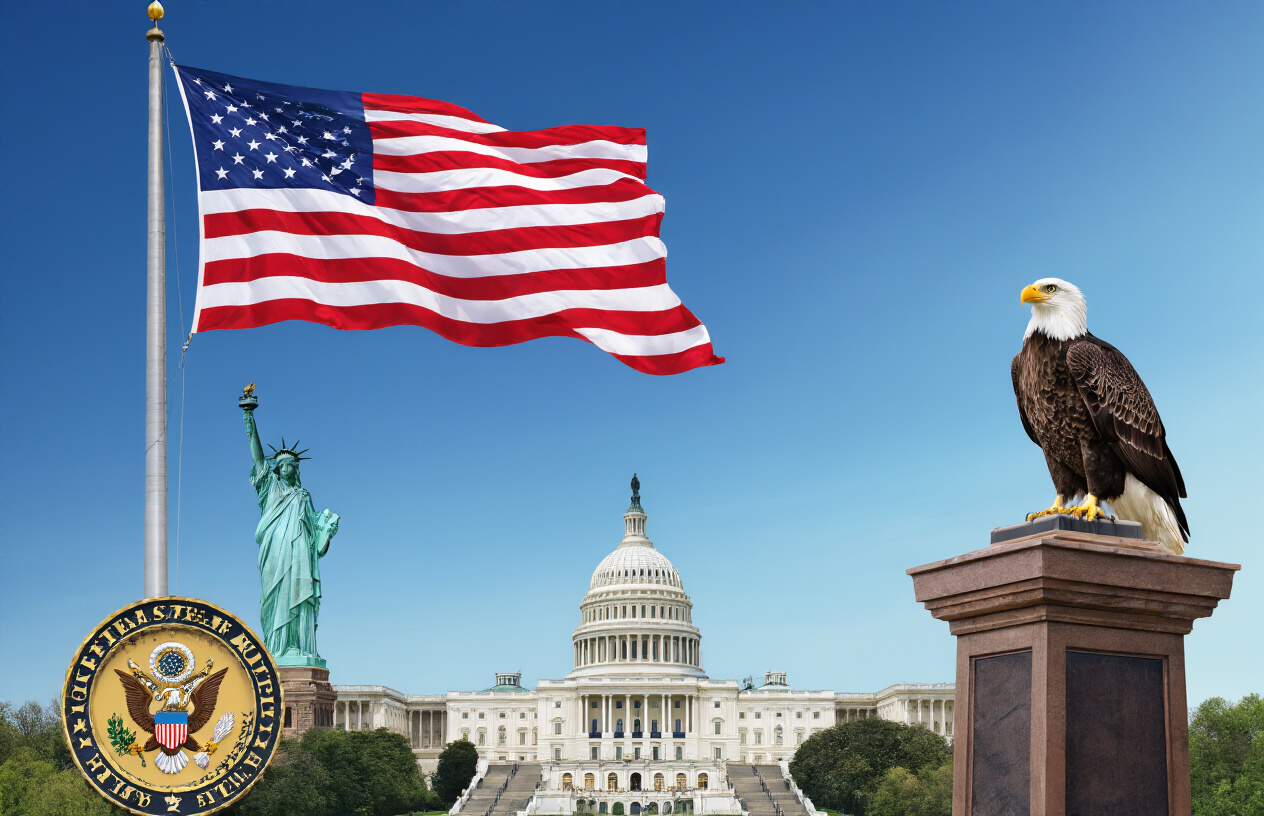
The American flag has transformed significantly since its first official adoption in 1777. The original design featured thirteen stars arranged in a circle on a blue canton, representing the founding colonies, alongside thirteen alternating red and white stripes. What makes this evolution fascinating is how the flag grew organically with the nation itself.
Each new state brought changes to the star arrangement. By 1818, Congress established that only stars would be added for new states, keeping the stripes at thirteen to honor the original colonies. The star patterns varied wildly during the 19th century – some flags displayed stars in rows, others in circles, and creative arrangements like the Great Star pattern where smaller stars formed one large star.
The current 50-star design emerged in 1960 with Alaska and Hawaii’s statehood. High school student Robert Heft actually designed this arrangement as a class project, receiving a B- grade initially. His teacher changed it to an A after President Eisenhower selected the design from over 1,500 submissions.
The red, white, and blue colors carry deep symbolism: red represents hardiness and valor, white signifies purity and innocence, and blue embodies vigilance, perseverance, and justice. The flag’s proportions follow specific guidelines – the width-to-length ratio of 10:19, with the blue canton occupying seven stripes in height.
Flag Protocol and Respect Traditions
American flag etiquette follows detailed protocols outlined in the U.S. Flag Code, established in 1942. These guidelines govern everything from display methods to retirement ceremonies, reflecting the deep respect Americans hold for their national symbol.
The flag should fly from sunrise to sunset, though it can remain up 24/7 if properly illuminated. During inclement weather, flags must come down unless they’re all-weather versions. When displayed with other flags, the American flag takes precedence – it flies at the same height as other national flags but above state and organizational flags.
Proper folding creates a triangle showing only the blue field with stars, performed with precise movements during military and veteran ceremonies. The flag should never touch the ground, be worn as clothing, or used for advertising purposes. When retiring a worn flag, the preferred method involves respectful burning during a dignified ceremony, often conducted by veterans’ organizations or scout groups.
Half-staff protocols require presidential or gubernatorial orders, with specific timeframes for different occasions. Memorial Day sees flags at half-staff until noon, then raised to full height. Flag-draped coffins follow strict military protocols, with the union (blue field) positioned over the deceased’s left shoulder.
National Anthem and Pledge of Allegiance
“The Star-Spangled Banner” emerged from Francis Scott Key’s 1814 poem after witnessing Fort McHenry’s bombardment during the War of 1812. The sight of the flag still flying after the British attack inspired verses that capture American resilience and determination. Congress didn’t officially adopt it as the national anthem until 1931, though it had been used ceremonially for decades.
The anthem’s challenging vocal range – spanning an octave and a half – makes it notoriously difficult to perform. Professional singers often struggle with the high notes, leading to memorable performances both triumphant and cringe-worthy at sporting events and ceremonies.
The Pledge of Allegiance has its own complex history, written by Francis Bellamy in 1892 for a magazine’s patriotic school program. Originally, students performed the Bellamy salute – extending their right arm toward the flag – until World War II associations with Nazi Germany prompted the switch to hand-over-heart positioning.
The phrase “under God” wasn’t part of the original pledge. Congress added these words in 1954 during the Cold War, distinguishing American values from atheistic communism. This addition remains controversial, with ongoing legal challenges regarding its use in public schools.
Both symbols serve as unifying forces during national events, sporting competitions, and civic ceremonies, creating shared experiences that transcend political and cultural differences across America’s diverse population.
Demographics and Population Trends

Current Population Statistics and Growth
The United States is home to approximately 335 million people as of 2024, making it the third most populous country globally after China and India. The nation experiences steady population growth, though at a slower pace than previous decades. Annual growth rates hover around 0.4%, driven primarily by immigration and natural increase.
This population expansion creates both opportunities and challenges across different sectors. Healthcare systems adapt to serve more people, while housing markets face increased demand. Educational institutions adjust enrollment capacities, and transportation networks require ongoing expansion to accommodate growing communities.
Several states lead population growth trends, with Texas, Florida, and California experiencing the most significant increases. These states attract residents through job opportunities, favorable climates, and lower living costs in certain regions. Meanwhile, some Rust Belt states see population decline as residents migrate toward economic opportunities elsewhere.
Birth rates have declined over recent decades, falling below replacement levels in many areas. Immigration plays a crucial role in maintaining population growth, with approximately one million new legal immigrants arriving annually. This combination of domestic births and international migration shapes America’s demographic landscape.
Ethnic and Racial Composition
America’s ethnic and racial diversity represents one of its defining characteristics. The population breakdown reflects centuries of immigration and cultural mixing, creating a complex mosaic of backgrounds and identities.
| Racial/Ethnic Group | Percentage of Population |
|---|---|
| White (Non-Hispanic) | 57.8% |
| Hispanic/Latino | 18.7% |
| Black/African American | 12.1% |
| Asian | 6.0% |
| Mixed Race | 2.9% |
| Native American | 0.7% |
| Pacific Islander | 0.2% |
Hispanic and Latino populations show the fastest growth rates, projected to reach 25% of the total population by 2050. This growth stems from both immigration and higher birth rates within these communities. States like California, Texas, and Florida have particularly large Hispanic populations.
Asian Americans represent the fastest-growing racial group proportionally, with populations concentrated in California, New York, and major metropolitan areas. This group includes diverse subpopulations from East Asia, Southeast Asia, and South Asia, each bringing distinct cultural traditions and languages.
The concept of mixed-race identity gains prominence as more Americans identify with multiple racial backgrounds. Census data shows increasing numbers of people selecting multiple racial categories, reflecting the nation’s ongoing demographic evolution.
Urban vs Rural Distribution
Roughly 83% of Americans live in urban areas, continuing a trend toward urbanization that began during the Industrial Revolution. This urban concentration creates dense population centers while leaving vast rural areas sparsely populated.
Major metropolitan areas house significant portions of the population:
- New York City metropolitan area: 20.1 million
- Los Angeles metropolitan area: 13.2 million
- Chicago metropolitan area: 9.6 million
- Dallas-Fort Worth metropolitan area: 7.6 million
- Houston metropolitan area: 7.1 million
Rural areas face unique challenges including population decline, aging residents, and limited economic opportunities. Young people often migrate to cities for education and career prospects, leaving rural communities with older populations and fewer working-age adults.
The COVID-19 pandemic temporarily shifted some migration patterns as remote work allowed people to move away from expensive urban centers. Some smaller cities and rural areas experienced population increases as people sought more space and lower living costs while maintaining urban jobs remotely.
Suburban areas continue growing as they offer compromises between urban amenities and rural space. These communities often provide good schools, shopping centers, and recreational facilities while maintaining lower population densities than city centers.
Age Demographics and Life Expectancy
America’s population shows clear aging trends that impact everything from healthcare to Social Security planning. The median age reaches 38.8 years, reflecting longer lifespans and declining birth rates.
Age Distribution:
- Under 18 years: 22.2%
- 18-64 years: 61.6%
- 65 years and older: 16.2%
The 65-and-older population grows rapidly as Baby Boomers enter retirement age. This demographic shift creates what experts call the “silver tsunami” – a wave of aging Americans requiring increased healthcare services, retirement benefits, and age-appropriate housing.
Life expectancy averages 78.9 years, though this varies significantly by gender, race, and geographic location. Women typically live longer than men, and certain ethnic groups experience different life expectancy rates due to various socioeconomic factors.
Regional variations in life expectancy highlight health disparities across the country. States like Hawaii and Connecticut report higher life expectancies, while southern states often show lower averages. These differences connect to factors including healthcare access, education levels, income inequality, and lifestyle factors.
The aging population creates both challenges and opportunities. Healthcare systems adapt to serve more elderly patients with chronic conditions. The economy benefits from experienced workers staying in the workforce longer, while retirement systems adjust to longer lifespans and changing work patterns.
Economic Powerhouse and Global Influence

GDP and World Economic Ranking
The United States stands as the world’s largest economy by nominal GDP, commanding approximately 25% of global economic output. With a GDP exceeding $26 trillion as of 2023, America maintains its position as the economic epicenter of the world. This massive economic engine produces more wealth annually than the combined economies of China and Japan, the second and third-largest economies respectively.
The sheer scale of American economic activity becomes clear when examining per capita metrics. With a GDP per capita of roughly $80,000, the U.S. ranks among the top ten wealthiest nations globally. This prosperity reflects decades of innovation, technological advancement, and strategic economic policies that have fostered growth across multiple sectors.
Major Industries and Corporate Giants
American industry spans diverse sectors, from technology and finance to manufacturing and entertainment. The technology sector leads the charge, with Silicon Valley giants like Apple, Microsoft, Google, and Amazon dominating global markets. These companies don’t just generate massive revenues—they shape how billions of people worldwide communicate, work, and consume content.
Wall Street remains the financial capital of the world, hosting major institutions like JPMorgan Chase, Bank of America, and Goldman Sachs. These financial powerhouses manage trillions in assets and provide capital that fuels global economic growth. The New York Stock Exchange and NASDAQ together represent the largest equity markets on Earth.
Manufacturing continues to play a vital role, particularly in aerospace and defense. Boeing competes globally in commercial aviation, while companies like Lockheed Martin and Raytheon dominate defense contracting. The automotive industry, though challenged by foreign competition, maintains significant presence through General Motors and Ford.
Healthcare and pharmaceuticals represent another crucial sector. Companies like Johnson & Johnson, Pfizer, and Merck lead medical innovation worldwide. The COVID-19 pandemic highlighted America’s pharmaceutical capabilities, with companies developing vaccines that protected billions globally.
Employment Sectors and Labor Force
America’s labor force of approximately 165 million people works across diverse sectors that reflect the country’s economic complexity. The service sector dominates employment, accounting for about 80% of all jobs. This includes everything from retail and hospitality to professional services and healthcare.
Professional and business services employ roughly 22 million Americans, making it the largest employment category. This sector encompasses consulting, legal services, accounting, and various support functions that keep businesses running smoothly. Healthcare and social assistance follow closely, employing about 21 million people as an aging population drives demand for medical services.
Retail trade remains a significant employer with 16 million workers, though e-commerce has transformed traditional shopping patterns. Manufacturing, once the backbone of American employment, now accounts for about 13 million jobs but remains crucial for economic output and innovation.
The technology sector, while smaller in total employment numbers, offers some of the highest-paying jobs and drives productivity gains across other industries. Software development, data analysis, and cybersecurity represent rapidly growing fields that command premium salaries.
Trade Relationships and International Commerce
The United States maintains complex trade relationships that reflect its role as both the world’s largest importer and second-largest exporter. Trade partnerships span the globe, with China, Canada, and Mexico serving as the top three trading partners by total volume.
Despite ongoing tensions, U.S.-China trade remains substantial, totaling over $690 billion annually. American companies export agricultural products, semiconductors, and aircraft to China while importing manufactured goods, electronics, and textiles. This relationship, though sometimes contentious, demonstrates deep economic interdependence.
The USMCA (formerly NAFTA) creates North America’s integrated economic zone. Trade with Canada and Mexico totals nearly $800 billion annually, supporting millions of jobs across all three countries. Energy trade with Canada and manufacturing partnerships with Mexico showcase regional economic integration.
European Union countries collectively represent another major trading bloc for America. Transatlantic trade supports advanced manufacturing, luxury goods, and high-tech industries. The relationship emphasizes quality over quantity, with higher-value products dominating trade flows.
American exports reflect the country’s competitive advantages: high-tech products, agricultural commodities, entertainment content, and professional services. The dollar’s status as the world’s primary reserve currency provides additional economic leverage, allowing the U.S. to finance trade deficits while maintaining global financial influence.
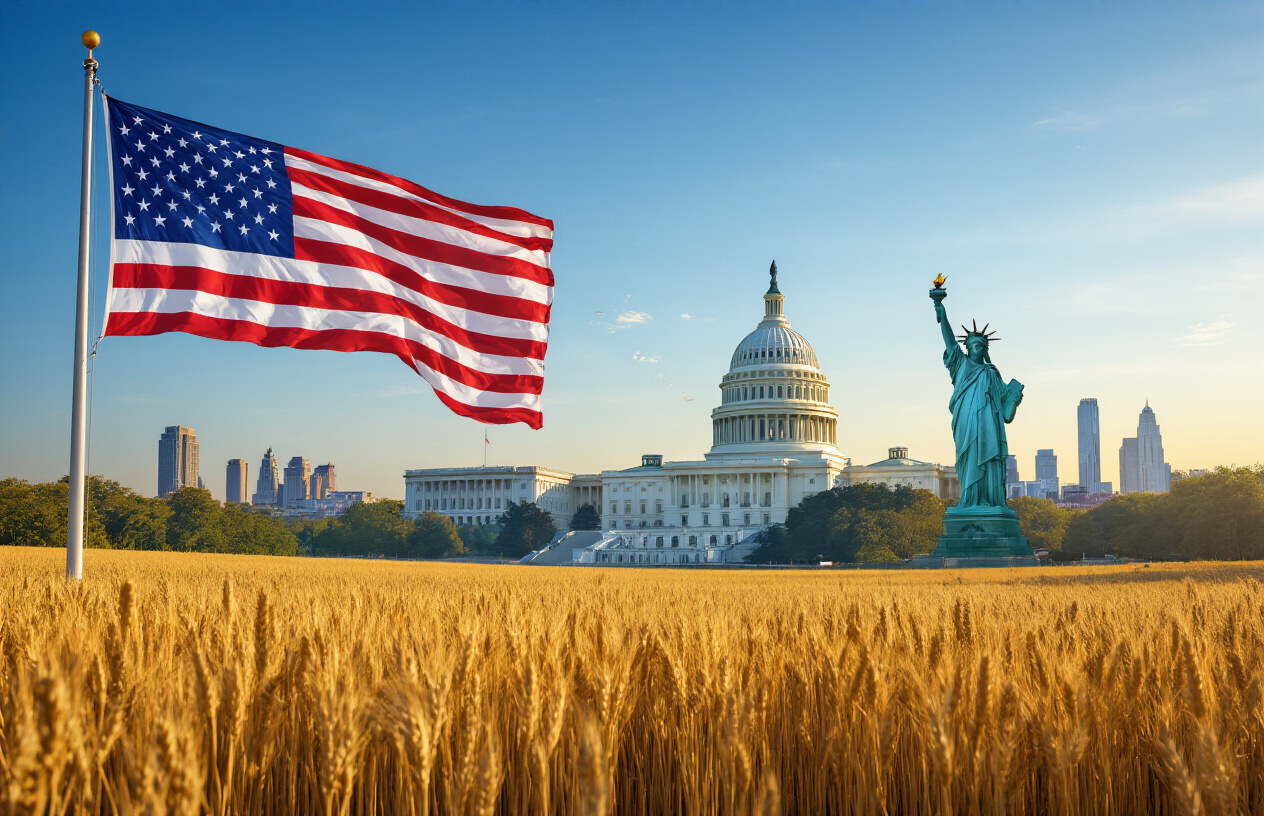
The United States stands as a remarkable blend of historical resilience, cultural diversity, and economic strength. From its founding principles to its position as the world’s capital in Washington D.C., America continues to shape global politics and commerce. The nation’s rich tapestry includes diverse geographic regions, each contributing unique characteristics that define the American experience. With over 330 million people representing countless backgrounds and traditions, the U.S. remains a beacon of opportunity and innovation.
America’s influence extends far beyond its borders through its robust economy and cultural exports. The stars and stripes symbolize freedom and democracy worldwide, while the country’s economic powerhouse status drives international markets and technological advancement. As demographics shift and new generations take the helm, the United States continues evolving while maintaining its core identity as a land of possibilities where diverse communities come together to build something greater than the sum of its parts.

Nasir Uddin is a dedicated writer and researcher at BanglaLook.com, where he explores topics related to education, Bangladeshi culture, lifestyle, and travel. With a strong passion for learning and storytelling, he blends personal observation with well-researched insights to help readers better understand Bangladesh and the world around them.