
India stands as one of the world’s oldest civilizations and most diverse nations, offering a fascinating blend of ancient history and modern progress. This comprehensive guide is perfect for students, travelers, business professionals, and anyone curious about this South Asian powerhouse that’s home to over 1.4 billion people.
We’ll explore India’s remarkable journey from ancient civilizations to independence, diving deep into its rich cultural heritage that spans thousands of years of traditions, festivals, and customs. You’ll also discover how New Delhi serves as the political heart of the nation, while we examine the country’s impressive economic transformation from agricultural roots to a global technology and services hub. Along the way, we’ll cover essential facts about India’s geography, national symbols, population demographics, and the diverse elements that make this nation truly unique.
Ancient Origins and Historical Timeline
Indus Valley Civilization and Early Settlements
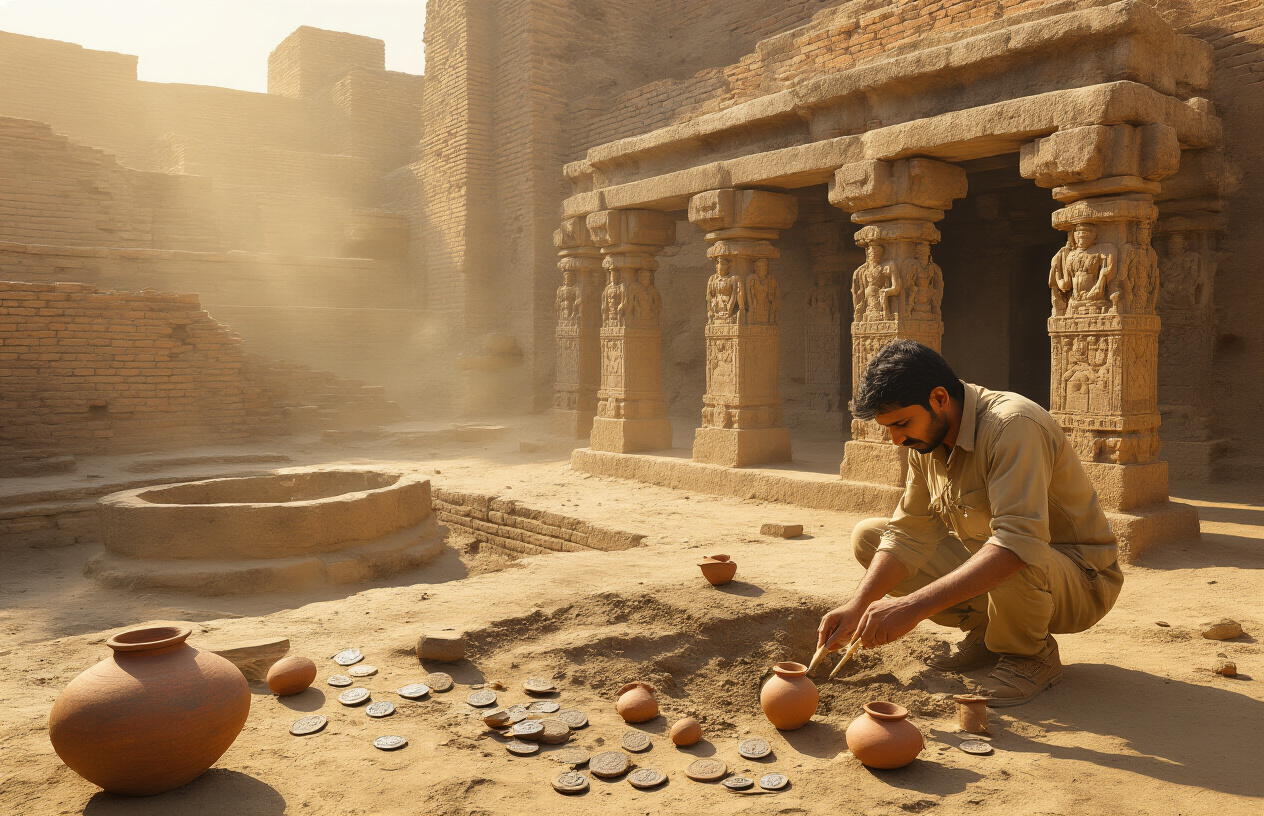
Around 3300 BCE, one of the world’s earliest urban civilizations began flourishing along the banks of the Indus River. The Indus Valley Civilization, also known as the Harappan Civilization, stretched across what is now Pakistan and northwest India. These ancient cities like Harappa and Mohenjo-daro were marvels of urban planning, featuring sophisticated drainage systems, grid-pattern streets, and standardized brick construction.
The Harappans were skilled traders, crafting intricate jewelry, pottery, and bronze artifacts. They developed an undeciphered script and maintained extensive trade networks reaching as far as Mesopotamia. Their society appears to have been remarkably egalitarian, with little evidence of palaces or monumental architecture dedicated to rulers. The civilization mysteriously declined around 1900 BCE, possibly due to climate change, flooding, or shifts in river patterns.
Vedic Period and Classical Kingdoms
Following the decline of the Indus Valley Civilization, Indo-Aryan peoples migrated into the Indian subcontinent around 1500 BCE, bringing with them the Vedic traditions. This period saw the composition of the Vedas, ancient Sanskrit texts that form the foundation of Hinduism. The Rigveda, the oldest of these texts, provides insights into early Vedic society, which was primarily pastoral and organized around tribal units.
As Vedic society evolved, it became more agricultural and stratified. The caste system began to take shape, and kingdoms emerged across northern India. The later Vedic period witnessed the rise of powerful states like Magadha, which would eventually give birth to India’s first major empire.
The 6th century BCE marked a period of religious and philosophical ferment. Both Buddhism and Jainism emerged during this time, with Gautama Buddha and Mahavira challenging existing religious practices. The Mauryan Empire, established by Chandragupta Maurya around 322 BCE, represented the first attempt at unifying much of the Indian subcontinent. His grandson Ashoka became one of India’s most celebrated rulers, embracing Buddhism and promoting non-violence across his vast empire.
The post-Mauryan period saw the rise of various regional kingdoms, including the Guptas (320-550 CE), often called India’s “Golden Age.” During Gupta rule, art, science, and literature flourished. Mathematicians like Aryabhata made groundbreaking discoveries, while poets like Kalidasa created timeless works of Sanskrit literature.
Mughal Empire and Cultural Integration
The arrival of Muslim rulers in India began with early invasions in the 11th century, but the most significant Islamic empire was established by the Mughals in 1526. Babur, a descendant of both Timur and Genghis Khan, founded the empire after defeating the Delhi Sultanate at the Battle of Panipat.
Under emperors like Akbar, Jahangir, Shah Jahan, and Aurangzeb, the Mughal Empire became one of the world’s wealthiest and most powerful states. Akbar, in particular, pursued a policy of religious tolerance and cultural synthesis, creating a unique Indo-Islamic culture. He established the syncretic religion Din-i Ilahi and encouraged dialogue between different faiths.
The Mughal period witnessed remarkable architectural achievements, including the Taj Mahal, built by Shah Jahan as a mausoleum for his wife Mumtaz Mahal. Persian and Islamic architectural styles blended with local Indian traditions, creating a distinctive Mughal aesthetic. The empire also saw advances in art, literature, and music, with the development of Hindustani classical music and Mughal miniature painting.
Trade flourished under Mughal rule, with India producing about 25% of the world’s industrial output. The empire’s wealth attracted European traders, eventually leading to the establishment of trading posts by the Portuguese, Dutch, French, and British.
British Colonial Era and Independence Movement
The British East India Company arrived in India in 1600, initially seeking trade opportunities. Through a combination of military conquest, political maneuvering, and exploitation of local conflicts, the Company gradually expanded its control. The Battle of Plassey in 1757 marked a turning point, giving the British control over Bengal and setting the stage for further expansion.
The Indian Rebellion of 1857, sparked by sepoys’ grievances over new rifle cartridges greased with cow and pig fat, represented the first major challenge to British rule. Although the rebellion was suppressed, it led to the end of Company rule and the establishment of direct British government control over India.
Colonial rule brought significant changes to Indian society. The British built railways, telegraphs, and irrigation systems, but primarily to serve their economic interests. They also established English education and legal systems while exploiting India’s resources and markets for Britain’s benefit.
The independence movement gained momentum in the late 19th and early 20th centuries. The Indian National Congress, founded in 1885, initially sought gradual reforms but eventually demanded complete independence. Mahatma Gandhi emerged as a pivotal leader, advocating non-violent resistance through methods like satyagraha and civil disobedience.
Key moments in the independence struggle included the Non-Cooperation Movement (1920-1922), the Salt March (1930), and the Quit India Movement (1942). World War II weakened Britain’s ability to maintain its empire, and mounting pressure from Indian leaders and international opinion finally led to independence on August 15, 1947. However, independence came with the painful partition of India into two nations – India and Pakistan – resulting in massive displacement and communal violence that affected millions of people.
Rich Cultural Heritage and Traditions
Religious Diversity and Spiritual Practices
India stands as one of the world’s most religiously diverse nations, home to numerous faiths that have coexisted for millennia. Hinduism remains the majority religion, practiced by about 80% of the population, encompassing countless traditions, deities, and philosophical schools. The religion’s flexibility allows for worship of various gods like Vishnu, Shiva, and Devi, while concepts of karma, dharma, and moksha guide spiritual life.
Islam represents the largest minority religion, with over 200 million followers making India home to one of the world’s largest Muslim populations. The Mughal influence brought architectural marvels and enriched Indian culture with Sufi mysticism and Islamic scholarship.
Buddhism and Jainism, both born on Indian soil, continue to shape spiritual practices. Buddhism’s emphasis on compassion and mindfulness attracts followers worldwide, while Jainism’s principle of ahimsa (non-violence) influences dietary practices and ethical living across communities.
Sikhism emerged in Punjab during the 15th century, blending elements of Hinduism and Islam while establishing unique practices centered around the Golden Temple in Amritsar. Christianity and Judaism also have ancient roots in India, particularly along the western coast.
This religious tapestry creates a unique spiritual landscape where temple bells, mosque calls to prayer, church hymns, and gurudwara kirtan blend together in daily life, demonstrating India’s remarkable capacity for religious harmony and mutual respect.
Festivals and Celebrations Throughout the Year
India’s festival calendar reads like a continuous celebration of life, spirituality, and cultural identity. Diwali, the festival of lights, illuminates the country for five days as families light oil lamps, share sweets, and celebrate the victory of light over darkness. Streets transform into glittering wonderlands with rangoli patterns decorating doorsteps and fireworks painting the night sky.
Holi brings spring with an explosion of colors as people throw gulal (colored powder) and water at each other, breaking down social barriers in joyous celebration. The festival represents renewal, love, and the triumph of good over evil.
Eid celebrations unite Muslim communities in prayer, feasting, and charitable giving, while Christmas sees elaborate decorations in Christian neighborhoods and widespread participation across communities. Durga Puja transforms Bengal into a cultural powerhouse with magnificent pandals (temporary structures) housing elaborate goddess sculptures.
Regional festivals add local flavor to the national calendar. Kerala celebrates Onam with boat races and elaborate feasts served on banana leaves. Tamil Nadu’s Pongal honors the harvest with rice dishes and cattle decoration. Punjab’s Baisakhi marks the Sikh New Year and spring harvest with energetic bhangra dancing.
These celebrations transcend religious boundaries, with people of all faiths participating in each other’s festivals, creating a shared cultural experience that strengthens India’s social fabric and reinforces its pluralistic identity.
Art Forms, Music, and Dance Traditions
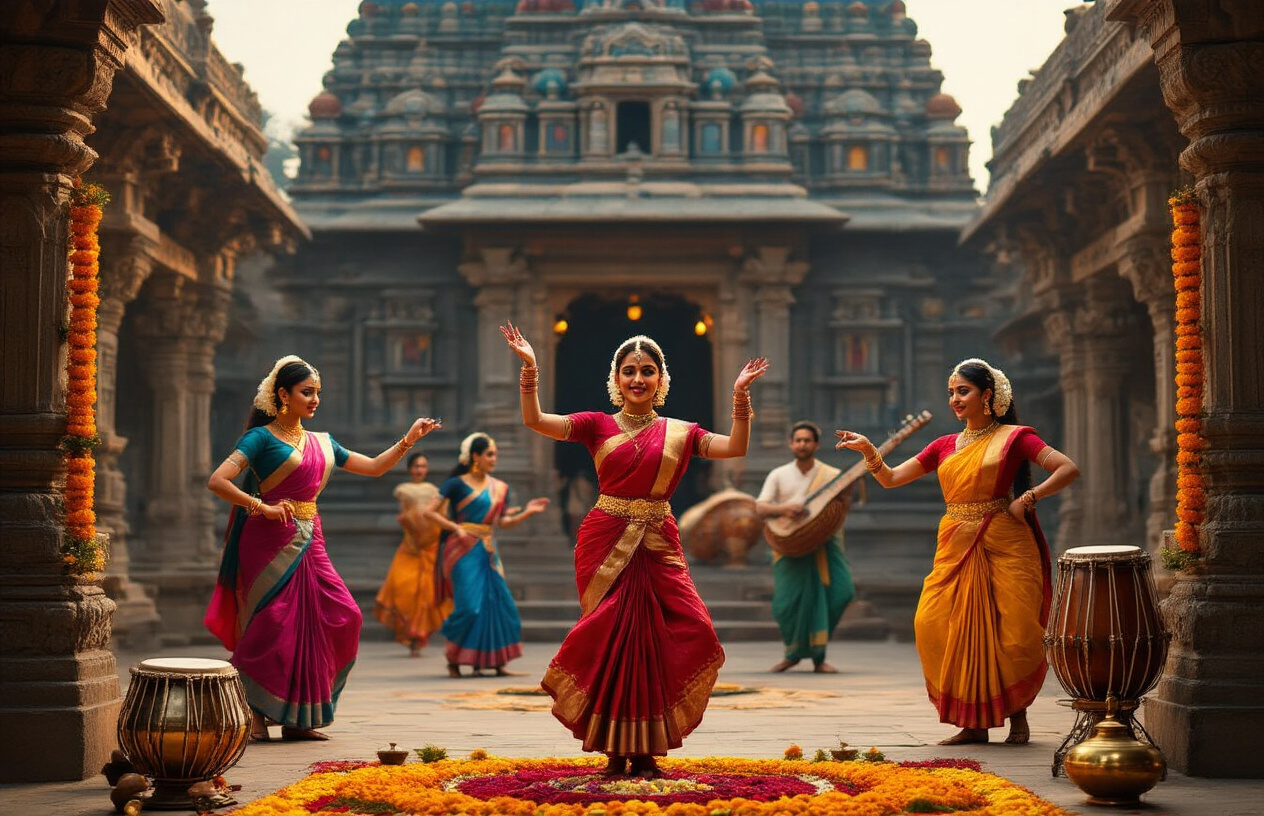
India’s artistic heritage spans thousands of years, creating a rich tapestry of creative expression that continues to evolve while honoring ancient traditions. Classical dance forms like Bharatanatyam from Tamil Nadu combine intricate footwork with expressive hand gestures (mudras) and facial expressions to tell mythological stories. Kathak from North India showcases spinning movements and storytelling, while Odissi from Odisha emphasizes graceful postures inspired by temple sculptures.
Music traditions divide into Hindustani (North Indian) and Carnatic (South Indian) classical systems, both built on ragas (melodic frameworks) and talas (rhythmic cycles). The sitar, tabla, veena, and mridangam create complex musical conversations that can last for hours, with improvisation playing a central role in performance.
Folk traditions vary dramatically across regions. Rajasthani folk music features the haunting melodies of desert life, while Bengal’s Baul singers wander with their ektara (one-stringed instrument), singing mystical songs. Punjab’s bhangra energizes celebrations with dhol beats and exuberant movements.
Visual arts encompass ancient cave paintings at Ajanta and Ellora, intricate miniature paintings from Mughal and Rajput courts, and contemporary works that blend traditional techniques with modern themes. Handicrafts like Kashmiri carpets, Varanasi silk, and Rajasthani textiles showcase regional expertise passed down through generations.
Theater traditions include Sanskrit drama, regional folk theater, and modern experimental forms that address contemporary social issues while maintaining classical storytelling techniques.
New Delhi as the National Capital
Historical Significance and Government Centers
New Delhi stands as India’s political heart, officially serving as the national capital since 1911 when the British colonial government decided to shift the seat of power from Calcutta. The city’s design reflects grand imperial ambitions, with British architect Edwin Lutyens and Herbert Baker creating a carefully planned capital that would showcase the might of the British Raj.
The central government district houses India’s most important institutions within a compact area. Parliament House, with its distinctive circular structure, serves as the meeting place for both houses of the Indian legislature. The President’s official residence, Rashtrapati Bhavan, dominates the landscape with its massive dome and sprawling gardens covering 320 acres. This former Viceroy’s House represents one of the world’s largest residential complexes for a head of state.
The Supreme Court of India anchors the judicial branch from its imposing building designed in Indo-British architectural style. Multiple ministry buildings line the wide boulevards of the government quarter, creating an efficient administrative hub where major policy decisions shape the nation’s direction.
Architectural Marvels and Landmarks
Delhi’s skyline blends ancient monuments with modern structures, creating a unique architectural tapestry. The Red Fort stands as a UNESCO World Heritage Site, showcasing Mughal architecture with its massive red sandstone walls and intricate interior palaces. Every Independence Day, India’s Prime Minister addresses the nation from its ramparts.
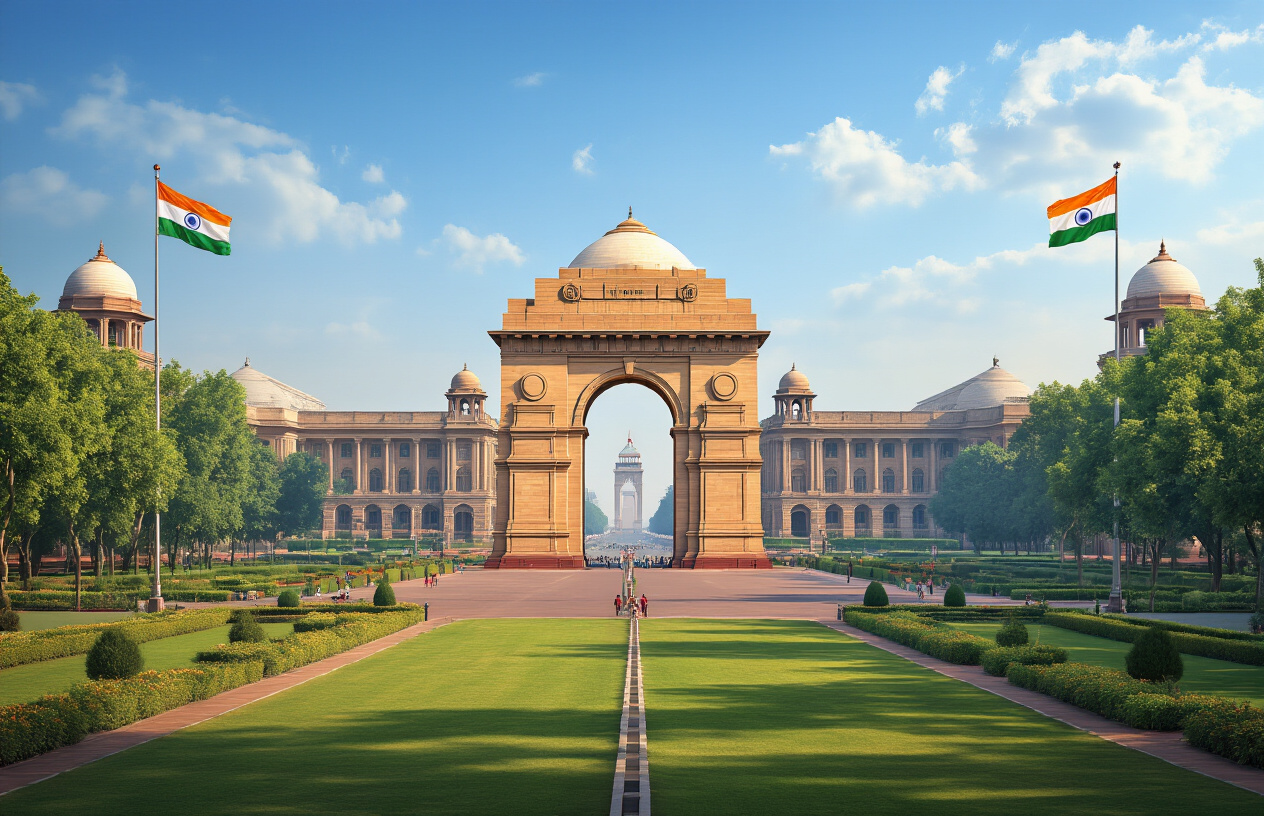
India Gate serves as the city’s most recognizable monument, honoring soldiers who died in World War I and the Afghan Wars. This 42-meter high war memorial anchors Rajpath, the ceremonial boulevard where Republic Day parades unfold each January.
The Lotus Temple attracts visitors worldwide with its flower-shaped design and Bahá’í philosophy of unity. Built from white marble, this modern architectural wonder welcomes people of all faiths for prayer and meditation.
Humayun’s Tomb represents early Mughal architecture and inspired the design of the Taj Mahal. Its Persian-style gardens and red sandstone structure demonstrate the sophisticated building techniques that defined the era.
Political Hub and Administrative Functions
Delhi operates as India’s decision-making center, where policies affecting 1.4 billion people take shape daily. The city hosts foreign embassies, high commissions, and international organizations, making it a crucial diplomatic hub for South Asia.
The Indian Parliament convenes here for budget sessions, policy debates, and legislative processes that guide the nation’s development. Cabinet meetings occur regularly at the Prime Minister’s residence, where ministers coordinate responses to national and international challenges.
Administrative efficiency centers around the Central Secretariat, where various ministries manage everything from defense and foreign affairs to agriculture and education. The Election Commission of India operates from Delhi, overseeing the world’s largest democratic process during national and state elections.
State chief ministers regularly visit Delhi to meet with central government officials, negotiate funding, and coordinate policies between federal and state levels. This constant political activity makes the city a barometer for India’s political climate.
Cultural Attractions and Modern Development
Delhi’s cultural landscape offers everything from street food markets to world-class museums. Chandni Chowk, one of India’s oldest markets, provides an authentic experience of Delhi’s commercial heritage with its narrow lanes filled with spice vendors, jewelry shops, and traditional eateries.
The National Museum houses India’s most comprehensive collection of artifacts spanning 5,000 years of history. Visitors can explore ancient sculptures, medieval paintings, and colonial-era exhibits that tell the story of Indian civilization.
Modern Delhi showcases rapid urban development through projects like the Delhi Metro, which revolutionized public transportation and reduced traffic congestion. Connaught Place serves as a major commercial hub with its Georgian-style architecture housing international brands, restaurants, and entertainment venues.
The city’s dining scene reflects India’s diversity, offering regional cuisines from every state alongside international options. From roadside vendors selling chaat to fine dining restaurants, Delhi’s food culture satisfies every palate and budget, making it a true cultural melting pot where tradition meets modernity.
Geographic Location and Physical Features
Borders and Neighboring Countries
India sits at the heart of South Asia, sharing its borders with seven countries across land and sea. To the northwest, Pakistan forms the longest border, stretching over 3,300 kilometers and marked by both the historic Radcliffe Line and ongoing geopolitical complexities. China dominates the northern frontier with a 3,488-kilometer boundary that includes disputed territories in Aksai Chin and Arunachal Pradesh.
Bangladesh wraps around India’s eastern edge, creating an intricate border of 4,096 kilometers that weaves through West Bengal, Assam, Meghalaya, Tripura, and Mizoram. Myanmar connects to India’s far east through Arunachal Pradesh, Nagaland, Manipur, and Mizoram. The Himalayan kingdoms of Nepal and Bhutan maintain open borders with India, reflecting centuries of cultural and economic ties.
Sri Lanka lies just 50 kilometers southeast across the Palk Strait, while the Maldives sits 600 kilometers southwest in the Indian Ocean. These maritime neighbors share crucial trade routes and cultural connections with the Indian subcontinent.
India’s strategic position creates natural gateways between Central Asia, Southeast Asia, and the Middle East. The country controls vital sea lanes through which global trade worth trillions of dollars passes annually.
Major Rivers, Mountains, and Plains
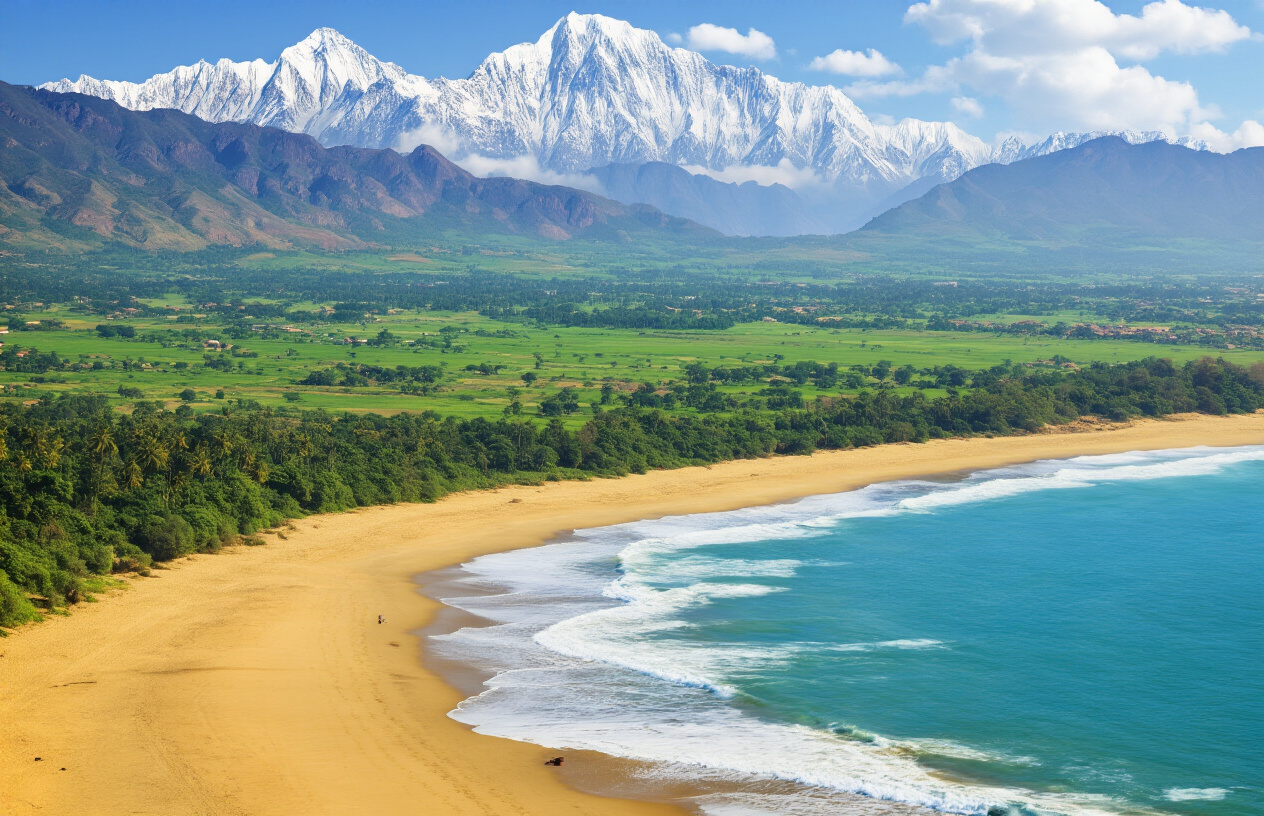
The mighty Himalayas form India’s northern crown, stretching 2,400 kilometers from Kashmir to Arunachal Pradesh. These young, towering peaks include some of the world’s highest mountains, with Kangchenjunga reaching 8,586 meters on the India-Nepal border. The Western Ghats run parallel to the Arabian Sea coast, while the Eastern Ghats stretch along the Bay of Bengal, creating a bowl-shaped plateau in between.
Three major river systems drain the subcontinent. The Ganges flows 2,525 kilometers from the Gangotri glacier through the fertile plains of North India before emptying into the Bay of Bengal. The Indus system, now mostly in Pakistan, historically watered the northwestern regions. The Brahmaputra carves through Assam after its journey from Tibet, joining the Ganges in a massive delta.
Southern India’s rivers like the Godavari, Krishna, and Kaveri flow eastward into the Bay of Bengal, while shorter streams like the Narmada and Tapti drain westward into the Arabian Sea. These waterways have shaped civilizations for millennia, supporting agriculture and trade.
The Indo-Gangetic Plain stretches 3,000 kilometers from Pakistan to Bangladesh, forming one of the world’s most fertile agricultural regions. This alluvial expanse supports over 400 million people and produces much of India’s food grain.
Climate Zones and Regional Variations
India experiences six distinct climate zones, each shaped by geography and monsoon patterns. The tropical wet climate dominates the western coast and northeast, receiving over 2,000 millimeters of annual rainfall. Dense forests thrive here, supporting incredible biodiversity.
The tropical dry climate covers much of peninsular India, with moderate rainfall and distinct wet and dry seasons. This region supports deciduous forests and extensive agriculture. The subtropical humid climate blankets the Gangetic plains, where hot, humid summers give way to pleasant winters.
The mountain climate varies dramatically with altitude across the Himalayas. While lower slopes remain temperate, peaks stay frozen year-round. Desert conditions prevail in Rajasthan and parts of Gujarat, where temperatures soar above 45°C in summer and rainfall barely reaches 150 millimeters annually.
The monsoon system drives India’s weather patterns, bringing 75% of annual rainfall between June and September. The southwest monsoon arrives first along the Kerala coast in early June, then sweeps northward across the subcontinent. A weaker northeast monsoon affects Tamil Nadu and parts of Andhra Pradesh from October to December.
Regional variations create distinct micro-climates. Cherrapunji in Meghalaya holds world records for rainfall, while nearby areas remain relatively dry due to rain shadow effects. Coastal regions enjoy moderated temperatures, while interior areas experience extreme seasonal variations.
National Symbols and Identity
Tricolor Flag Design and Meaning
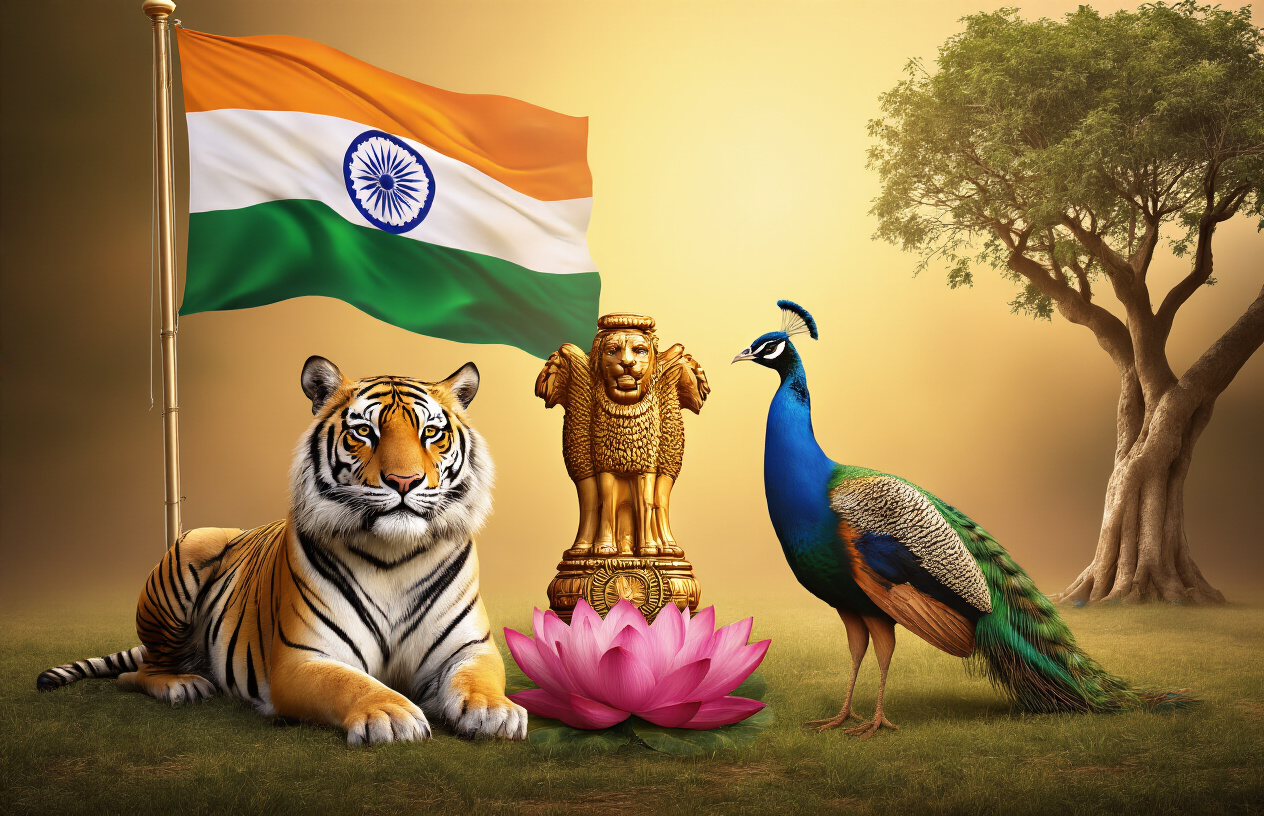
India’s national flag stands as one of the most recognizable symbols worldwide, featuring three horizontal stripes in saffron, white, and dark green. The saffron band at the top represents courage, sacrifice, and the spirit of renunciation. This vibrant orange hue symbolizes the strength and bravery of the nation’s leaders and citizens who fought for independence.
The white middle stripe signifies truth, peace, and purity, embodying the path of dharma that guides the nation’s moral compass. At its center sits the Ashoka Chakra, a navy blue wheel with 24 spokes representing the eternal wheel of law and righteousness. This ancient symbol connects modern India to its Buddhist heritage and Emperor Ashoka’s legacy of non-violence and justice.
The bottom green stripe represents fertility, growth, and the auspicious nature of the land. It symbolizes the relationship between humans and soil, highlighting India’s agricultural foundation and the prosperity that comes from the earth.
The flag’s proportions follow a specific ratio of 2:3, and strict protocols govern its display, manufacture, and handling. Citizens can fly the national flag on their homes and buildings, but specific guidelines ensure its dignity remains intact.
National Emblem and Motto
The Lion Capital of Ashoka serves as India’s national emblem, adopted from the ancient pillar erected at Sarnath around 250 BCE. Four lions stand back-to-back, symbolizing power, courage, confidence, and pride, mounted on a circular abacus decorated with sculptures of a bull, horse, elephant, and lion separated by intervening wheels.
Below the lions sits the motto “Satyameva Jayate,” meaning “Truth Alone Triumphs.” This Sanskrit phrase comes from the Mundaka Upanishad and reflects the nation’s commitment to truth and righteousness in all endeavors. The emblem appears on official government documents, currency, and state communications.
The original sculpture included a fourth lion and a wheel (dharma chakra) on top, but the emblem adaptation shows only three visible lions due to the perspective. The base features a lotus in full bloom, symbolizing the source of life and creative inspiration.
National Anthem and Song
“Jana Gana Mana” serves as India’s national anthem, composed by Nobel laureate Rabindranath Tagore in 1911. The complete song contains five stanzas, but only the first stanza is sung as the official anthem. The lyrics praise the dispenser of India’s destiny and enumerate various regions of the country, creating a sense of unity across diverse landscapes and cultures.
The anthem takes approximately 52 seconds to sing and plays at official ceremonies, sports events, and national celebrations. Citizens stand at attention during its performance, showing respect for the nation and its values.
“Vande Mataram,” composed by Bankim Chandra Chatterjee, holds the honor of being India’s national song. This powerful composition played a crucial role during the independence movement, inspiring countless freedom fighters. The song personifies India as a mother goddess, expressing deep reverence and devotion to the motherland.
Both musical compositions capture the essence of Indian patriotism while celebrating the country’s cultural diversity and shared heritage.
Demographics and Population Statistics
Total Population and Growth Trends
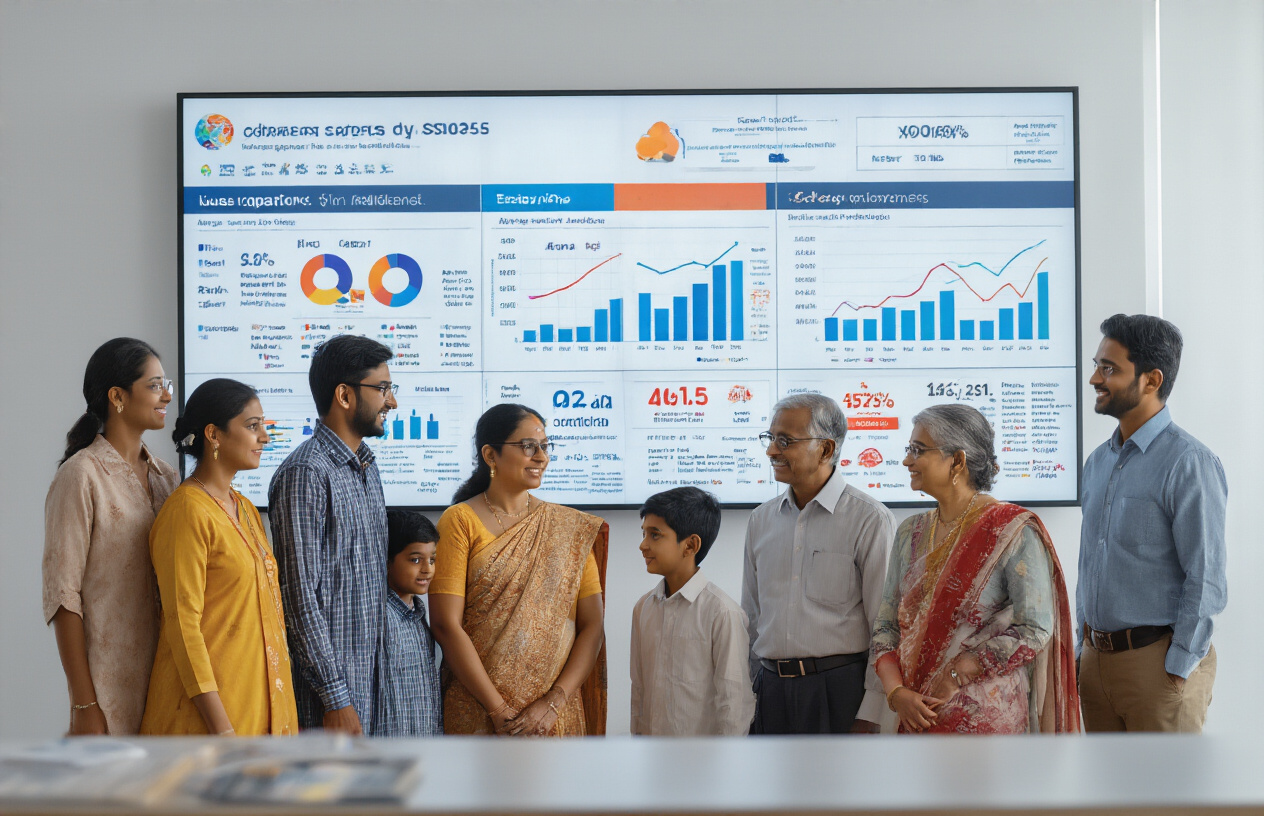
India stands as the world’s most populous nation with over 1.42 billion people as of 2024, having recently surpassed China in total population. The country experiences a moderate annual growth rate of approximately 0.7%, reflecting a significant slowdown from the 2.2% growth rate recorded in the 1970s. This demographic transition showcases India’s evolving population dynamics, with declining fertility rates and improving healthcare contributing to more sustainable growth patterns.
The population pyramid reveals a predominantly young demographic structure, with about 65% of Indians under the age of 35 and the median age hovering around 28 years. This youthful population presents both opportunities and challenges for the nation’s development trajectory. While it offers a substantial workforce advantage, it also demands massive investments in education, healthcare, and job creation.
Urban vs Rural Distribution
Despite rapid urbanization, India remains predominantly rural, with approximately 65% of the population living in villages and small towns. Urban areas house around 35% of the population, representing over 480 million people across cities and metropolitan regions. The urbanization rate continues accelerating, with projections suggesting that nearly 50% of Indians will live in urban areas by 2050.
Major metropolitan areas drive this urban concentration:
| Metropolitan Area | Population (millions) |
|---|---|
| Mumbai | 20.4 |
| Delhi | 32.9 |
| Kolkata | 14.9 |
| Chennai | 11.5 |
| Bangalore | 13.6 |
| Hyderabad | 10.3 |
Rural-to-urban migration patterns reflect economic opportunities, educational access, and infrastructure development. However, this migration also creates challenges including urban sprawl, housing shortages, and pressure on city resources.
Language Diversity and Communication
India’s linguistic landscape represents one of the world’s most diverse communication ecosystems. The Constitution recognizes 22 official languages, while the country hosts over 700 living languages across different regions. Hindi serves as the most widely spoken language, used by approximately 44% of the population, followed by English as the primary link language for business, education, and government operations.
Regional languages dominate specific states:
- Bengali: 8.3% (West Bengal, Tripura)
- Telugu: 6.9% (Andhra Pradesh, Telangana)
- Marathi: 6.8% (Maharashtra)
- Tamil: 5.9% (Tamil Nadu)
- Gujarati: 4.6% (Gujarat)
- Urdu: 4.2% (Various states)
English proficiency continues growing, particularly among younger generations and urban populations, with an estimated 125 million English speakers nationwide. This multilingual environment creates both unity in diversity and practical communication challenges across different regions.
Religious and Ethnic Composition
India’s religious diversity reflects centuries of cultural evolution and migration patterns. Hinduism remains the dominant religion, practiced by approximately 79.8% of the population, encompassing various traditions, sects, and regional variations. Islam represents the largest religious minority at 14.2%, making India home to the world’s third-largest Muslim population after Indonesia and Pakistan.
Other significant religious communities include:
- Christianity: 2.3% (concentrated in Kerala, Goa, Northeast states)
- Sikhism: 1.7% (primarily in Punjab)
- Buddhism: 0.7% (Maharashtra, Ladakh, Sikkim)
- Jainism: 0.4% (Gujarat, Rajasthan, Maharashtra)
Ethnic composition varies dramatically across regions, with Indo-Aryan groups comprising about 72% of the population, primarily in northern and central India. Dravidian peoples constitute approximately 25%, concentrated in southern states. Mongoloid and other ethnic groups make up the remaining 3%, mainly in northeastern regions and tribal areas. This ethnic and religious diversity shapes India’s political landscape, cultural practices, and social dynamics while contributing to the nation’s rich multicultural identity.
Economic Structure and Development
Major Industries and Manufacturing Sectors
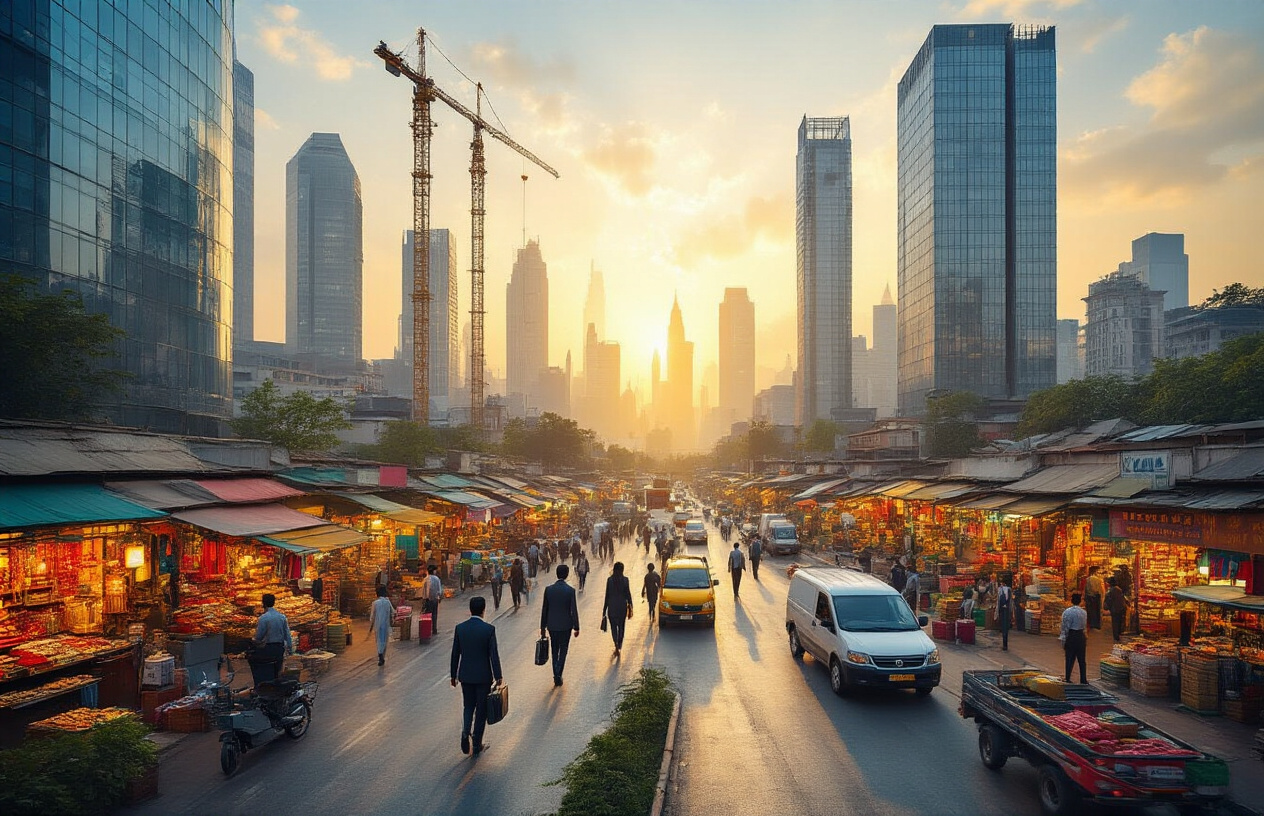
India’s manufacturing landscape spans diverse sectors that drive economic growth and employment. The automotive industry stands as a cornerstone, with companies like Tata Motors, Mahindra, and Maruti Suzuki producing vehicles for domestic and international markets. Major global manufacturers including Hyundai, Ford, and Toyota have established production facilities across states like Tamil Nadu, Karnataka, and Haryana.
The textile and garment sector remains deeply rooted in India’s industrial fabric. From cotton mills in Gujarat and Maharashtra to silk production in Karnataka, the industry employs millions of workers. India ranks among the world’s largest textile exporters, supplying clothing to major international brands and retailers.
Steel production centers around companies like Tata Steel, JSW Steel, and Steel Authority of India Limited (SAIL). These giants operate massive plants in Jharkhand, Odisha, and Chhattisgarh, leveraging the country’s rich iron ore deposits. The pharmaceutical industry has earned global recognition, with companies like Sun Pharma, Dr. Reddy’s, and Cipla manufacturing generic drugs and active pharmaceutical ingredients for worldwide distribution.
Chemical and petrochemical industries cluster around refineries in Gujarat, Maharashtra, and Andhra Pradesh. Reliance Industries operates one of the world’s largest petrochemical complexes in Jamnagar, producing everything from plastics to synthetic fibers. The electronics manufacturing sector continues expanding through initiatives like “Make in India,” attracting smartphone manufacturers such as Foxconn, Samsung, and Xiaomi to establish assembly plants.
Agriculture and Food Production
Agriculture employs nearly half of India’s workforce and covers about 60% of the total land area. Rice and wheat form the backbone of food grain production, with Punjab, Haryana, and Uttar Pradesh leading wheat cultivation, while West Bengal, Uttar Pradesh, and Punjab dominate rice production.
The Green Revolution transformed agricultural productivity through high-yielding varieties, improved irrigation, and modern farming techniques. Today, India ranks as the world’s second-largest producer of rice, wheat, and several other crops including sugarcane, cotton, and tea.
Regional specialization characterizes Indian agriculture. Kerala leads in spice production, particularly black pepper, cardamom, and cinnamon. Maharashtra produces significant quantities of sugarcane and grapes, while Gujarat excels in cotton cultivation. The Indo-Gangetic plains serve as the country’s granary, supporting intensive wheat and rice cultivation through canal irrigation and tube wells.
Cash crops generate substantial export revenue. Cotton from Gujarat and Maharashtra feeds both domestic textile mills and international markets. Tea estates in Assam, West Bengal, and the Nilgiris produce distinct varieties that command premium prices globally. Coffee plantations in Karnataka, Kerala, and Tamil Nadu contribute to India’s position among major coffee-producing nations.
Horticulture has gained prominence with increased production of fruits and vegetables. Mango orchards in Maharashtra and Uttar Pradesh, apple cultivation in Himachal Pradesh and Kashmir, and banana production in Tamil Nadu and Gujarat showcase the sector’s diversity. The dairy sector, led by cooperative movements like Amul, has made India the world’s largest milk producer.
Service Sector and Technology Growth
The service sector contributes over 50% of India’s GDP and represents the economy’s most dynamic component. Information technology services transformed India into a global technology hub, with cities like Bangalore, Hyderabad, Pune, and Chennai earning recognition as major IT centers.
Companies like Tata Consultancy Services (TCS), Infosys, Wipro, and HCL Technologies pioneered the offshore software development model, serving clients across North America, Europe, and other regions. These firms provide software development, maintenance, testing, and consulting services to Fortune 500 companies worldwide.
Business process outsourcing (BPO) evolved alongside IT services, with Indian companies handling customer support, data entry, financial processing, and other back-office operations for international clients. The sector employs millions of English-speaking professionals who work night shifts to serve clients in different time zones.
Financial services have modernized rapidly through digital transformation. Banking giants like State Bank of India, HDMI Bank, and ICICI Bank have embraced online and mobile banking. The introduction of the Unified Payments Interface (UPI) revolutionized digital payments, enabling seamless money transfers through smartphones.
The telecommunications sector experienced remarkable growth with the rollout of 4G networks and affordable data plans. Companies like Reliance Jio disrupted the market with low-cost high-speed internet, leading to massive smartphone adoption and digital service consumption.
E-commerce platforms such as Flipkart, Amazon India, and numerous specialized platforms have created new retail channels. These companies have built extensive logistics networks, warehousing facilities, and payment systems that serve both urban and rural customers.
Trade Relations and Export Markets
India maintains trade relationships with over 190 countries, with total merchandise trade exceeding $800 billion annually. The United States serves as India’s largest trading partner, followed by China, the United Arab Emirates, and Saudi Arabia. Trade flows include both raw materials and finished goods, reflecting the economy’s diverse production capabilities.
Major export categories include petroleum products, pharmaceuticals, jewelry, textiles, and engineering goods. Reliance and other refiners export refined petroleum products to neighboring countries and beyond. The pharmaceutical industry exports generic drugs and active pharmaceutical ingredients to regulated markets in the US, Europe, and developing countries.
Diamond cutting and jewelry manufacturing centered in Mumbai and Surat contribute significantly to export earnings. Indian craftsmen process rough diamonds imported mainly from Africa, adding value through cutting and polishing before re-export to global markets.
Engineering goods exports encompass automotive parts, machinery, and precision instruments. Indian manufacturers supply components to global automotive and industrial companies, leveraging cost advantages and technical expertise.
The government has negotiated various trade agreements and partnerships to boost exports. Comprehensive Economic Partnership Agreements with countries like South Korea and Japan have opened new market opportunities. Special Economic Zones provide export-oriented industries with infrastructure, tax benefits, and streamlined regulations.
Import patterns reflect both consumer demand and industrial requirements. Crude oil represents the largest import category, followed by gold, coal, and electronic goods. China supplies significant quantities of manufactured goods, while Middle Eastern countries provide energy resources essential for industrial operations and transportation.
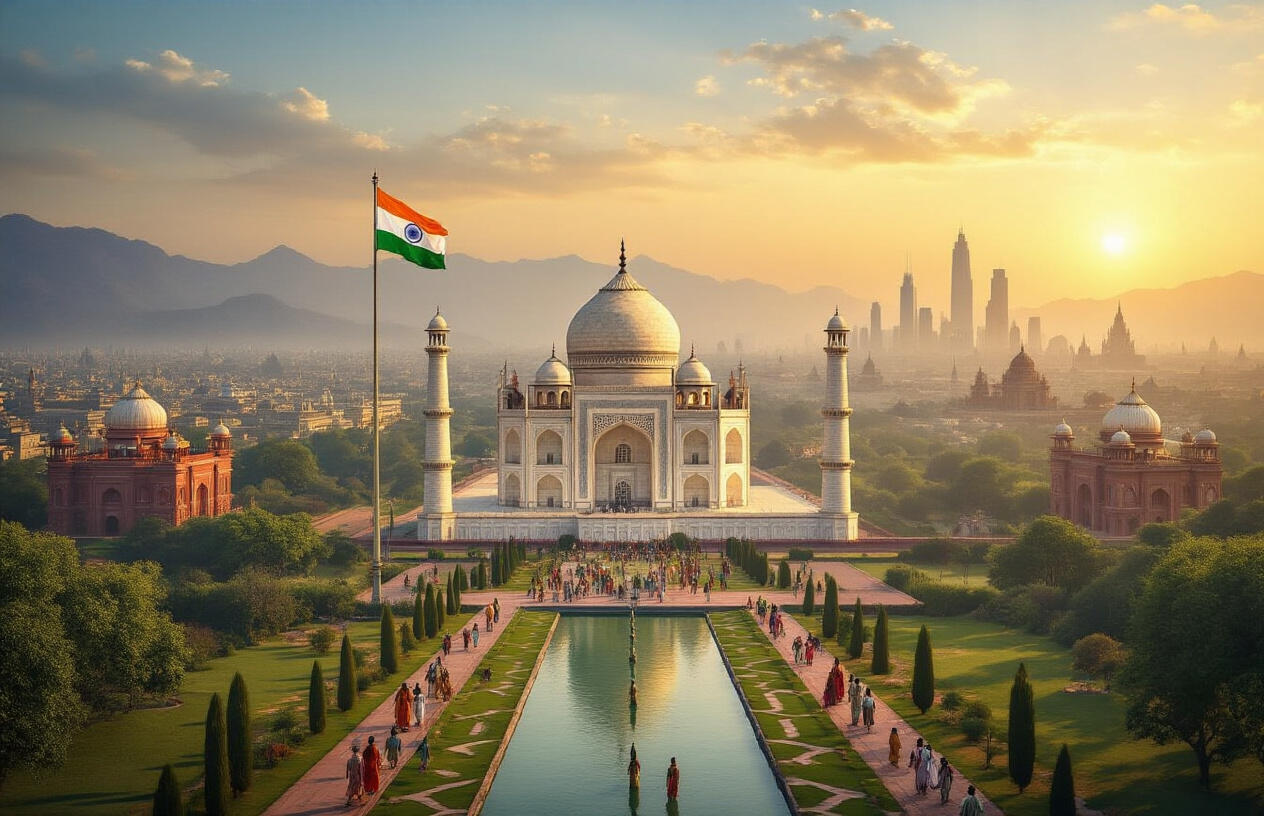
India stands as one of the world’s most fascinating countries, with roots stretching back thousands of years through ancient civilizations and empires that shaped its unique character. From the vibrant festivals and diverse traditions that paint everyday life with color, to the bustling capital city of New Delhi that serves as the nation’s political heart, every aspect tells a story of remarkable heritage and progress.
The country’s massive population of over 1.4 billion people, spread across diverse landscapes from the Himalayas to coastal plains, makes it a true melting pot of languages, religions, and customs. With its rapidly growing economy and rich natural resources, India continues to balance honoring its deep-rooted traditions while embracing modern development. Whether you’re curious about its ancient history, drawn to its cultural celebrations, or interested in its role as a major world economy, India offers endless discoveries that reveal why it’s often called the world’s largest democracy and a land of incredible diversity.

Author: Nasir Uddin
Nasir Uddin is a dedicated writer and researcher at BanglaLook.com, where he explores topics related to education, Bangladeshi culture, lifestyle, and travel. With a strong passion for learning and storytelling, he blends personal observation with well-researched insights to help readers better understand Bangladesh and the world around them.