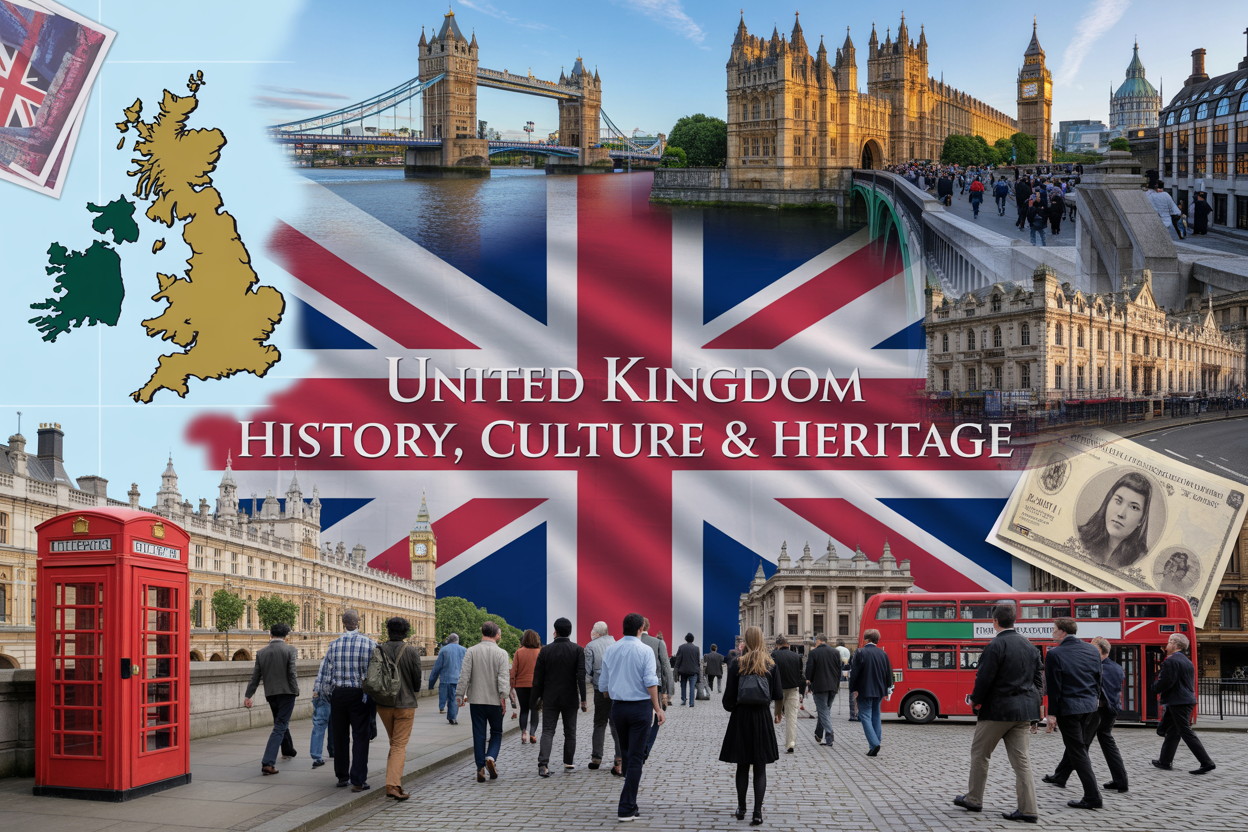
The United Kingdom stands as one of the world’s most influential nations, blending centuries of rich history with modern global significance. This comprehensive guide serves students, travelers, and anyone curious about Britain’s multifaceted identity—from its ancient castles to its bustling financial centers.
We’ll explore how Britain’s remarkable history shaped its unique culture, from medieval traditions to contemporary arts and literature. You’ll also discover why London remains one of the world’s most important capitals, serving as both Britain’s political center and a global economic hub. Finally, we’ll examine the UK’s complex geography, decode the symbolism behind the Union Jack flag, and break down the demographics that make up Britain’s diverse 67-million-strong population across England, Scotland, Wales, and Northern Ireland.
Discover the Rich Tapestry of British History
Ancient Roots and Roman Britain’s Lasting Legacy
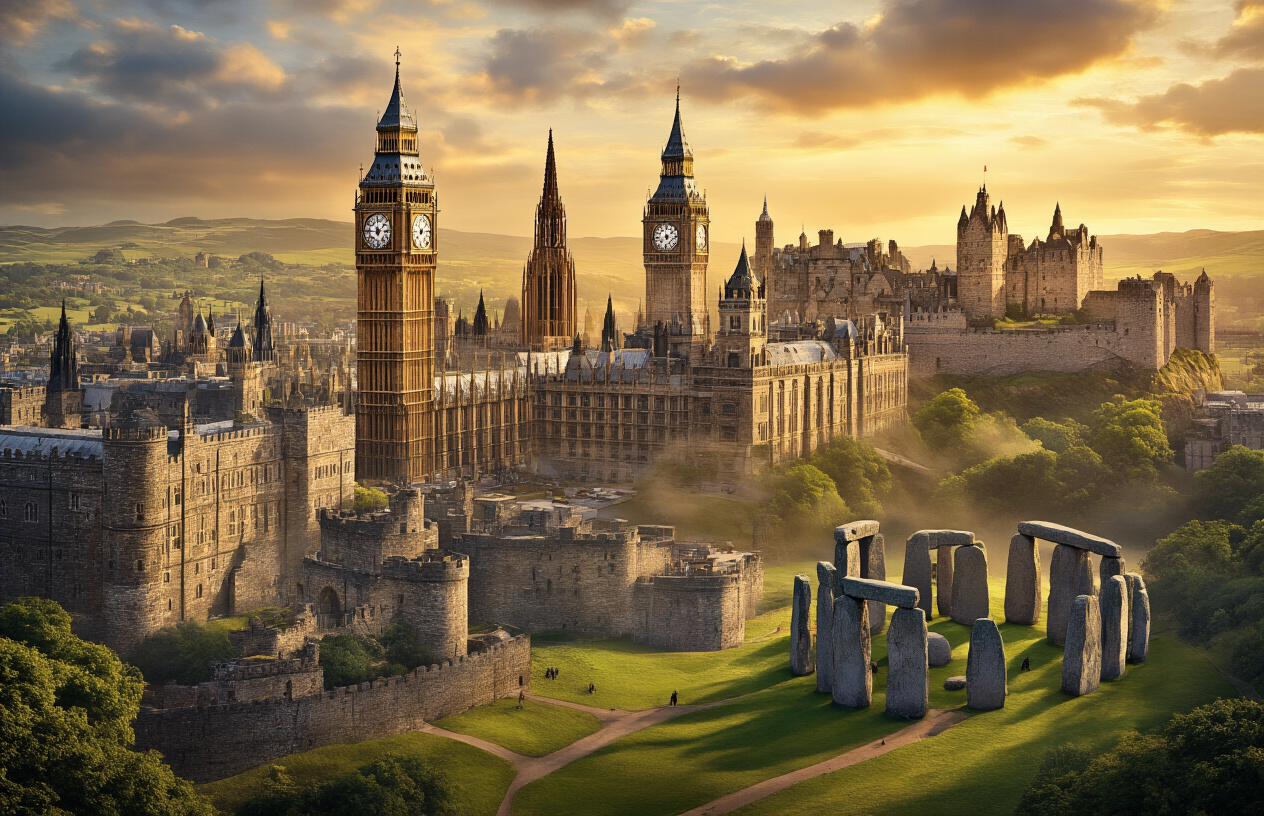
Britain’s story begins long before recorded history, with ancient peoples leaving their mark across the landscape. The mysterious stone circles at Stonehenge and Avebury tell tales of sophisticated Bronze Age civilizations that understood astronomy and engineering thousands of years ago. Celtic tribes dominated the islands for centuries, establishing a rich culture of warriors, druids, and skilled craftspeople whose influence can still be felt today.
When the Romans arrived in 43 AD under Emperor Claudius, they brought revolutionary changes that shaped Britain forever. Roman engineering prowess created straight roads that connected distant corners of the province, many still forming the backbone of modern transportation networks. Hadrian’s Wall, stretching 73 miles across northern England, stands as a testament to Roman military might and their determination to keep Scottish tribes at bay.
Roman cities like Londinium, Eboracum (York), and Aquae Sulis (Bath) introduced urban planning, sophisticated water systems, and luxurious bathhouses. The Romans brought Christianity, advanced agriculture techniques, and a legal system that influenced British law for centuries. Latin words entered the Celtic languages, creating linguistic foundations that persist today. When Roman legions withdrew around 410 AD, they left behind a transformed landscape dotted with villas, temples, and infrastructure that provided the foundation for medieval Britain.
Medieval England’s Rise to Power and Influence
The medieval period witnessed England’s transformation from a collection of warring kingdoms into a unified nation with growing international influence. The Norman Conquest of 1066 marked a pivotal moment when William the Conqueror brought French culture, architecture, and administrative systems across the Channel. Norman castles sprouted across the countryside, while magnificent cathedrals like Canterbury and Durham showcased the new architectural styles that defined the era.
The Plantagenet dynasty expanded English territory into France, creating an empire that stretched from Scotland to the Pyrenees. King Henry II’s legal reforms established common law principles that became the foundation of justice systems worldwide. The Magna Carta of 1215 limited royal power and established precedents for constitutional government that inspired democratic movements centuries later.
Medieval England became Europe’s dominant military power through innovations in warfare and naval technology. English longbowmen proved decisive at battles like Crécy and Agincourt during the Hundred Years’ War. The wool trade made England wealthy, with merchants establishing trading relationships across Europe. Monasteries preserved knowledge and advanced agriculture, while universities at Oxford and Cambridge emerged as centers of learning. The Black Death of 1348-1351 devastated the population but ultimately led to social changes that weakened feudalism and empowered the common people.
Industrial Revolution’s Transformation of Society
The Industrial Revolution began in Britain around 1760, fundamentally changing how people lived and worked. Steam engines revolutionized manufacturing, with textile mills in Manchester and Birmingham becoming symbols of the new industrial age. James Watt’s improvements to the steam engine powered factories, mines, and eventually railways that connected cities across the nation.
Coal mining expanded dramatically to fuel the growing industrial machine. Iron and steel production soared, enabling the construction of bridges, railways, and ships that showcased British engineering excellence. The Liverpool-Manchester Railway, opened in 1830, demonstrated the potential of steam locomotion and sparked railway mania that connected every corner of Britain.
Workers flocked from rural areas to industrial cities, creating massive urban centers but also overcrowded, unsanitary conditions. Child labor in factories and mines became common until reform movements pushed for protective legislation. The emergence of trade unions gave workers collective bargaining power against harsh working conditions. British innovations in textile production, particularly cotton processing, created global supply chains that made Manchester the world’s cotton capital.
This industrial transformation made Britain the “workshop of the world,” producing goods for global markets. Steam-powered ships carried British manufactured goods to colonies and trading partners, while bringing back raw materials. The social upheaval created new class structures, with industrial capitalists gaining wealth and political influence alongside traditional landowners.
Modern Era Challenges and Triumphs
The 20th century tested Britain’s resilience through two world wars, economic upheavals, and the dismantling of the British Empire. World War I devastated a generation of young men but demonstrated British determination and industrial capacity. The interwar period brought economic depression and social unrest, challenging traditional political structures.
World War II became Britain’s finest hour when the nation stood alone against Nazi Germany after France fell in 1940. The Battle of Britain saw Royal Air Force pilots defend British skies, while the Blitz tested civilian courage as German bombs fell on London and other cities. Winston Churchill’s leadership inspired resistance and helped maintain morale during the darkest months.
Post-war Britain underwent massive social transformation with the creation of the National Health Service in 1948, providing free healthcare for all citizens. The welfare state expanded education and social services while nationalizing key industries. Decolonization saw the peaceful transition from empire to Commonwealth, maintaining cultural and economic ties with former colonies.
The 1960s brought cultural revolution with British music, fashion, and film influencing global trends. The Beatles, Rolling Stones, and other bands made London the center of popular culture. Economic challenges in the 1970s led to political changes, including Margaret Thatcher’s conservative revolution that emphasized free markets and reduced government intervention. The discovery of North Sea oil provided economic benefits while Britain adapted to membership in the European Economic Community, later the European Union.
Explore Britain’s Vibrant Cultural Heritage
Literature’s Golden Age from Shakespeare to Modern Masters
Britain’s literary legacy stretches back centuries, creating some of the world’s most celebrated works. William Shakespeare stands as the towering figure, with plays like Hamlet, Macbeth, and Romeo and Juliet continuing to captivate audiences worldwide. His influence extends far beyond the theatre, shaping the English language itself with countless phrases we still use today.
The Romantic period brought us William Wordsworth and Lord Byron, who revolutionized poetry with their emotional depth and connection to nature. Charles Dickens followed with his vivid portrayals of Victorian society, while the Brontë sisters challenged social norms through novels like Jane Eyre and Wuthering Heights.
Modern British literature has maintained this excellence. J.K. Rowling’s Harry Potter series became a global phenomenon, while authors like Ian McEwan, Zadie Smith, and Kazuo Ishiguro continue winning prestigious awards. The tradition lives on through contemporary voices exploring themes of identity, immigration, and social change.
Music Traditions from Folk Songs to Global Rock Phenomena
British folk music laid the foundation for centuries of musical innovation. Traditional ballads and Celtic melodies from Scotland, Wales, and Ireland created a rich tapestry of regional sounds that influenced classical composers like Ralph Vaughan Williams and Benjamin Britten.
The 1960s transformed Britain into a musical powerhouse. The Beatles changed popular music forever, while The Rolling Stones brought blues-influenced rock to the masses. This British Invasion sparked a cultural revolution that spread across continents.
Different decades brought new genres and innovations:
- 1970s: Led Zeppelin and Pink Floyd pioneered progressive and hard rock
- 1980s: The Cure, Depeche Mode, and Duran Duran defined new wave and synth-pop
- 1990s: Britpop emerged with Oasis, Blur, and Radiohead
- 2000s: Arctic Monkeys and Coldplay dominated alternative rock
British artists continue shaping global music, from Adele’s soulful ballads to Ed Sheeran’s pop anthems, proving the country’s enduring musical influence.
Architectural Marvels Spanning Centuries of Innovation
Britain’s architecture tells the story of changing times, from ancient stone circles to cutting-edge modern buildings. Medieval cathedrals like Canterbury and Westminster Abbey showcase Gothic mastery with their soaring spires and intricate stonework.
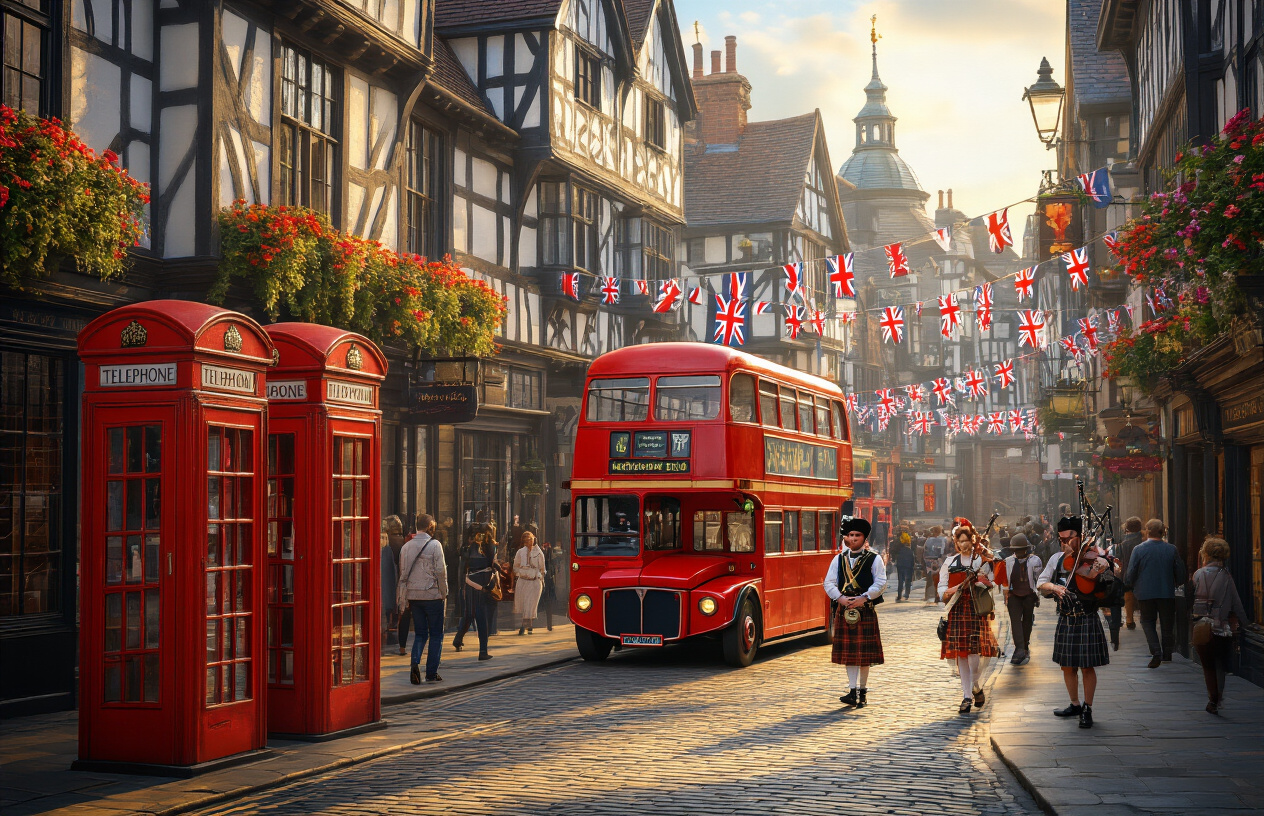
Tudor architecture brought us distinctive black-and-white timber framing, still visible in towns like Stratford-upon-Avon. The Georgian period created elegant terraces and crescents, particularly beautiful in Bath and Edinburgh’s New Town.
Victorian innovation produced remarkable engineering feats:
| Structure | Year | Significance |
|---|---|---|
| Big Ben | 1859 | Iconic clock tower |
| Tower Bridge | 1894 | Engineering marvel |
| Royal Albert Hall | 1871 | Architectural acoustics |
| St. Pancras Station | 1868 | Gothic Revival masterpiece |
Contemporary architecture continues pushing boundaries. Norman Foster’s glass dome on the Reichstag, the London Eye, and the Shard represent modern British architectural ambition, blending tradition with innovation.
Sports Origins and International Championships
Britain gave the world many beloved sports, earning the nickname “the birthplace of modern sport.” Football (soccer) originated here in the 1860s, with the Football Association establishing the first official rules. The Premier League now attracts global audiences and the world’s best players.
Cricket developed from medieval bat-and-ball games into the “gentleman’s game,” with Lord’s Cricket Ground serving as its spiritual home. Rugby split into two codes after originating at Rugby School in the 1820s.
Tennis found its modern form at Wimbledon, the oldest tennis tournament still running. The championships maintain traditions like strawberries and cream while showcasing world-class competition.
Other British sporting contributions include:
- Golf: St. Andrews remains the sport’s historic heart
- Rowing: Oxford vs Cambridge boat race dates to 1829
- Horse Racing: Royal Ascot represents the pinnacle of British racing
- Snooker: Invented by British Army officers in India
These sports reflect British values of fair play, tradition, and competitive excellence that spread worldwide through the Commonwealth.
Culinary Evolution from Traditional to Contemporary Cuisine
British cuisine has undergone a dramatic transformation from its humble traditional roots. Classic dishes like fish and chips, roast beef with Yorkshire pudding, and shepherd’s pie once defined the national palate. These hearty meals reflected the country’s agricultural heritage and working-class needs.
The post-war immigration wave enriched British food culture significantly. Indian, Pakistani, and Bangladeshi communities introduced curry houses, making chicken tikka masala arguably Britain’s national dish. Chinese, Turkish, and Caribbean influences followed, creating diverse high streets filled with international flavors.
The gastropub movement revolutionized dining in the 1990s, elevating pub food from basic fare to gourmet experiences. Celebrity chefs like Jamie Oliver, Gordon Ramsay, and Nigella Lawson brought British cooking to global attention, while traditional ingredients gained new respect.
Modern British cuisine now celebrates:
- Seasonal ingredients: Farm-to-table movements emphasize local produce
- Artisanal products: Craft breweries, specialty cheeses, and boutique bakeries
- Fine dining: Michelin-starred restaurants showcase innovative techniques
- Food festivals: Events celebrating everything from cheese to chocolate
Tea culture remains central to British identity, from afternoon tea ceremonies to the daily “cuppa,” representing continuity amid culinary change.
Navigate London as the Beating Heart of Britain
Political Power Center and Government Institutions
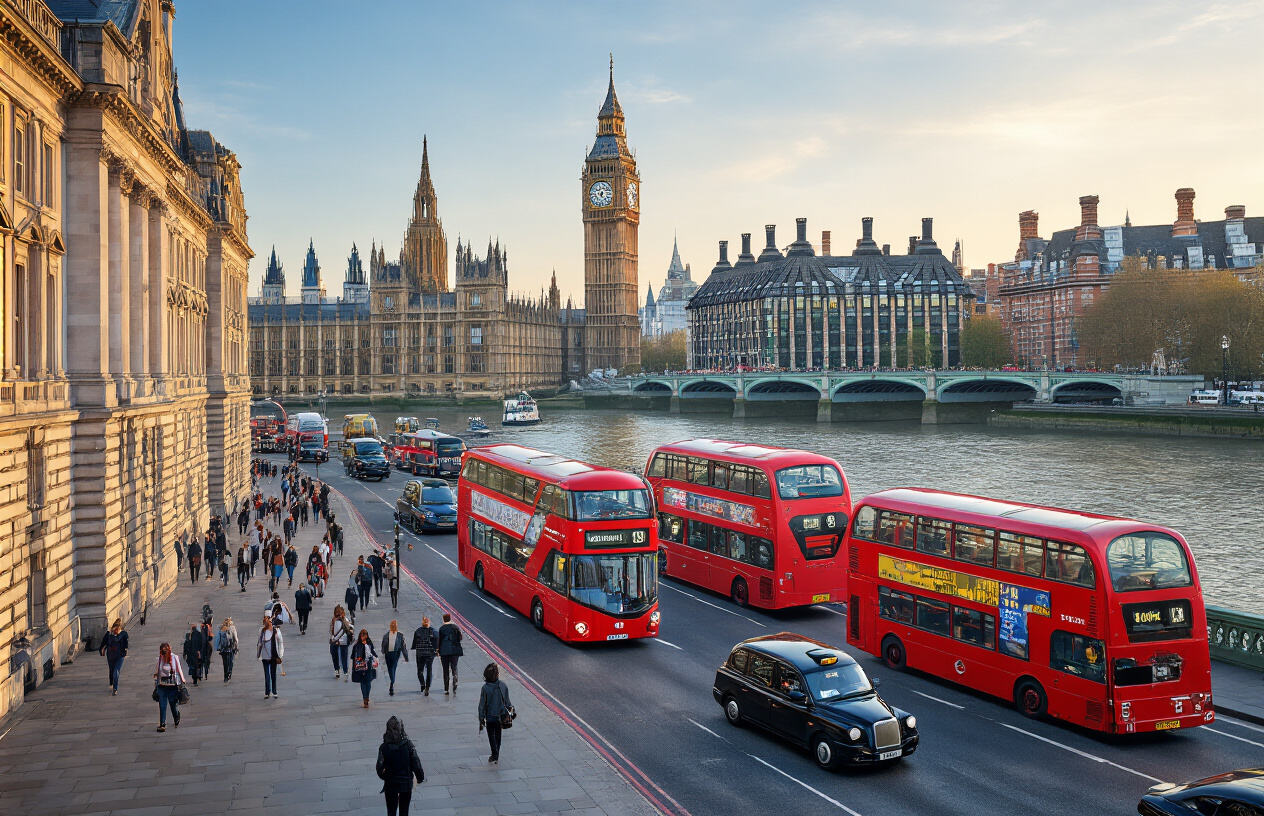
Westminster stands as the epicenter of British political power, housing the most significant government institutions that shape the nation’s destiny. The Palace of Westminster, home to both Houses of Parliament, represents over 900 years of democratic evolution. Within its Gothic Revival walls, the House of Commons and House of Lords debate legislation that affects 67 million Britons and influences global politics.
Downing Street remains one of the world’s most recognizable political addresses. Number 10 serves as the Prime Minister’s official residence and workplace, while Number 11 houses the Chancellor of the Exchequer. These modest Georgian townhouses belie their immense political significance, serving as the nerve center for executive decision-making.
Whitehall stretches between Parliament and Trafalgar Square, hosting major government departments including the Foreign Office, Treasury, and Cabinet Office. Civil servants working in these imposing buildings implement policies that reach every corner of the United Kingdom and beyond. The area’s concentration of political power makes it a magnet for diplomats, lobbyists, and journalists from around the world.
Buckingham Palace adds constitutional monarchy to this political landscape. While the monarch’s role is largely ceremonial, the palace serves as the focal point for state ceremonies and diplomatic receptions that reinforce Britain’s soft power globally.
Financial District’s Global Economic Influence
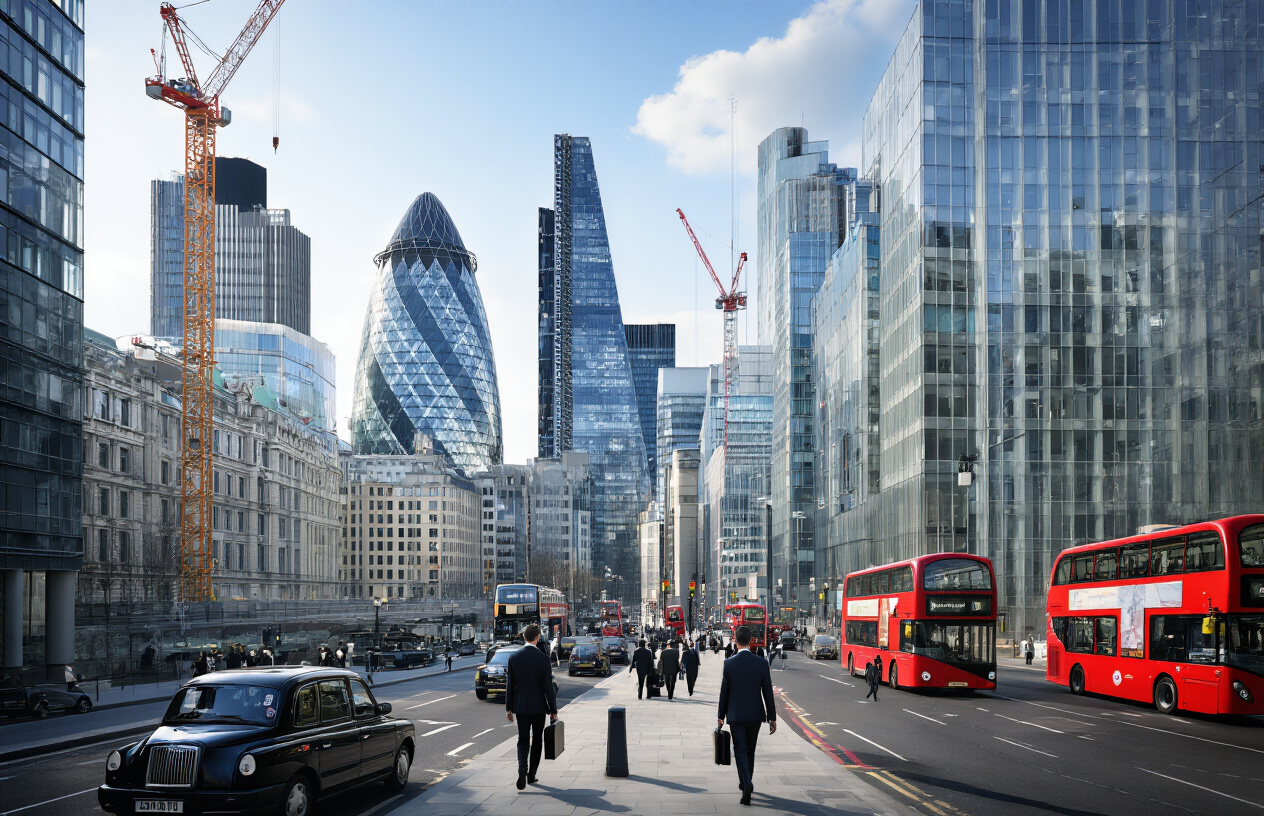
The City of London, known simply as “the City,” occupies just one square mile but wields disproportionate global financial influence. This ancient area houses the London Stock Exchange, Bank of England, and headquarters of major international banks, making it one of the world’s premier financial centers alongside New York and Hong Kong.
The Bank of England, Britain’s central bank since 1694, sets monetary policy that ripples through global markets. Its decisions on interest rates and quantitative easing affect currencies, commodities, and investment flows worldwide. The iconic Threadneedle Street institution remains a pillar of international financial stability.
Canary Wharf represents London’s modern financial expansion. This gleaming district of skyscrapers houses major investment banks, insurance companies, and financial services firms. The contrast between the historic City and ultra-modern Canary Wharf illustrates London’s ability to blend tradition with innovation in financial services.
Lloyd’s of London continues its 300-year tradition of insuring unique and complex risks. From shipping to space satellites, Lloyd’s sophisticated risk assessment capabilities make it indispensable to global commerce. The insurance market’s distinctive building, designed by Richard Rogers, symbolizes London’s architectural innovation.
London’s financial markets handle trillions in daily transactions. The city’s time zone advantage allows it to bridge Asian and American trading sessions, while English common law provides a trusted legal framework for international contracts and disputes.
Cultural Landmarks and Tourist Attractions
London’s cultural landscape blends millennia of history with contemporary creativity. The Tower of London, a UNESCO World Heritage site, has served as royal palace, prison, and treasury for nearly 1,000 years. The Crown Jewels housed within its walls attract millions of visitors who marvel at symbols of British monarchy and craftsmanship.
The British Museum holds treasures from civilizations across the globe, including the Rosetta Stone and Parthenon sculptures. This institution embodies London’s role as a cultural crossroads where artifacts from ancient Egypt, Greece, and countless other cultures find permanent homes alongside British historical objects.
Westminster Abbey represents both spiritual and national significance. This Gothic masterpiece has witnessed coronations, royal weddings, and state funerals for centuries. Poets’ Corner honors literary giants from Chaucer to Dickens, while the tomb of the Unknown Warrior commemorates sacrifice in service to the nation.
The South Bank cultural quarter showcases London’s modern artistic achievements. The National Theatre, Tate Modern, and Shakespeare’s Globe create a vibrant arts district along the Thames. The London Eye provides breathtaking views of the city’s sprawling landscape, connecting visitors with London’s geographic scale and architectural diversity.
Covent Garden balances commercial appeal with cultural heritage. Street performers entertain crowds while boutique shops and restaurants occupy historic market buildings. This area demonstrates London’s genius for repurposing historical spaces for contemporary use while maintaining their essential character.
Understand Britain’s Geographic Landscape and Borders
England’s Diverse Regions and Natural Features
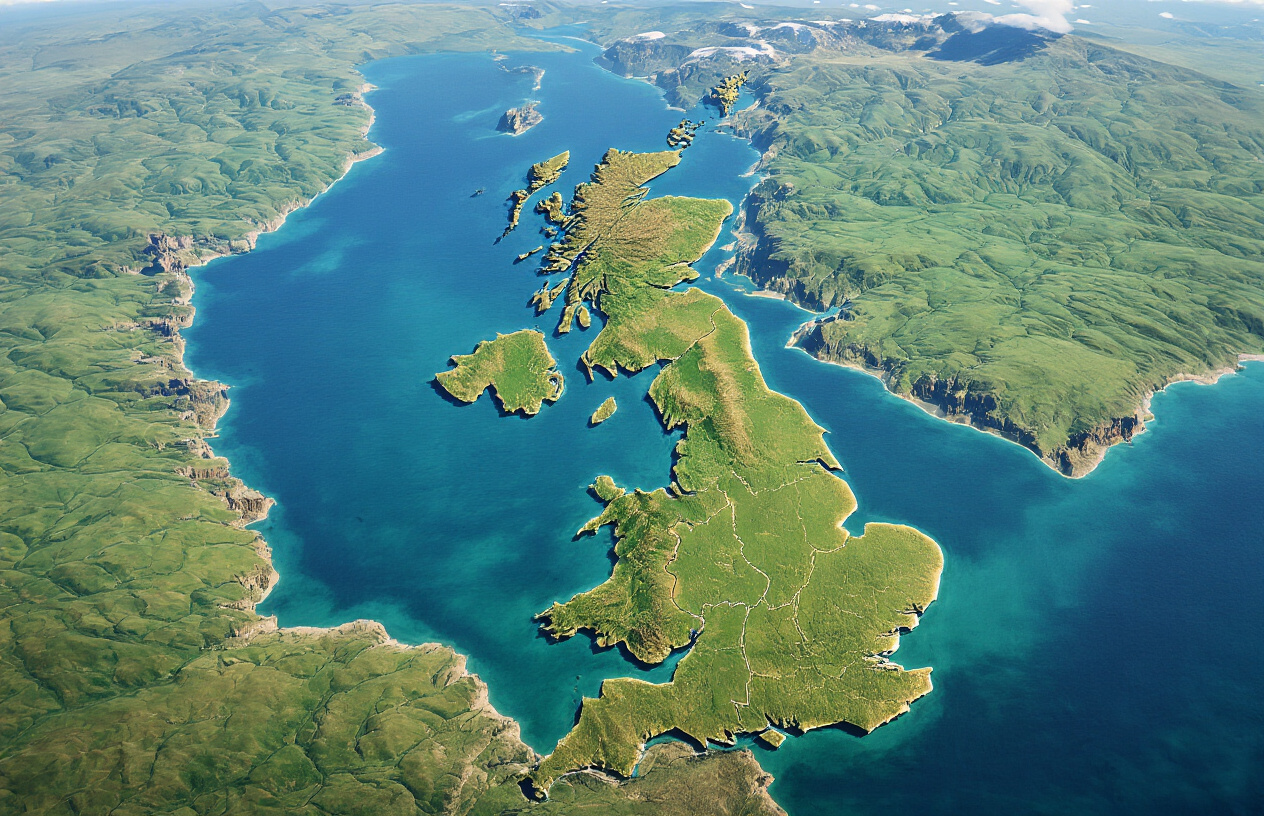
England stretches across 50,350 square miles of remarkably varied terrain, from rolling countryside to dramatic coastlines. The Pennines form England’s backbone, running north-south through the center and earning the nickname “the spine of England.” These ancient hills separate the industrial northwest from the agricultural northeast, creating distinct regional identities.
The Lake District in Cumbria showcases England’s most spectacular scenery, with 16 major lakes carved by glacial action surrounded by fells reaching over 3,000 feet. Scafell Pike stands as England’s highest peak at 3,209 feet. Moving south, the Yorkshire Dales present limestone pavements, dry stone walls, and traditional farming communities that have shaped the landscape for centuries.
England’s coastline spans 2,800 miles, featuring the white chalk cliffs of Dover, the rugged granite shores of Cornwall, and the sandy beaches of Norfolk. The Jurassic Coast in Dorset reveals 185 million years of geological history through its dramatic rock formations and fossil deposits.
The Thames River system drains much of southern England, flowing 215 miles from the Cotswolds to the North Sea. Other major rivers include the Severn, Trent, and Great Ouse, creating fertile valleys that support agriculture and urban development.
Regional differences are striking: Cornwall’s Celtic heritage contrasts sharply with East Anglia’s flat agricultural lands, while the industrial Midlands differ completely from the pastoral beauty of the Cotswolds.
Scotland’s Highlands and Historic Territories
Scotland occupies the northern third of Great Britain, covering 30,414 square miles of some of Europe’s most breathtaking wilderness. The Highland Boundary Fault divides the country into distinct geological regions, creating the Highlands, Central Belt, and Southern Uplands.
The Scottish Highlands contain Britain’s most dramatic mountains, with Ben Nevis rising 4,413 feet as the UK’s tallest peak. The Grampian Mountains stretch across central Scotland, while the Northwest Highlands feature ancient Torridonian sandstone and Lewisian gneiss among the world’s oldest rocks. Cairngorm National Park protects vast areas of sub-arctic plateau and ancient Caledonian pine forests.
Scotland’s coastline extends over 6,200 miles when including its 790 islands. The Inner and Outer Hebrides scatter across the Atlantic, each with unique landscapes from Skye’s jagged Cuillin mountains to Lewis’s prehistoric stone circles. Orkney and Shetland lie far to the north, where Neolithic villages like Skara Brae reveal 5,000-year-old settlements.
The Great Glen cuts diagonally across the Highlands, containing famous lochs including Loch Ness. Loch Lomond and the Trossachs form Scotland’s first national park, while the Borders region features gentle hills and historic abbeys that witnessed centuries of English-Scottish conflict.
Scotland’s rivers include the Tay, Spey, and Tweed, supporting salmon runs and whisky production that depend on pure Highland water.
Wales’ Mountainous Terrain and Coastal Beauty
Wales packs extraordinary diversity into just 8,023 square miles, making it one of Europe’s most mountainous countries relative to its size. Snowdonia National Park dominates the north, where Snowdon (Yr Wyddfa) rises 3,560 feet above dramatic glacial valleys. The park contains 15 peaks over 3,000 feet, connected by knife-edge ridges and surrounded by dark lakes called “llyns.”
The Brecon Beacons National Park spans south-central Wales, featuring distinctive flat-topped mountains carved from Old Red Sandstone. Pen y Fan, the highest peak in southern Britain at 2,907 feet, offers panoramic views across the Severn Valley and Bristol Channel.
Wales boasts 870 miles of coastline, designated as the Wales Coast Path – the world’s first complete coastal walking route around an entire country. Pembrokeshire’s sea cliffs shelter colonies of seals and seabirds, while the Gower Peninsula features pristine beaches and limestone headlands. Cardigan Bay supports dolphins, porpoises, and grey seals in Britain’s largest bay.
The Cambrian Mountains form Wales’ green backbone, containing the source of major rivers including the Severn, Wye, and Rheidol. These uplands support traditional sheep farming and provide water supplies for much of Wales and western England.
Coal valleys like the Rhondda carved deep into the southern mountains created unique communities, while the Conwy Valley and Llangollen preserve medieval castles and historic market towns.
Northern Ireland’s Strategic Position and Landscapes
Northern Ireland occupies 5,460 square miles in the northeast corner of Ireland, separated from Scotland by just 13 miles across the North Channel. This strategic position has influenced its history, culture, and economic development for millennia.
The Giant’s Causeway represents Northern Ireland’s most famous natural wonder – 40,000 interlocking basalt columns created by volcanic activity 60 million years ago. The Antrim Coast features dramatic cliffs, hidden bays, and the rope bridge at Carrick-a-Rede, suspended 100 feet above crashing Atlantic waves.
Lough Neagh dominates the center of Northern Ireland as the British Isles’ largest freshwater lake, covering 153 square miles. The Mourne Mountains rise sharply from the southeastern coast, where Slieve Donard reaches 2,789 feet. These granite peaks inspired C.S. Lewis’s Narnia chronicles and offer hiking trails with views across the Irish Sea to the Isle of Man.
The River Bann flows north from the Mournes through Lough Neagh to reach the Atlantic at Coleraine, dividing Northern Ireland roughly in half. The Lagan Valley contains Belfast, while the Foyle system drains the western regions toward Derry/Londonderry.
Fermanagh’s lakeland scenery centers on Lough Erne, where medieval castles dot wooded islands. The Causeway Coastal Route connects geological wonders, historic sites, and traditional fishing villages, showcasing Northern Ireland’s compact but diverse landscapes within easy driving distance.
Decode the Union Jack’s Symbolic Meaning
Historical Origins of the Flag Design
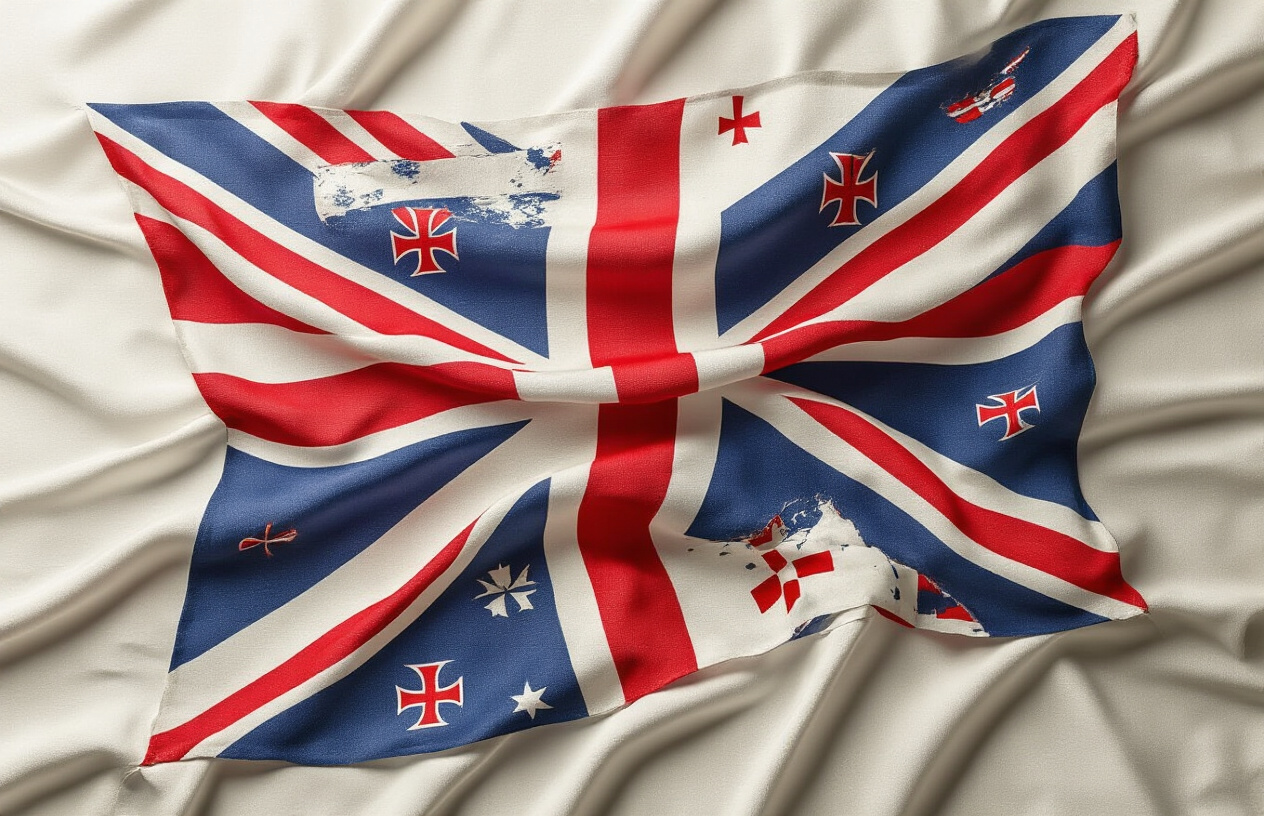
The Union Jack came together through centuries of political marriages and territorial unions, not some grand design meeting. When James VI of Scotland became James I of England in 1603, the kingdoms needed a flag that represented both nations. The first version appeared in 1606, combining the red cross of St. George (England) with the blue and white saltire of St. Andrew (Scotland).
This early design lasted over 200 years until Ireland joined the mix. After the Act of Union in 1801 brought Ireland into the United Kingdom, designers added the red saltire of St. Patrick to create the flag we know today. The challenge was fitting three distinct crosses into one design without losing their individual identities.
The positioning wasn’t random either. English heraldic tradition demanded that St. George’s cross take the dominant position, sitting on top of the other elements. The Scottish and Irish saltires were carefully arranged so neither appeared subordinate to the other – though keen observers will notice the white band of St. Andrew’s cross is broader on the upper hoist side, giving Scotland a slight visual advantage.
Component Flags Representing United Nations
Each element of the Union Jack tells the story of the constituent countries that make up the United Kingdom:
St. George’s Cross (England)
- Red cross on white background
- Represents England and Wales
- Takes the central, dominant position in the design
- Named after England’s patron saint
St. Andrew’s Saltire (Scotland)
- White diagonal cross on blue background
- Scotland’s national flag since the 13th century
- Forms the blue base of the Union Jack
- Creates the distinctive diagonal pattern
St. Patrick’s Saltire (Ireland)
- Red diagonal cross on white background
- Added in 1801 to represent Ireland
- Positioned to counterbalance St. Andrew’s cross
- Still remains despite Irish independence, representing Northern Ireland
Wales notably doesn’t appear in the Union Jack design. When the flag was created, Wales was already legally incorporated into England through earlier Acts of Union, so it wasn’t considered a separate entity requiring representation.
Official Usage and Protocol Guidelines
The Union Jack follows strict protocols that many people don’t realize exist. The flag has a correct way up – the broader white stripe should be at the top of the flag on the side nearest the flagpole. Flying it upside down is technically a distress signal, though most people wouldn’t notice the difference.
Government buildings must fly the Union Jack on specific designated days throughout the year, including royal birthdays, Remembrance Sunday, and Commonwealth Day. The flag flies from sunrise to sunset, and there are detailed rules about when it should fly at half-mast during periods of mourning.
Private citizens can fly the Union Jack whenever they want, but official buildings need permission to fly it outside of designated flag days. When the flag becomes worn or damaged, it should be disposed of respectfully, typically through burning in a private ceremony rather than throwing it in regular waste.
The flag takes precedence over all other flags in the UK except when foreign heads of state visit – then their national flag can be displayed alongside it at equal height.
Analyze Britain’s Population Dynamics and Demographics

Current Population Statistics and Distribution Patterns
The United Kingdom houses approximately 67.5 million people as of 2024, making it the third most populous country in Europe after Germany and France. England dominates the population landscape with roughly 56 million residents, while Scotland contributes 5.5 million, Wales 3.1 million, and Northern Ireland 1.9 million.
Population density reveals striking regional contrasts across the UK. England packs an average of 434 people per square kilometer, creating one of Europe’s most densely populated areas. London and the Southeast bear the heaviest concentration, with Greater London alone hosting over 9 million residents. The metropolitan areas of Birmingham, Manchester, Leeds, and Glasgow follow as major population centers.
Rural areas tell a different story entirely. Scotland’s Highlands, mid-Wales, and Northern England’s remote regions maintain population densities below 25 people per square kilometer. This uneven distribution creates significant challenges for infrastructure development, healthcare delivery, and economic planning.
Urban migration continues reshaping Britain’s demographic map. Young adults consistently move from smaller towns to major cities seeking educational and career opportunities. Manchester, Bristol, and Edinburgh have experienced particularly strong growth among the 20-35 age bracket. Meanwhile, coastal towns like Brighton and seaside communities in Devon attract retirees, creating age-segregated population pockets across different regions.
Immigration Trends and Multicultural Communities
Britain’s multicultural fabric reflects centuries of immigration waves that have fundamentally transformed its social landscape. Recent data shows that 14% of the UK population was born outside the country, with London reaching an extraordinary 37% foreign-born population.
European migration patterns shifted dramatically following Brexit. Pre-2016, Polish, Romanian, and other Eastern European nationals represented the largest immigrant groups. Post-Brexit restrictions have redirected migration flows, with increased arrivals from India, Nigeria, Pakistan, and other Commonwealth nations. The new points-based immigration system prioritizes skilled workers, particularly in healthcare, technology, and engineering sectors.
Regional distribution of immigrant communities creates distinct cultural enclaves throughout the UK. Birmingham hosts substantial South Asian populations, particularly in areas like Sparkhill and Alum Rock. London’s diversity spans from Turkish communities in North London to Caribbean populations in South London boroughs. Manchester’s Curry Mile showcases one of Europe’s largest concentrations of South Asian restaurants and businesses.
Second and third-generation immigrant families increasingly identify as British while maintaining cultural traditions. Mixed-heritage households now represent the fastest-growing demographic segment, particularly in urban areas. Cities like Leicester and Bradford have become majority-minority locations, where traditional white British residents comprise less than 50% of the population.
Age Demographics and Social Implications
Britain faces an aging population crisis that will reshape its economic and social systems over the coming decades. The median age has risen to 40.6 years, with over 12.4 million people aged 65 and above. Projections suggest this elderly population will reach 17 million by 2040, creating unprecedented demands on healthcare, pensions, and social services.
The baby boomer generation, born between 1946-1964, represents the largest demographic bulge in British history. Their retirement creates a “silver tsunami” affecting everything from housing markets to healthcare staffing. Many coastal towns already experience this phenomenon, with over 30% of residents in places like Eastbourne and Worthing exceeding retirement age.
Declining birth rates compound the aging challenge. The UK fertility rate has dropped to 1.61 children per woman, well below the 2.1 replacement level needed for natural population growth. Young families increasingly delay having children due to housing costs, student debt, and career pressures. This trend particularly affects middle-class professionals in expensive areas like London and Southeast England.
Regional age variations create distinct social and economic environments. University cities like Cambridge, Oxford, and Durham maintain younger populations due to student influx. Traditional industrial areas in Northern England and Wales show older age profiles as young people migrate south for opportunities. Scotland faces particular challenges with rural depopulation as younger generations abandon farming and fishing communities.
These demographic shifts influence political voting patterns, consumer markets, and infrastructure planning. Older voters tend to support conservative policies, while younger demographics favor progressive social changes. Businesses adapt marketing strategies and product offerings to serve aging consumers, while local councils struggle to balance services between elderly care needs and youth programs.
Examine Britain’s Economic Powerhouse Status
Key Industries Driving National Prosperity
Britain’s economy thrives on a diverse foundation of industries that have shaped its global standing. The manufacturing sector remains a cornerstone, producing everything from luxury vehicles like Rolls-Royce and Bentley to advanced aerospace components through companies like BAE Systems. The automotive industry alone employs over 800,000 people and contributes billions to the national GDP.
Energy production plays a massive role, with North Sea oil and gas reserves generating substantial revenue while offshore wind farms position Britain as a renewable energy leader. The creative industries have exploded in recent years, contributing over £116 billion annually through film production, gaming, music, and digital media. Companies like Rockstar Games and major film studios choosing British locations boost this sector significantly.
Pharmaceuticals and biotechnology represent another powerhouse, with giants like GlaxoSmithKline and AstraZeneca leading global drug development. The sector received massive attention during COVID-19 when Oxford-AstraZeneca vaccine development showcased British scientific capabilities to the world.
International Trade Relationships and Partnerships
Post-Brexit Britain has reshaped its trade relationships while maintaining strong economic ties globally. The European Union remains the largest trading partner, accounting for approximately 42% of UK exports despite political changes. Trade agreements with individual EU member states continue facilitating business relationships.
The Commonwealth nations present growing opportunities, with countries like India, Australia, and Canada expanding trade volumes. The recent Comprehensive and Progressive Agreement for Trans-Pacific Partnership (CPTPP) application signals Britain’s Pacific pivot strategy.
China represents a complex but crucial relationship, with bilateral trade exceeding £100 billion annually. Despite political tensions, economic interdependence remains strong across technology, education, and luxury goods sectors. The United States continues as Britain’s second-largest trading partner, with the “special relationship” extending into economic cooperation across defense, technology, and financial services.
Financial Services Sector’s Global Dominance
London’s financial district stands as one of the world’s most influential financial centers, competing directly with New York and Hong Kong. The City of London handles roughly 40% of global foreign exchange trading, processing over $6.6 trillion daily. This dominance stems from favorable time zones, English language advantages, and centuries of banking expertise.
British banks like HSBC, Barclays, and Standard Chartered maintain global operations spanning continents. The insurance market, anchored by Lloyd’s of London, underwrites risks worldwide from natural disasters to space missions. Asset management companies control trillions in global investments, making London a decision-making hub for international capital flows.
Fintech innovation has exploded, with companies like Revolut, Monzo, and Wise revolutionizing digital banking. Open banking regulations have spurred competition and innovation, positioning Britain ahead of many developed nations in financial technology adoption.
Innovation and Technology Sector Growth
Britain’s tech sector has become Europe’s most valuable, worth over £765 billion and growing rapidly. London ranks as Europe’s top tech hub, attracting more venture capital investment than any other European city. The government’s digital strategy and favorable startup ecosystem have created unicorn companies across various sectors.
Artificial intelligence research thrives through partnerships between universities like Oxford, Cambridge, and Imperial College with private companies. DeepMind, owned by Google’s parent company Alphabet, continues groundbreaking AI research from its London headquarters. The gaming industry produces global hits while employing over 47,000 people across development studios nationwide.
Quantum computing research places Britain at the forefront of next-generation computing technology. Government investment in quantum technologies aims to maintain competitive advantages in this emerging field. The space industry contributes over £16 billion annually, with companies like Surrey Satellite Technology and Inmarsat leading satellite innovation. Green technology development accelerates as Britain pursues net-zero carbon goals, creating new industries around renewable energy, electric vehicles, and sustainable manufacturing processes.
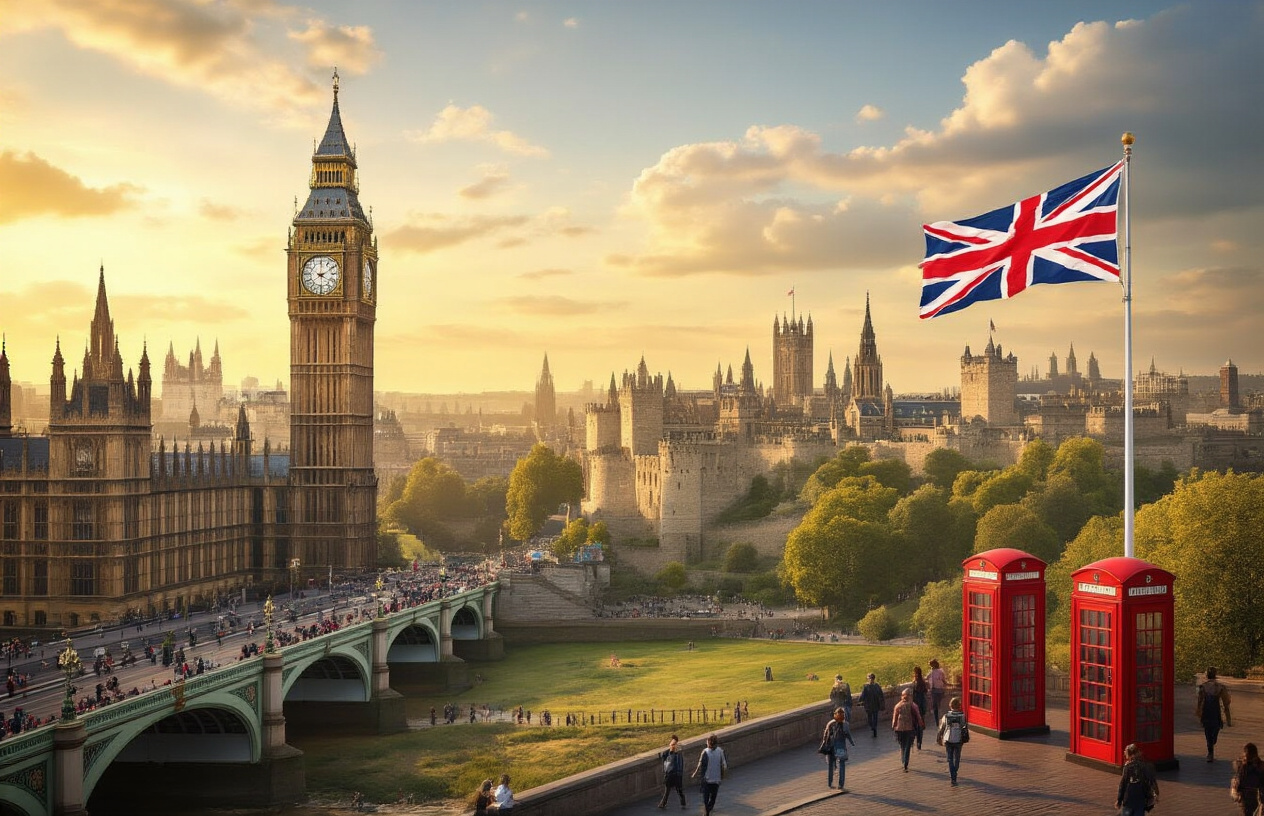
The United Kingdom stands as a fascinating blend of ancient traditions and modern innovation, where centuries of history have shaped a unique cultural identity that continues to influence the world today. From the royal ceremonies that capture global attention to the literary giants whose works remain timeless, Britain’s cultural heritage runs deep through every aspect of daily life. London serves as the perfect microcosm of this diversity, where historic landmarks sit alongside cutting-edge architecture, and where people from all corners of the globe have made their home.
Britain’s story is one of remarkable transformation and resilience. The Union Jack tells the tale of four nations united under one flag, while the country’s 67 million residents represent a rich tapestry of backgrounds and experiences. Despite its relatively small size, the UK punches well above its weight economically, remaining a major player on the world stage through finance, technology, and creative industries. Whether you’re drawn to explore its medieval castles, bustling cities, or rolling countryside, Britain offers something for everyone who wants to understand how the past and present can work together to create something truly special.

Author: Nasir Uddin
Nasir Uddin is a dedicated writer and researcher at BanglaLook.com, where he explores topics related to education, Bangladeshi culture, lifestyle, and travel. With a strong passion for learning and storytelling, he blends personal observation with well-researched insights to help readers better understand Bangladesh and the world around them.