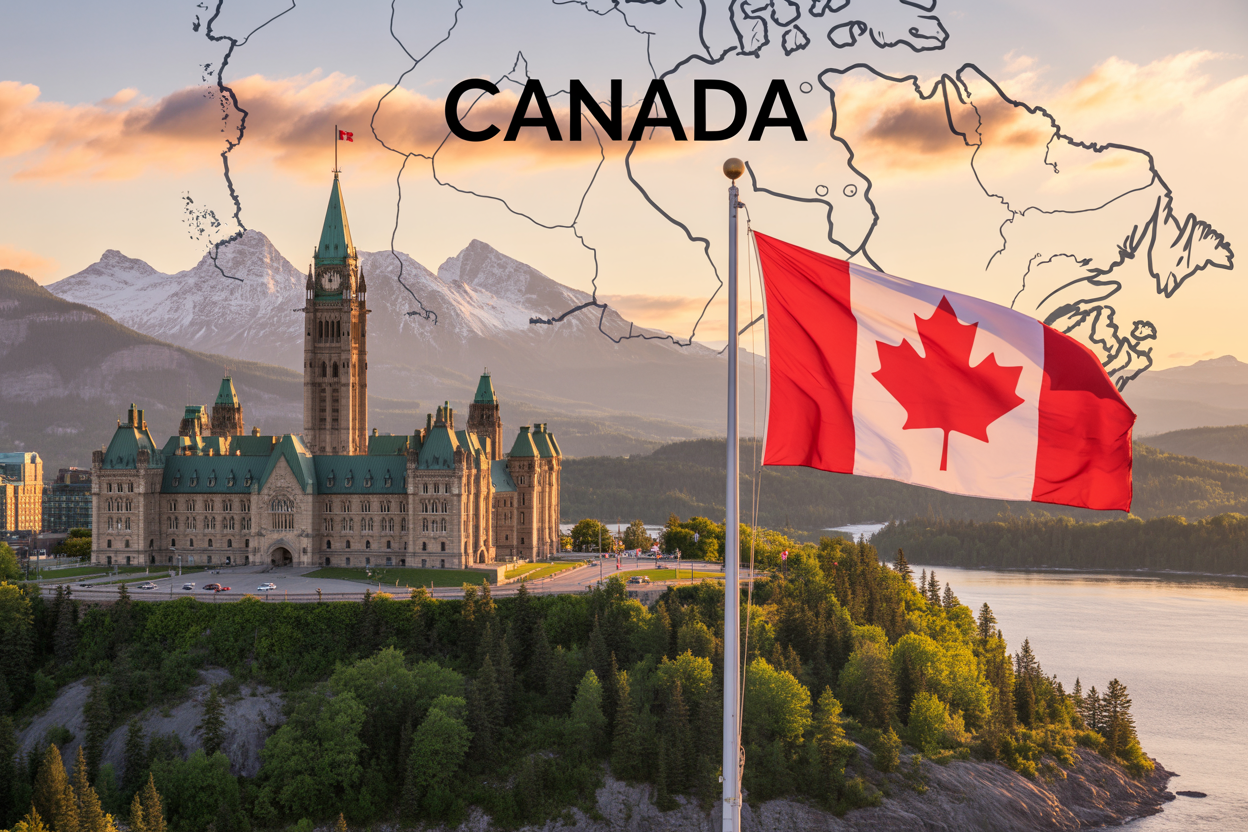
Canada stands as the world’s second-largest country by land area, stretching from the Atlantic to the Pacific and Arctic oceans. This comprehensive guide serves students, travelers, and anyone curious about the Great White North who wants to understand what makes Canada unique.
We’ll explore Canada’s remarkable transformation from Indigenous territories to a modern multicultural nation, tracing key events that shaped the country we know today. You’ll discover how Canadian culture blends French and English influences with Indigenous traditions and immigrant communities from around the globe.
We’ll also examine Canada’s economic foundation, built on vast natural resources like oil, minerals, and forests, plus a growing tech and service sector. From Ottawa’s role as the political capital to the stories behind Canada’s distinctive red maple leaf flag, you’ll get a complete picture of this fascinating North American nation and its 38 million residents.
Canada’s Historical Journey from Indigenous Roots to Modern Nation
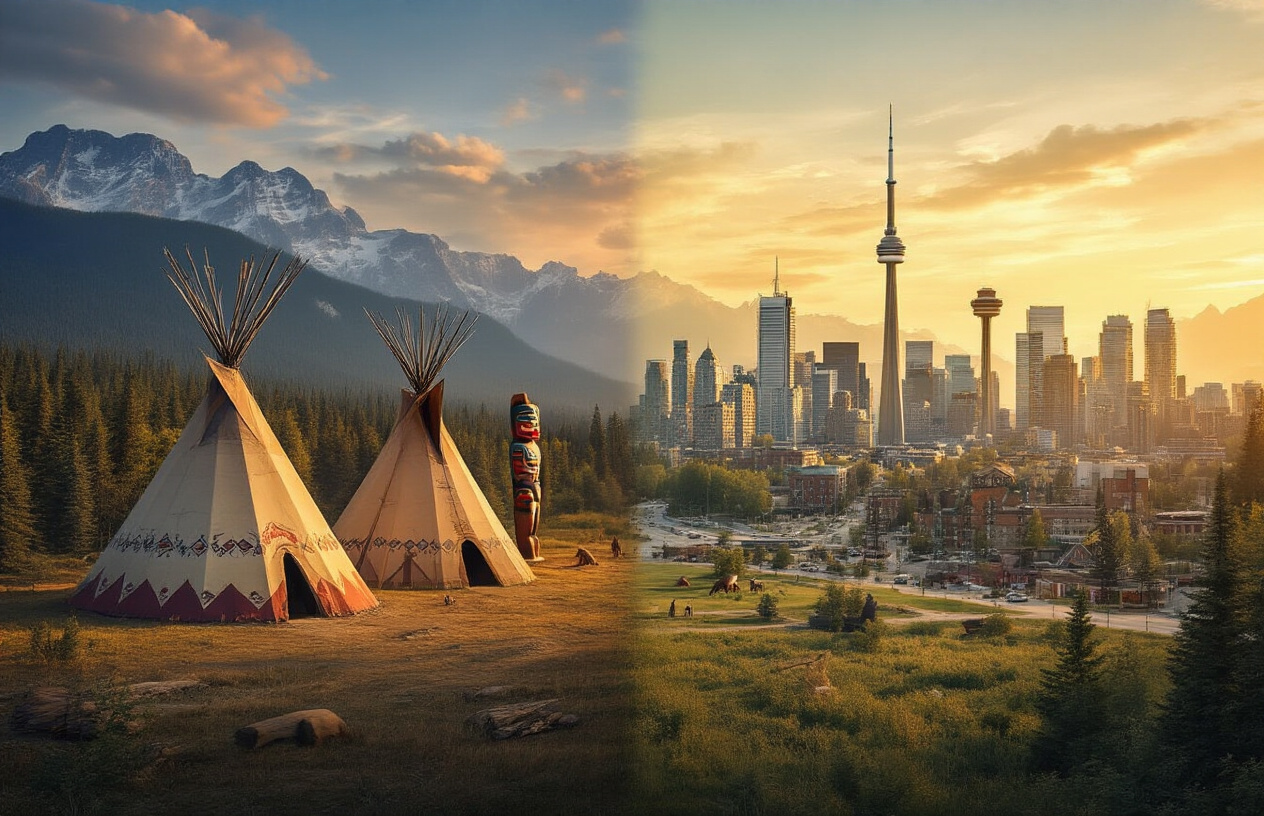
Indigenous peoples and their foundational civilizations
Long before European ships appeared on the horizon, diverse Indigenous nations thrived across what would become Canada. The Haudenosaunee (Iroquois) Confederacy established sophisticated democratic governance systems that would later influence modern political thought. Their Great Law of Peace created a framework for decision-making that emphasized consensus and collective responsibility.
In the Pacific Northwest, coastal peoples like the Haida, Tlingit, and Salish developed complex societies centered around salmon runs and cedar forests. These communities created remarkable art forms, including totem poles and intricate carvings that told stories spanning generations. Their potlatch ceremonies demonstrated wealth redistribution systems that maintained social balance.
The vast prairies supported nomadic nations such as the Blackfoot, Cree, and Dakota, who developed deep relationships with buffalo herds. These groups created portable dwellings, intricate beadwork, and oral traditions that preserved knowledge about land management, astronomy, and medicine.
Arctic peoples, including the Inuit, mastered survival in one of Earth’s harshest environments. They developed innovative technologies like kayaks, snow houses, and sophisticated hunting techniques that allowed them to flourish in conditions that challenged even modern explorers.
Each nation maintained distinct languages, spiritual practices, and governance structures. Trade networks stretched across the continent, connecting communities from coast to coast. These foundational civilizations established the first political, social, and economic systems on the land, creating a rich cultural foundation that continues to influence Canadian identity today.
European exploration and early colonial settlements
Jacques Cartier’s 1534 voyage up the St. Lawrence River marked the beginning of sustained European contact with Indigenous peoples. His encounters with Haudenosaunee communities at Stadacona (Quebec City) and Hochelaga (Montreal) opened trade relationships that would reshape both societies.
Samuel de Champlain founded Quebec City in 1608, establishing the first permanent French settlement in what would become Canada. The French colonial model differed significantly from British approaches – New France emphasized fur trading partnerships with Indigenous nations rather than large-scale agricultural settlement. French coureurs de bois (runners of the woods) lived among Indigenous communities, learned their languages, and often married into their families.
The Hudson’s Bay Company, established in 1670, created a vast commercial empire centered on fur trading. Company posts became focal points where Indigenous trappers, European traders, and mixed-heritage Métis communities converged. This trading system created new cultural syntheses and economic relationships that stretched across the continent.
British military conquest of New France in 1759 brought significant changes. The Treaty of Paris (1763) transferred French territories to British control, but guaranteed French-speaking Catholics the right to maintain their religion, language, and civil law system. This arrangement established Canada’s earliest experience with managing cultural diversity within a single political framework.
Maritime provinces saw different settlement patterns. Nova Scotia attracted New England planters and German Protestants, while Scottish Highland clearances brought thousands of Gaelic-speaking immigrants to Cape Breton and Prince Edward Island.
Confederation and the birth of modern Canada
The British North America Act of 1867 united four provinces – Ontario, Quebec, Nova Scotia, and New Brunswick – into the Dominion of Canada. This wasn’t simply a British decision imposed from above; Canadian politicians like John A. Macdonald, George-Étienne Cartier, and Thomas D’Arcy McGee campaigned vigorously for federal union.
Political deadlock in the Province of Canada (modern Ontario and Quebec) had made governance nearly impossible. French and English representatives frequently blocked each other’s initiatives, creating legislative paralysis. Confederation offered a solution by creating separate provincial governments for Ontario and Quebec while establishing a federal system to handle shared concerns.
The American Civil War added urgency to discussions. British North Americans feared that a victorious Union Army might turn northward, and railway connections to American markets seemed vulnerable to political tensions. A transcontinental railway linking Atlantic and Pacific coasts became both a practical necessity and a symbol of national unity.
George Brown’s Clear Grits, Cartier’s Bleus, and Macdonald’s Conservatives put aside partisan differences to create the Great Coalition of 1864. Their collaboration at the Charlottetown and Quebec conferences laid groundwork for the new nation’s structure.
The resulting federal system balanced central authority with provincial autonomy. The federal government received powers over trade, defense, and criminal law, while provinces controlled education, healthcare, and local matters. This division reflected the practical need to respect Quebec’s distinct civil law system and Catholic education network while creating national institutions.
Key historical milestanes that shaped national identity
The completion of the Canadian Pacific Railway in 1885 physically united the country from sea to sea, but came at enormous human cost. Thousands of Chinese workers died building the mountain sections, and their contributions were followed by discriminatory head taxes that lasted until the 1940s. The railway’s completion sparked the North-West Rebellion, as Métis leader Louis Riel led resistance against federal policies that threatened traditional ways of life on the prairies.
World War I transformed Canada’s international status. Canadian Corps victories at Vimy Ridge and Passchendaele demonstrated military capability independent of British command. Prime Minister Robert Borden demanded separate Canadian representation at the Paris Peace Conference, marking the country’s emergence as a sovereign nation rather than merely a British dominion.
The Great Depression tested federal-provincial relationships as unemployment reached 30% in some regions. Prime Minister R.B. Bennett’s New Deal programs and the creation of the Canadian Broadcasting Corporation established federal roles in economic management and cultural expression. The decade also saw the rise of new political movements like Social Credit and the Co-operative Commonwealth Federation, which broadened Canada’s political spectrum.
World War II accelerated social and economic changes. Women entered the workforce in unprecedented numbers, Indigenous peoples served with distinction despite facing discrimination at home, and Japanese Canadians endured forced relocation and internment. Post-war prosperity enabled the creation of universal healthcare, the Canada Pension Plan, and expanded immigration programs that welcomed refugees and transformed the country’s ethnic composition.
The Quiet Revolution in Quebec during the 1960s challenged traditional federal arrangements. The October Crisis of 1970 saw federal troops deployed in peacetime for the first time, while the sovereignty movement gained political representation through the Parti Québécois. Constitutional debates culminated in the patriation of the Constitution in 1982, though Quebec never signed the resulting Charter of Rights and Freedoms.
Rich Cultural Tapestry of Canadian Society

Bilingual Heritage and Official Language Policies
Canada stands as one of the few truly bilingual nations in the world, with English and French holding equal status as official languages. This linguistic duality stems from the country’s colonial history, where British and French settlers established distinct communities that maintained their languages and cultures. The Official Languages Act of 1969, strengthened in 1988, ensures that Canadians can receive federal services in either language regardless of where they live.
French speakers, primarily concentrated in Quebec, represent about 22% of the population, while English dominates in the remaining provinces. New Brunswick holds the distinction of being Canada’s only officially bilingual province, where both languages enjoy constitutional protection. The federal government actively promotes bilingualism through education programs, requiring many civil servants to be functionally bilingual and funding French immersion schools across English-speaking provinces.
This bilingual framework creates unique opportunities and challenges. Canadian children often grow up learning both languages, giving them distinct advantages in the global marketplace. Major cities like Montreal, Ottawa, and Moncton showcase this linguistic blend daily, with street signs, government documents, and public announcements appearing in both languages.
Indigenous Cultural Contributions and Traditions
Long before European contact, Indigenous peoples developed sophisticated societies across the vast Canadian landscape. Today, over 630 First Nations communities, along with Inuit and Métis peoples, continue to enrich Canadian culture through their languages, traditions, and worldviews. More than 70 Indigenous languages survive, though many face extinction without active preservation efforts.
Indigenous contributions permeate Canadian identity in ways many people don’t fully recognize. Traditional knowledge guides environmental conservation efforts, while Indigenous art forms like totem poles, Inuit sculptures, and beadwork have become internationally recognized symbols of Canadian heritage. Pow wows, drumming circles, and traditional ceremonies attract participants from all backgrounds, fostering cross-cultural understanding.
The reconciliation process has brought Indigenous perspectives to the forefront of national conversations. Truth and Reconciliation Commission recommendations have prompted governments, schools, and organizations to incorporate Indigenous history and perspectives into their operations. Land acknowledgments have become commonplace at public events, recognizing the original stewards of Canadian territories.
Modern Indigenous leaders actively shape policy discussions on everything from climate change to resource development. Their emphasis on sustainable living and respect for natural resources offers valuable insights as Canada navigates environmental challenges and economic development decisions.
Multicultural Immigration Patterns and Diversity
Canada’s immigration story reflects waves of newcomers who have transformed the nation’s cultural landscape. While early immigrants came primarily from Britain and France, the 20th and 21st centuries brought people from every corner of the globe. The Immigration Act of 1976 established a points-based system that prioritizes skills and education over country of origin, creating one of the world’s most diverse societies.
Major cities like Toronto, Vancouver, and Montreal have become incredibly multicultural hubs. Toronto alone is home to residents from over 200 countries speaking more than 180 languages. Neighborhoods like Little Italy, Chinatown, Little India, and Greektown offer authentic cultural experiences while contributing to the broader Canadian mosaic.
Recent immigration patterns show significant arrivals from Asia, Africa, and the Middle East. Countries like India, China, the Philippines, and Syria have become major source countries for new Canadians. Each community brings distinct traditions, foods, festivals, and business practices that enrich local economies and cultural offerings.
| Region | Primary Countries | Cultural Contributions |
|---|---|---|
| Asia | India, China, Philippines | Festivals, cuisine, business networks |
| Africa | Nigeria, Ethiopia, Somalia | Music, art, community organizations |
| Middle East | Syria, Lebanon, Iran | Food, traditions, professional expertise |
| Latin America | Colombia, Mexico, Brazil | Music, dance, entrepreneurship |
Canada’s multiculturalism policy, officially adopted in 1971, encourages newcomers to maintain their cultural identities while participating fully in Canadian society. This approach differs from the “melting pot” concept, instead celebrating diversity as a source of national strength. Public funding supports cultural festivals, heritage language schools, and community organizations that help preserve and share various traditions.
The success of this multicultural approach shows in Canada’s relatively low levels of ethnic tension and high rates of immigrant integration. Second and third-generation Canadians often maintain connections to their ancestral cultures while developing distinctly Canadian identities that blend multiple influences.
Ottawa as Canada’s Political and Administrative Center
Strategic Location and Historical Significance
Ottawa sits perfectly positioned along the Ottawa River, straddling the border between Ontario and Quebec. This location wasn’t chosen by accident – Queen Victoria selected it as Canada’s capital in 1857 precisely because of its geographic advantages. The city offered a strategic compromise between the English and French populations, sitting roughly halfway between Toronto and Montreal while being far enough inland to avoid potential American military threats.
The area’s history stretches back thousands of years, originally inhabited by the Algonquin peoples who used the Ottawa River as a vital transportation route. European settlers arrived in the early 1800s, establishing Bytown (later renamed Ottawa) as a lumber town. The construction of the Rideau Canal from 1826 to 1832 transformed the settlement into a crucial transportation hub, connecting Ottawa to Kingston and providing a secure inland route to avoid the American-controlled St. Lawrence River.
When Confederation arrived in 1867, Ottawa’s central location made it the natural choice for Canada’s new capital. The decision balanced regional interests while ensuring the seat of government remained accessible to all provinces.
Government Institutions and National Landmarks
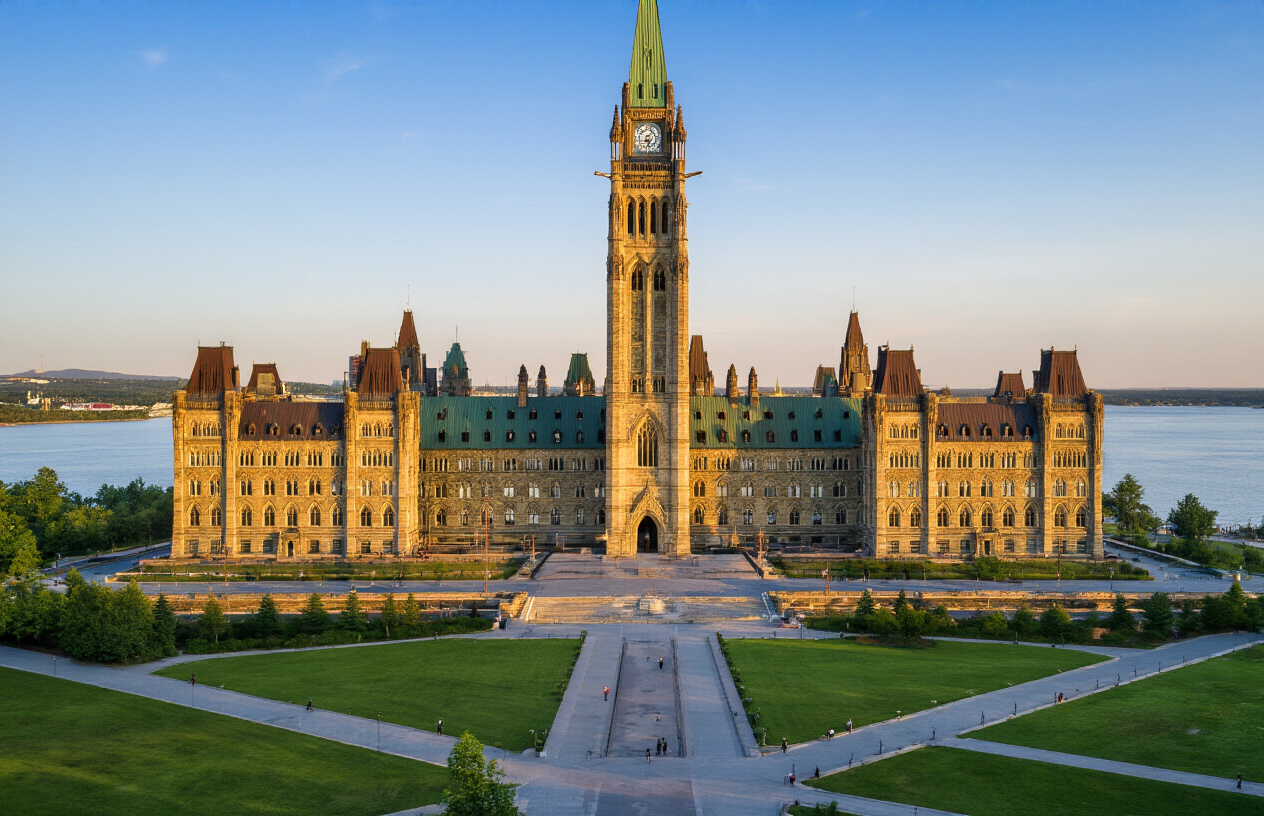
Parliament Hill stands as Ottawa’s crown jewel, housing Canada’s federal government in its iconic Gothic Revival buildings. The Centre Block, rebuilt after a devastating 1916 fire, contains the House of Commons and Senate chambers where Canada’s laws are debated and passed. The Peace Tower, rising 92 meters above the complex, houses the Memorial Chamber honoring Canada’s war dead and offers stunning views of the city below.
The Supreme Court of Canada building, completed in 1946, represents the country’s highest judicial authority. Its Art Deco design contrasts beautifully with Parliament’s Gothic architecture while maintaining the dignity befitting Canada’s final court of appeal.
Rideau Hall serves as the official residence of the Governor General, Canada’s representative of the Crown. This expansive estate has hosted countless state dinners, ceremonies, and official functions since 1867, welcoming world leaders and celebrating Canadian achievements.
The National Gallery of Canada, with its distinctive glass and granite design, houses the world’s most comprehensive collection of Canadian art alongside international masterpieces. The Canadian Museum of History, located across the river in Gatineau, Quebec, tells the story of Canada’s past through innovative exhibits and the world’s largest indoor collection of totem poles.
Cultural Attractions and Symbols of Canadian Identity
The Rideau Canal transforms Ottawa’s character with the seasons. In summer, boats navigate its historic locks while cyclists and joggers use the adjacent pathways. Winter brings the world’s largest naturally frozen skating rink, stretching 7.8 kilometers through the heart of the city. Thousands of residents and tourists lace up their skates to glide past downtown landmarks while enjoying hot chocolate and BeaverTails pastries from riverside vendors.
ByWard Market pulses with Canadian culture, featuring local artisans, farmers, and restaurateurs in one of Canada’s oldest public markets. The cobblestone streets come alive with street performers, while the market buildings house everything from maple syrup vendors to Indigenous craft makers.
Canada Day celebrations center on Parliament Hill, where hundreds of thousands gather annually to celebrate Canadian identity with concerts, ceremonies, and fireworks. The Changing of the Guard ceremony during summer months showcases military traditions dating back over a century.
The Canadian Tulip Festival each May transforms the city into a colorful celebration of friendship, commemorating the Netherlands’ gift of tulip bulbs after Canada’s liberation efforts in World War II. Over one million tulips bloom throughout the city, creating spectacular displays that attract visitors from around the globe.
Geographic Features and Regional Diversity Across Canada
Vast Territorial Expanse From Coast to Coast
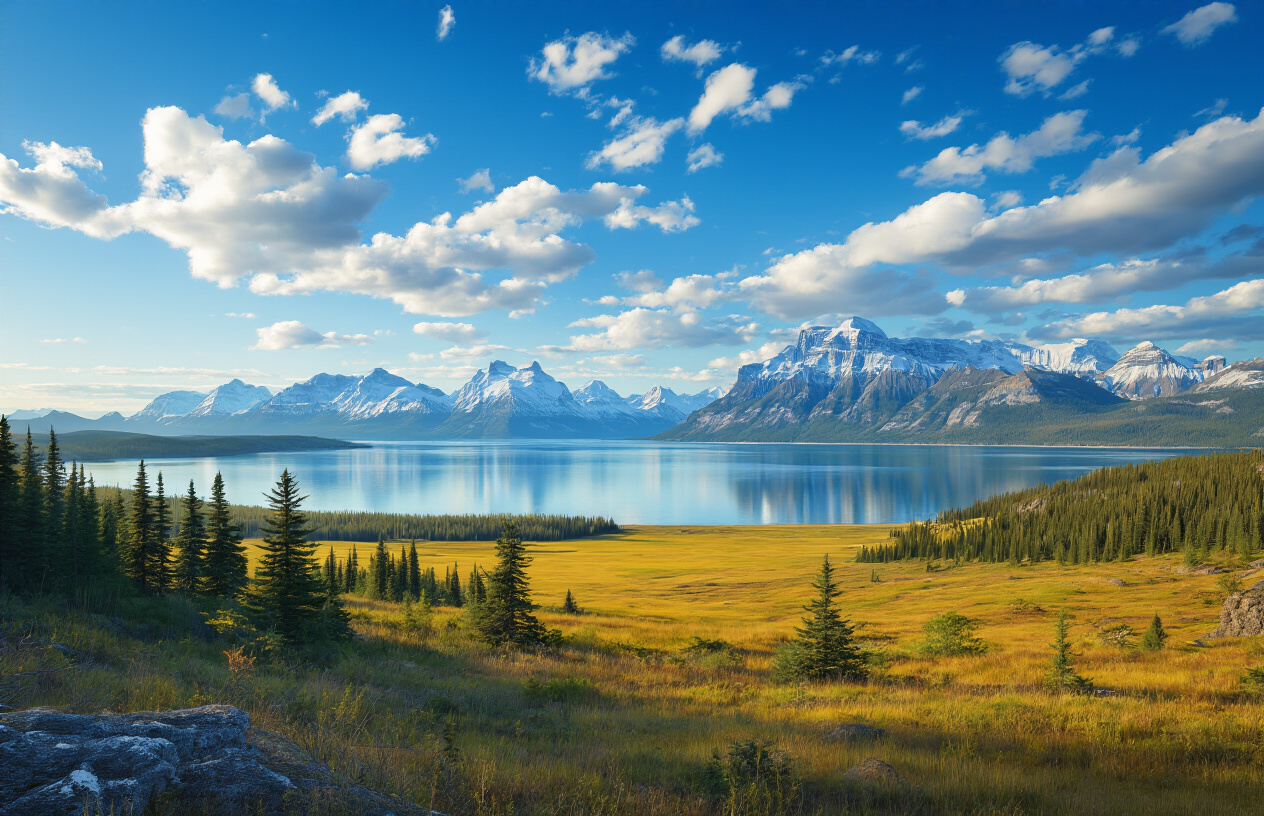
Canada stretches across an incredible 9.98 million square kilometers, making it the world’s second-largest country by total area. The nation spans six time zones and extends from the Atlantic Ocean in the east to the Pacific Ocean in the west, with the Arctic Ocean forming its northern boundary. This massive landmass encompasses everything from the rugged Rocky Mountains to the Great Plains, from dense boreal forests to Arctic tundra.
The country’s sheer size creates distinct geographical regions, each with unique characteristics. The Canadian Shield dominates the eastern and central portions, featuring ancient rock formations and thousands of lakes carved by glacial activity. The Western Cordillera includes the Coast Mountains and Rocky Mountains, while the Interior Plains stretch across the prairie provinces. The Arctic Archipelago consists of over 36,000 islands scattered across the northern reaches.
Major Cities and Provincial Capitals
Canada’s urban landscape reflects its regional diversity, with major population centers distributed across the provinces and territories. Toronto stands as the country’s largest city with over 2.9 million residents, serving as Ontario’s economic powerhouse. Montreal, Quebec’s largest city, maintains its status as a cultural and financial hub with 1.8 million inhabitants.
Vancouver anchors the west coast with 675,000 people in the city proper, though its metropolitan area houses over 2.6 million residents. Calgary and Edmonton compete as Alberta’s major urban centers, each exceeding one million in their metropolitan areas.
| Province/Territory | Capital | Largest City | Population |
|---|---|---|---|
| Ontario | Toronto | Toronto | 14.8 million |
| Quebec | Quebec City | Montreal | 8.6 million |
| British Columbia | Victoria | Vancouver | 5.2 million |
| Alberta | Edmonton | Calgary | 4.4 million |
| Manitoba | Winnipeg | Winnipeg | 1.4 million |
| Saskatchewan | Regina | Saskatoon | 1.2 million |
Natural Landmarks and Climate Variations
Canada’s landscape showcases some of the world’s most spectacular natural features. Niagara Falls thunders along the Ontario-New York border, attracting millions of visitors annually. The Canadian Rockies feature towering peaks, pristine lakes, and glaciers that define Banff and Jasper National Parks. The Bay of Fundy experiences the world’s highest tides, reaching up to 16 meters in height.
Climate varies dramatically across the country’s expanse. The Maritime provinces experience a humid continental climate with mild summers and cold, snowy winters. Central Canada endures temperature extremes, with Toronto seeing summer highs around 26°C and winter lows of -6°C. The prairie provinces face continental conditions with hot summers and bitterly cold winters, where temperatures can plummet below -30°C.
British Columbia’s coastal regions enjoy the mildest climate, thanks to Pacific Ocean influence. Vancouver rarely sees snow, with winter temperatures hovering around 6°C. The Arctic territories experience polar conditions, with Iqaluit averaging -23°C in January and just 12°C in July.
Transportation Networks Connecting the Nation
Canada’s vast distances necessitate extensive transportation infrastructure to connect communities and facilitate commerce. The Trans-Canada Highway stretches 7,821 kilometers from Victoria, British Columbia, to St. John’s, Newfoundland, representing one of the world’s longest national highways. This vital artery links all ten provinces and serves as the backbone of cross-country travel.
The Canadian Pacific Railway and Canadian National Railway operate extensive freight networks, moving goods between ports and population centers. VIA Rail provides passenger service connecting major cities, though service frequency varies by region. The iconic Canadian train journey from Toronto to Vancouver takes four days and covers 4,466 kilometers.
Air travel proves essential for reaching remote communities, particularly in the northern territories. Major airports in Toronto, Vancouver, and Montreal serve as international gateways, while smaller regional airports connect isolated settlements. The aviation network becomes critical in areas where winter conditions make road travel challenging or impossible for months at a time.
National Symbols and the Story Behind Canada’s Flag
Evolution of Canadian flag design and adoption
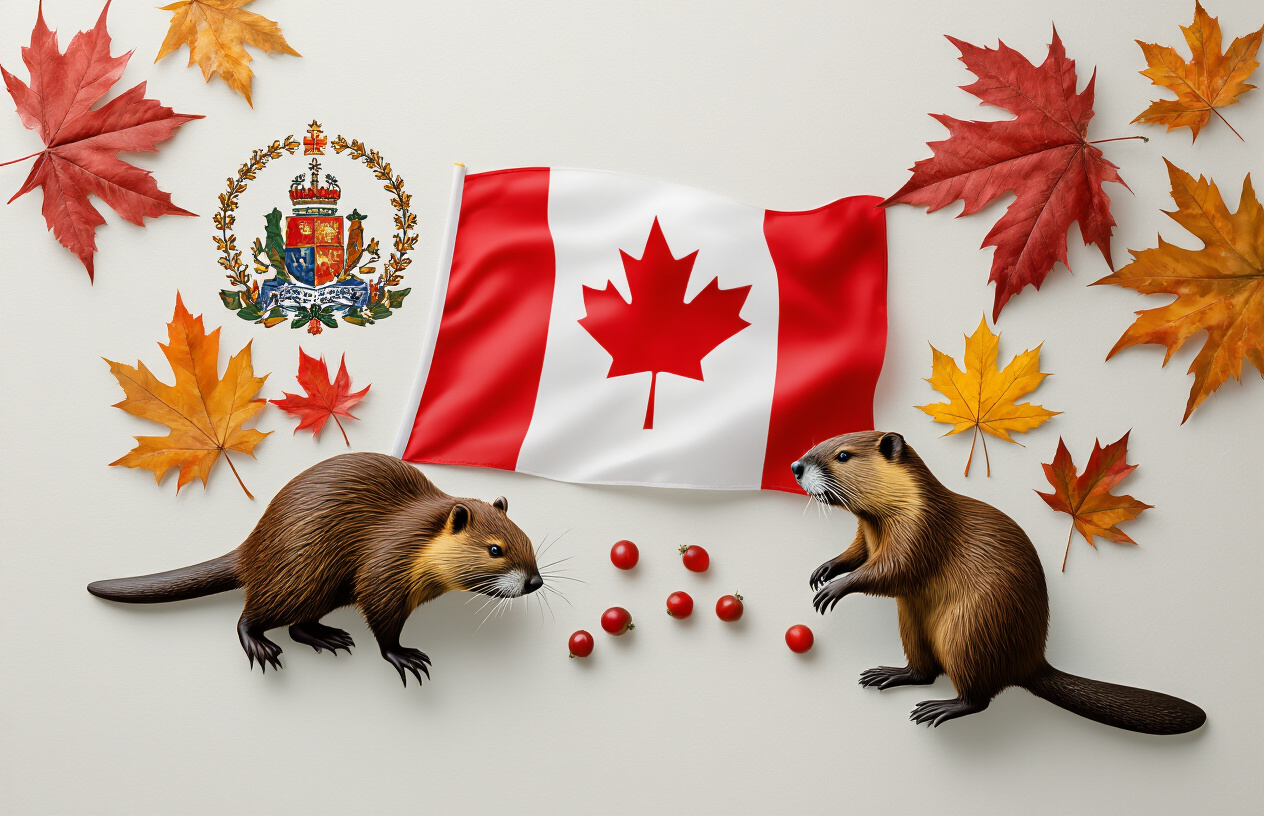
Canada’s journey to its iconic red maple leaf flag took over a century and sparked one of the nation’s most passionate political debates. Before 1965, Canada flew the Red Ensign, featuring the Union Jack and the Canadian coat of arms. This flag represented Canada’s colonial ties but left many Canadians wanting something uniquely their own.
The Great Flag Debate began in earnest during the 1960s under Prime Minister Lester B. Pearson. Thousands of designs poured in from across the country, ranging from elaborate coats of arms to simple geometric patterns. The most contentious proposals included multiple maple leaves, beavers, and various combinations of red, white, and blue elements.
George Stanley, a history professor and heraldry expert, proposed the winning design featuring a single stylized maple leaf between two red bars. The maple leaf had deep Canadian roots, appearing on military insignia, coins, and provincial symbols for decades. The three-panel design created perfect proportions while the red and white colors honored Canada’s official national colors, proclaimed by King George V in 1921.
Parliamentary debates raged for months. Opposition members filibustered for weeks, with some sessions running past midnight. Conservative leader John Diefenbaker famously declared the new flag looked like it belonged on a beer bottle. Despite fierce resistance, the Liberal government pushed through the legislation.
On February 15, 1965, the new flag flew for the first time over Parliament Hill. What started as a divisive political issue gradually became a beloved national symbol that Canadians proudly display worldwide.
Provincial flags and territorial symbols
Canada’s provinces and territories each maintain distinct flags and symbols that reflect their unique histories, cultures, and geographical features. These regional emblems create a rich tapestry of Canadian identity beyond the national maple leaf.
Provincial Flag Highlights:
- Ontario: Features the Red Ensign design with the provincial coat of arms displaying the Cross of St. George and three golden maple leaves
- Quebec: The fleur-de-lis flag showcases four white lilies on blue and white squares, honoring French heritage
- British Columbia: Combines the Union Jack with a golden half-sun and wavy blue and white stripes representing the Pacific Ocean
- Alberta: Displays the provincial coat of arms on a royal blue background with wheat sheaves, mountains, and prairie landscapes
The territories have developed their own distinctive symbols since gaining greater autonomy. Nunavut’s flag, adopted in 1999, features an inuksuk (stone landmark) in gold and blue, representing traditional Inuit culture. The Northwest Territories flag shows the territorial coat of arms with white fox fur, symbolizing the northern wilderness.
Each province also maintains official flowers, birds, and trees. The trillium represents Ontario, while British Columbia claims the Pacific dogwood. These natural symbols connect deeply with local ecosystems and cultural traditions.
Many provincial legislatures display elaborate ceremonial maces, representing royal authority and democratic governance. These symbols blend British parliamentary traditions with uniquely Canadian elements, creating distinctive regional identities within the broader national framework.
National anthem and ceremonial traditions
“O Canada” became the official national anthem in 1980, though Canadians had sung various versions for over a century. Calixa Lavallée composed the music in 1880, with French lyrics by Adolphe-Basile Routhier. The English version evolved through multiple translations and revisions before Robert Stanley Weir’s 1908 version gained widespread acceptance.
The anthem reflects Canada’s bilingual character, with official versions in both French and English. Recent changes include replacing “in all thy sons command” with “in all of us command” to make the lyrics more inclusive. These modifications sparked debate about tradition versus modern values, but ultimately reflected Canada’s evolving national identity.
Key Ceremonial Traditions:
- Governor General’s Role: As the Crown’s representative, the Governor General performs crucial ceremonial functions including throne speeches, royal assent, and state visits
- Changing of the Guard: Summer ceremonies on Parliament Hill showcase military pageantry with the Ceremonial Guard in distinctive red tunics and bearskin hats
- Canada Day Celebrations: July 1st festivities combine official ceremonies with public celebrations, featuring concerts, fireworks, and citizenship ceremonies
- Remembrance Day Protocol: November 11th observances follow strict traditions including two minutes of silence and wreath-laying at war memorials
The Order of Canada, established in 1967, recognizes outstanding achievement and service to the country. Recipients wear distinctive insignia and participate in investiture ceremonies at Rideau Hall. This honor system creates living symbols of Canadian excellence across all fields of endeavor.
These ceremonial traditions blend inherited British customs with distinctly Canadian elements, creating meaningful rituals that unite citizens while respecting the country’s diverse cultural heritage.
Population Demographics and Growth Patterns

Current population statistics and distribution
Canada stands as the world’s second-largest country by landmass, yet ranks 38th globally in population with approximately 39.2 million residents as of 2024. This creates one of the lowest population densities worldwide at roughly 4 people per square kilometer. The vast majority of Canadians cluster within 200 kilometers of the U.S. border, creating a distinctive ribbon of settlement across the southern regions.
Population distribution varies dramatically across provinces and territories. Ontario leads with nearly 15.6 million residents, representing about 39% of the national total, followed by Quebec with 8.7 million. The three prairie provinces—Alberta, Saskatchewan, and Manitoba—collectively house about 7.4 million people, while British Columbia maintains steady growth with 5.5 million residents.
The northern territories showcase Canada’s geographic challenges, with Yukon, Northwest Territories, and Nunavut combined holding fewer than 130,000 people despite covering over 3.9 million square kilometers. This extreme disparity highlights how geography, climate, and economic opportunities shape where Canadians choose to live.
Regional population density tells a compelling story: while the Greater Toronto Area alone houses over 6 million people, vast stretches of northern Canada remain virtually uninhabited. Prince Edward Island, Canada’s smallest province, maintains the highest population density at 25 people per square kilometer, while Nunavut averages just 0.02 people per square kilometer.
Immigration trends and settlement patterns
Immigration drives Canada’s population growth, contributing roughly 80% of annual increases. The country welcomes between 350,000 to 450,000 new permanent residents yearly through various programs including economic immigration, family reunification, and refugee resettlement. This represents one of the highest per-capita immigration rates among developed nations.
Recent immigration patterns show strong preference for major metropolitan areas. Toronto receives about 45% of all newcomers, followed by Vancouver at 15% and Montreal at 10%. These gateway cities offer established immigrant communities, employment opportunities, and cultural amenities that ease integration. However, smaller cities like Calgary, Edmonton, and Winnipeg increasingly attract newcomers through provincial nominee programs designed to distribute immigration benefits more evenly.
Source countries have shifted significantly over recent decades. While European immigration dominated the mid-20th century, today’s newcomers primarily arrive from Asia, Africa, and the Middle East. China, India, Philippines, and Nigeria consistently rank among top source countries, reflecting Canada’s points-based immigration system that prioritizes education, language skills, and work experience over country of origin.
Settlement patterns reveal interesting dynamics beyond initial destination choices. Many immigrants initially settle in Toronto or Vancouver but later relocate to smaller communities seeking affordable housing, entrepreneurial opportunities, or specific employment prospects. This secondary migration helps distribute immigrant populations across Canada’s geography.
Urban versus rural population dynamics
Canada’s urbanization story mirrors global trends but with unique characteristics. Currently, 81% of Canadians live in urban areas, a figure that continues climbing steadily. This urban concentration intensifies within census metropolitan areas (CMAs), where 70% of all Canadians reside despite these areas covering less than 1% of the country’s landmass.
The Big Six metropolitan areas—Toronto, Montreal, Vancouver, Calgary, Edmonton, and Ottawa-Gatineau—house over half of Canada’s total population. Toronto alone accounts for nearly 20% of all Canadians, creating significant economic and political influence concentrated in a relatively small geographic area. These urban centers act as economic engines, generating disproportionate shares of GDP while attracting young professionals, immigrants, and businesses.
Rural Canada faces ongoing challenges as mechanized agriculture reduces farm employment and young people migrate to cities for education and career opportunities. Rural population decline affects Atlantic Canada particularly severely, where outmigration combines with aging demographics to create economic pressures on small communities. However, some rural areas near major cities experience growth as people seek affordable housing while maintaining urban employment connections.
Remote work trends, accelerated by the COVID-19 pandemic, show potential to alter traditional urban-rural dynamics. Some Canadians relocated from expensive urban centers to smaller communities, though whether this represents lasting change or temporary adjustment remains unclear.
Age demographics and future projections
Canada’s population ages rapidly, reflecting declining birth rates and increasing life expectancy. The median age reached 41.9 years in 2024, up from 37.6 years in 2001. This demographic shift creates significant policy challenges around healthcare, pensions, and labor force participation.
The baby boom generation, born between 1946 and 1965, represents the largest demographic cohort and drives current aging trends. As boomers retire, they create labor shortages in many sectors while increasing demand for healthcare and social services. Atlantic Canada experiences this aging most acutely, with median ages exceeding 45 years in some provinces.
Birth rates continue declining across Canada, currently sitting at 1.4 children per woman—well below the 2.1 replacement rate needed for natural population growth. Quebec maintains slightly higher fertility rates than other provinces, partly due to supportive family policies, while territories show higher birth rates driven by younger Indigenous populations.
Population projections suggest Canada could reach 47-50 million residents by 2041, with immigration accounting for virtually all growth. However, these projections depend heavily on immigration policy decisions and global migration patterns. The working-age population (15-64 years) faces particular pressure, with dependency ratios climbing as fewer workers support growing numbers of retirees.
Regional age variations create different challenges across the country. While cities like Toronto and Vancouver attract young professionals, rural areas and Atlantic provinces struggle with aging populations and youth outmigration, creating uneven demographic pressures that require targeted policy responses.
Economic Powerhouse Built on Natural Resources and Innovation
Key industries driving economic growth
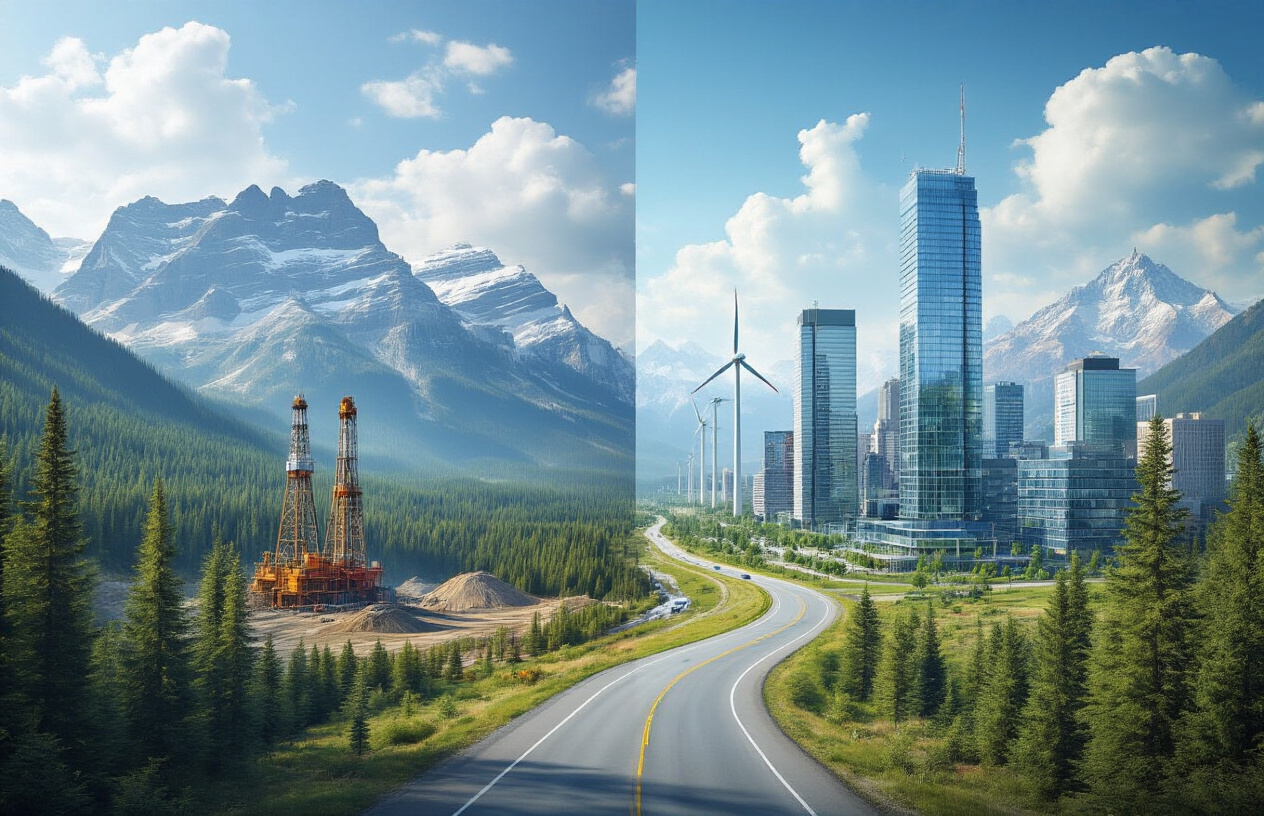
Canada’s economy runs on a diverse mix of sectors that have evolved from traditional resource extraction to modern innovation hubs. The natural resources sector remains a cornerstone, with oil and gas production from Alberta’s oil sands generating substantial revenue for both provincial and federal governments. Mining operations across the country extract everything from gold and copper to rare earth minerals essential for technology manufacturing.
The forestry industry continues to be a major player, supplying lumber and paper products to global markets. Canada produces about 12% of the world’s softwood lumber and ranks as the second-largest exporter of wood products globally. Agriculture contributes significantly too, with canola, wheat, and pulse crops feeding both domestic and international markets.
Manufacturing has shifted toward high-tech sectors, particularly in Ontario and Quebec. Aerospace companies like Bombardier have established Canada as a leader in regional aircraft production. The automotive sector, concentrated in the Windsor-Detroit corridor, produces vehicles for major North American manufacturers.
Technology and innovation sectors are rapidly expanding, especially in cities like Toronto, Vancouver, and Montreal. The financial services industry, centered in Toronto, manages trillions in assets and serves as a gateway between American and international markets. Clean technology and renewable energy sectors are growing quickly, driven by government incentives and environmental regulations.
Trade relationships and international partnerships
Canada’s trade network spans the globe, with the United States serving as its largest trading partner by far. The Canada-United States-Mexico Agreement (CUSMA), which replaced NAFTA, governs roughly 75% of Canada’s total trade. This relationship creates a daily flow of goods worth billions of dollars across the longest undefended border in the world.
The Comprehensive Economic and Trade Agreement (CETA) with the European Union opened new markets for Canadian exporters, reducing tariffs on thousands of products. This partnership has boosted agricultural exports, particularly beef, pork, and canola products, while creating opportunities for Canadian service providers in European markets.
Canada has also strengthened ties with Asia-Pacific nations through the Comprehensive and Progressive Trans-Pacific Partnership (CPTPP). This agreement includes Japan, Australia, Vietnam, and other growing economies, providing Canadian businesses with preferential access to markets representing over 500 million consumers.
Bilateral relationships with countries like China, India, and the United Kingdom continue to evolve. Despite occasional diplomatic tensions, trade with these nations remains robust, particularly in commodities like canola, lumber, and energy products. Canada actively participates in G7, G20, and World Trade Organization discussions, positioning itself as a reliable trading partner that supports multilateral trade agreements.
Employment sectors and labor market trends
Canada’s labor market reflects the country’s economic diversity, with service sectors employing the largest share of workers. Healthcare and social services account for about 13% of employment, driven by an aging population that requires more medical care and support services. Professional, scientific, and technical services employ another 9% of the workforce, showing the economy’s shift toward knowledge-based work.
Retail trade and accommodation services provide jobs for millions of Canadians, particularly in urban centers and tourist destinations. The construction industry remains strong, supported by immigration-driven population growth and infrastructure spending. Manufacturing employment has stabilized after decades of decline, with remaining jobs concentrated in higher-skill, technology-intensive operations.
Regional differences in employment are notable. Alberta’s economy centers around energy sector jobs, while Ontario focuses on manufacturing and financial services. British Columbia balances resource extraction with technology and film production. Atlantic Canada relies heavily on fishing, tourism, and government services.
Labor shortages in certain sectors have become a persistent challenge. Healthcare, skilled trades, and technology fields struggle to find qualified workers. Canada’s immigration system now targets workers in these high-demand occupations. Remote work trends, accelerated by the pandemic, have created new opportunities for workers in smaller communities to access jobs traditionally concentrated in major cities. The gig economy has also expanded, with more Canadians working as independent contractors in delivery, ride-sharing, and freelance professional services.
Canada stands as a remarkable example of how diverse cultures, vast landscapes, and rich natural resources can come together to create a thriving modern nation. From its deep Indigenous heritage to its emergence as a confederation in 1867, the country has built a unique identity that celebrates multiculturalism while maintaining strong national unity. Ottawa serves as the political heart that coordinates this massive federation, while the iconic maple leaf flag represents the values and aspirations of over 38 million Canadians spread across ten provinces and three territories.
The country’s success stems from its ability to balance tradition with innovation, transforming abundant natural resources into economic opportunities while embracing technological advancement. Canada’s story shows how respecting Indigenous roots, welcoming immigrants from around the world, and protecting vast wilderness areas can create a society that ranks among the world’s most livable nations. For anyone looking to understand what makes Canada special, it’s this combination of natural beauty, cultural diversity, and forward-thinking leadership that continues to define the Great White North in the 21st century.

Nasir Uddin is a dedicated writer and researcher at BanglaLook.com, where he explores topics related to education, Bangladeshi culture, lifestyle, and travel. With a strong passion for learning and storytelling, he blends personal observation with well-researched insights to help readers better understand Bangladesh and the world around them.